Pakistan

Punjab Food Authority Seizes Thousands of Rotten Eggs in Lahore
Pakistan

Punjab Food Authority Seizes Thousands of Rotten Eggs in Lahore

Punjab Food Authority (PFA) teams intercepted a vehicle on Bund Road in Lahore carrying 10,800 contaminated and rotten hatchery eggs illegally transported from Faisalabad. The eggs, intended for distribution and use in food preparation, were deemed unfit for consumption due to severe contamination, posing significant health hazards including the potential spread of diseases. Swift Action: Arrest, Impoundment, and Destruction Acting on intelligence about unsanitary food transportation, PFA Vigilance and Food Safety teams impounded the vehicle, arrested the supplier, confiscated the entire load, and destroyed the 10,800 rotten eggs on the spot. A case was registered against the supplier. PFA Director General Asim Javed described the act as a “severe violation of food safety standards” and a criminal offense, emphasizing a zero-tolerance policy toward food adulteration. He highlighted that using broken or rotten eggs in food production is banned, and both suppliers and buyers face stringent legal action. The operation aligns with Chief Minister directives for rigorous food safety enforcement, ensuring citizens access hygienic and nutritious food. This incident underscores ongoing efforts to combat illegal practices threatening public health in Punjab.

Rawalpindi Police Nab Seven Kite Suppliers, Seize Over 3,000 Kites
Pakistan

Rawalpindi Police Nab Seven Kite Suppliers, Seize Over 3,000 Kites

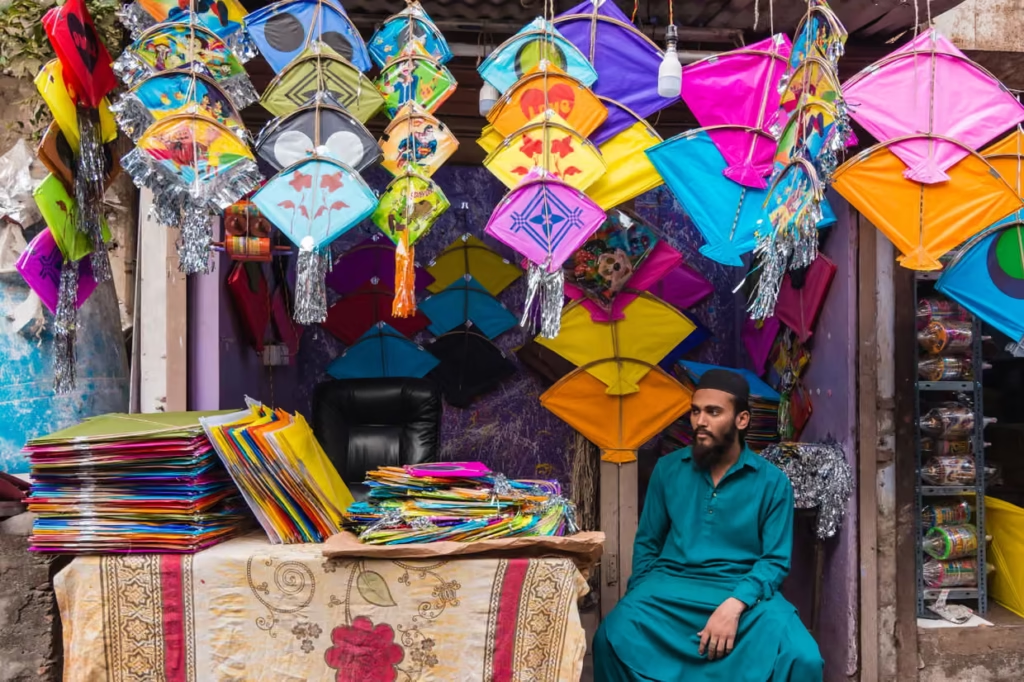
Rawalpindi Police, acting on directives from City Police Officer (CPO) Syed Khalid Hamdani, arrested seven individuals involved in supplying kites and dangerous string in multiple operations. The raids targeted suppliers in various areas, resulting in the seizure of 3,100 kites and 12 spools of metallic or chemical-coated string, often used in the prohibited activity. Breakdown of Seizures and Strict Enforcement Ratta Amral Police apprehended two suspects, recovering 2,250 kites and four spools. Taxila Police detained one supplier with 400 kites and two spools, while Wah Cantt Police arrested three individuals, seizing 200 kites and five spools. Gujar Khan Police nabbed one person with 250 kites and one spool. Separate cases have been registered against all accused. A police spokesman emphasized that kite flying is a non-bailable offence, labeling it a “bloody sport” due to risks of injury or death from sharp strings. Authorities vowed no leniency, stating participants and suppliers “would not escape the law.” This action aligns with Punjab’s longstanding ban on kite flying, enacted to prevent accidents during festivals like Basant, where deadly string battles have caused fatalities, including throat injuries and electrocutions.

Spider Venom Drug Enters Human Trials to Combat Heart Attacks and Strokes
Pakistan

Spider Venom Drug Enters Human Trials to Combat Heart Attacks and Strokes

From Lethal Toxin to Heart and Brain Protector Researchers at the University of Queensland have launched human trials for IB409, a drug derived from the venom of the Australian funnel-web spider—one of the world’s most dangerous arachnids. The molecule, based on the protein Hi1a found in venom from spiders on Queensland’s Fraser Island (K’gari), works by blocking acid-sensing ion channels that trigger cell death during oxygen deprivation. Preclinical studies showed exceptional promise, with Hi1a protecting heart tissue as effectively as previous candidates that failed due to side effects, while selectively targeting only damaged cells to minimize risks. Phase 1 Trials Underway with Global Implications Developed by biotechnology company Infensa Bioscience, IB409 is a miniaturized peptide version of Hi1a optimized for clinical use. The ongoing Phase 1 study focuses on safety, tolerability, and dosing in humans. Professor Glenn King from UQ’s Institute for Molecular Bioscience highlighted that no current drugs prevent the irreversible damage caused by heart attacks and strokes, which claim millions of lives annually as the leading cause of death worldwide. Infensa CEO Professor Mark Smythe emphasized that success in trials could revolutionize treatment, potentially allowing paramedics to administer the drug on-site and vastly improving outcomes for patients with cardiovascular disease. Years of research, supported by independent safety validations, have culminated in this milestone, offering hope for a breakthrough in preventing post-event tissue damage.

Pakistan's 10 Million Housing Shortage: Experts Demand Immediate Reforms
Pakistan

Pakistan’s 10 Million Housing Shortage: Experts Demand Immediate Reforms

Experts at a recent seminar highlighted Pakistan’s acute housing crisis, with a shortage of 9–10 million units driven by rapid population growth and urbanization. Nearly half of the urban population now resides in slums and informal settlements, particularly affecting low- and middle-income groups. Affordability issues, weak housing finance, regulatory gaps, and climate vulnerabilities exacerbate the problem, turning housing—a basic human right—into an unattainable goal for millions. Read More: https://theboardroompk.com/new-motorway-to-slash-lahore-islamabad-distance-by-100-km/ New Policy Framework Offers Hope The National Housing Policy 2025, currently in its final draft and set for federal cabinet approval, aims to address these challenges. Initiated on the Prime Minister’s directive to update the outdated 2001 policy, it was developed through extensive multi-stakeholder consultations involving academia, urban authorities, civil society, and international partners like UN-Habitat, the World Bank, and JICA. The policy features nine thematic pillars: land for housing, intermediate city development, housing finance, construction services, slum rehabilitation, low-cost and green housing, institutional frameworks, and capacity building. Key strategies include land banking, land pooling, and transit-oriented development to curb urban sprawl and protect farmland. With Pakistan’s mortgage-to-GDP ratio at just 0.3%—far below global benchmarks—the policy emphasizes inclusive finance expansion, rental improvements, and corporate involvement. Organized by the Pakistan Institute of Development Economics (PIDE), the seminar stressed coordinated federal-provincial efforts post-18th Amendment to deliver affordable, sustainable shelter.

New Motorway to Slash Lahore-Islamabad Distance by 100 km
Pakistan

New Motorway to Slash Lahore-Islamabad Distance by 100 km

The Lahore-Sialkot-Kharian-Rawalpindi motorway corridor promises to slash the distance between Lahore and Islamabad by approximately 100 kilometers, cutting travel time from 3.5 hours to just 2.5 hours. This alternative route to the existing M-2 motorway will provide commuters with a faster, safer option, reducing fuel consumption and vehicle operating costs while easing congestion on traditional highways. Read More: https://theboardroompk.com/saudi-arabia-negotiates-jf-17-purchase-for-2b-loans-on-pakistan/ Project Details and Progress Comprising three key sections—M-11 (Lahore-Sialkot, 89 km, operational since 2020), M-12 (Sialkot-Kharian, 69 km), and M-13 (Kharian-Rawalpindi, 117 km)—the corridor is being developed under a Public-Private Partnership model. The completed M-11 features six lanes, seven interchanges, service areas with modern amenities like mosques, fuel stations, and trauma centers. Recent restructurings, guided by the Special Investment Facilitation Council (SIFC), have upgraded M-12 and M-13 to six-lane facilities from the outset, including eight interchanges, twin-tube tunnels, and extensive rest areas. Despite delays on M-12 due to unforeseen challenges, revised plans have been approved, with procurement processes underway. Officials emphasize that the full corridor, a priority initiative, is expected to be fully operational within 2.5 to 3 years, boosting economic hubs in Punjab and enhancing national connectivity through improved traffic flow and road safety.

PIA Lahore to London Flights to Resume from March 30, 2026
Pakistan

PIA Lahore to London Flights to Resume from March 30, 2026

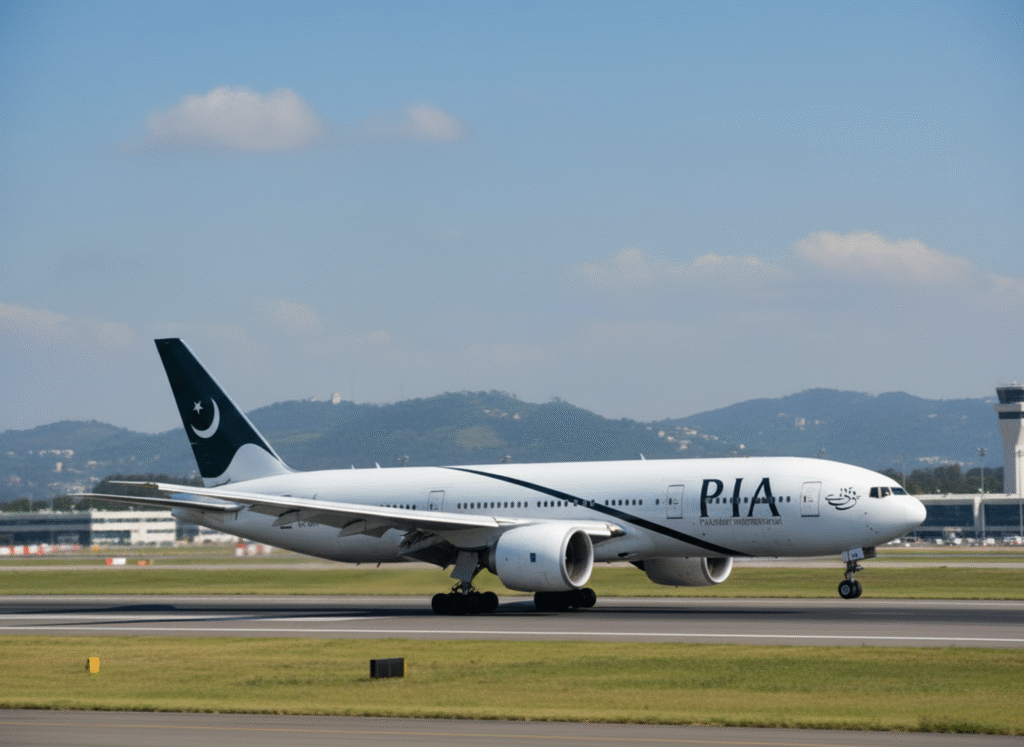
PIA Lahore to London flights are officially set to resume from March 30, 2026, marking a major milestone in Pakistan International Airlines’ expanding UK operations. The announcement reflects PIA’s strategic push to strengthen air connectivity between Pakistan and the United Kingdom amid surging passenger demand and consistently full flight loads. The national flag carrier is gradually increasing its UK flight frequency and is expected to operate up to seven weekly flights to the United Kingdom by the end of March 2026, according to a PIA spokesperson. This expansion comes in response to long-standing requests from Pakistani nationals and expatriates residing in the UK. PIA Lahore to London Flights Strengthen UK Air Connectivity Following the successful resumption of flights to Manchester and the announcement of Islamabad to London flights starting March 29, 2026, PIA has now finalized arrangements for a direct Lahore to London route beginning the very next day. The consecutive relaunch dates for Islamabad–London and Lahore–London routes highlight the airline’s operational readiness and demand-driven planning. According to PIA officials, all existing UK-bound flights are currently operating at full capacity, reinforcing the need for expanded services. Rising Demand Drives PIA Lahore to London Flights The decision to resume PIA Lahore to London flights has been driven by robust passenger demand, particularly from overseas Pakistanis, business travelers, and students. Lahore, being one of Pakistan’s largest economic and cultural hubs, has long required a direct air link to London to reduce travel time and improve convenience. PIA management acknowledged that demand from Punjab-based travelers and UK-based Pakistani communities played a crucial role in prioritizing this route. The airline aims to provide affordable and reliable travel options while reclaiming its historical market presence in the UK aviation sector. PIA UK Flight Schedule and Frequency Explained Under the current expansion plan, PIA will operate: • Three weekly flights from Islamabad to London• One weekly direct flight from Lahore to London This initial schedule is expected to increase as operational capacity improves and regulatory approvals allow further expansion. Historically, PIA operated over 22 weekly flights to the United Kingdom, and the airline now expects to surpass those levels in the future. Rather than presenting this information in tabular form, PIA officials emphasize that the phased approach allows the airline to align fleet availability, crew readiness, and passenger demand efficiently. Future Expansion Plans Beyond PIA Lahore to London Flights Beyond London and Manchester, PIA is actively evaluating additional routes from Pakistan to other UK destinations. The airline sees the UK as a strategic long-haul market and a key revenue driver, particularly with growing tourism, family travel, and trade ties between the two countries. A PIA spokesperson confirmed that the airline’s long-term goal is to rebuild its UK network comprehensively, restoring confidence among travelers while maintaining high load factors and operational efficiency. Why PIA Lahore to London Flights Matter for Pakistan’s Aviation Sector The resumption of PIA Lahore to London flights is not just an airline expansion it is a positive signal for Pakistan’s aviation recovery and international connectivity. Direct routes reduce travel fatigue, improve cargo movement, and support economic linkages with one of Pakistan’s most important overseas markets. For overseas Pakistanis, the restored route offers convenience and national-carrier loyalty, while for the airline, it represents a step toward regaining its competitive position in international aviation. With the relaunch of PIA Lahore to London flights from March 30, 2026, Pakistan International Airlines is reinforcing its commitment to meeting passenger demand and expanding its UK footprint. As flight frequencies increase and more routes are planned, the move positions PIA for sustained growth in one of its most important international markets.

Agent Interoperability in Pakistan’s Banking System: Transforming Digital Finance
Pakistan

Agent Interoperability in Pakistan’s Banking System: Transforming Digital Finance

Agent Interoperability in Pakistan’s Banking System marks a significant milestone in the country’s journey toward a more inclusive, efficient, and digitally connected financial ecosystem. The introduction of this long-awaited reform allows banking agents, branchless banking operators, and financial institutions to conduct transactions seamlessly across multiple networks breaking long-standing silos in Pakistan’s banking infrastructure. This upgrade is expected to accelerate digital payments adoption, expand access to formal banking services, and strengthen consumer trust in Pakistan’s rapidly evolving financial sector. What Is Agent Interoperability in Pakistan’s Banking System? Agent Interoperability in Pakistan’s Banking System refers to the ability of banking agents and branchless banking outlets to serve customers of multiple banks and digital wallets, regardless of the institution they are registered with. Previously, agents were tied to specific banks or mobile wallet providers, limiting customer choice and convenience. With interoperability, customers can now: • Deposit and withdraw cash across different banking networks• Transfer funds between various digital wallets• Access financial services without worrying about network compatibility This shift aligns Pakistan with global best practices in digital banking and financial inclusion. Why Agent Interoperability Matters for Pakistan’s Economy The launch of Agent Interoperability in Pakistan’s Banking System is not just a technical upgrade it is an economic enabler. Pakistan has millions of unbanked and underbanked citizens, particularly in rural and semi-urban areas where physical bank branches are limited. By enabling shared agent networks, the banking system can: • Reduce operational costs for banks• Expand financial services to underserved regions• Improve transaction efficiency and transparency• Support government-led digitization initiatives This reform strengthens Pakistan’s position as an emerging digital economy in South Asia. Impact of Agent Interoperability on Financial Inclusion Agent Interoperability and Access to Banking Services With Agent Interoperability in Pakistan’s Banking System, customers no longer need to locate a specific bank’s agent. Any authorized agent can now serve multiple institutions, significantly improving accessibility. This means: • Faster cash transactions• Reduced travel time for customers• Greater confidence in digital financial services Agent Interoperability and Digital Payments Growth Interoperability encourages wider use of mobile wallets, QR payments, and instant transfers, helping Pakistan move closer to a cash-lite economy. Benefits for Banks, Agents, and Customers For Banks:Agent interoperability allows banks to expand outreach without heavy investment in physical infrastructure. It also fosters healthy competition based on service quality rather than network size. For Agents:Agents benefit from increased footfall, higher transaction volumes, and diversified revenue streams by serving customers from multiple banks. For Customers:Consumers enjoy greater convenience, faster transactions, and improved trust in Pakistan’s banking system. Regulatory Support Behind Agent Interoperability in Pakistan’s Banking System The successful rollout of Agent Interoperability in Pakistan’s Banking System reflects strong regulatory backing and collaboration among financial stakeholders. Regulators have emphasized interoperability as a key pillar of Pakistan’s National Financial Inclusion Strategy. By promoting standardized systems and secure transaction protocols, regulators aim to ensure: • Consumer protection• System stability• Long-term scalability of digital banking services Future Outlook: What’s Next for Pakistan’s Banking System? As Agent Interoperability in Pakistan’s Banking System gains traction, experts anticipate further innovations such as: • Enhanced real-time payment systems• Cross-platform QR code payments• Integration with fintech and microfinance platforms• Improved data-driven financial services These developments will further strengthen Pakistan’s digital finance ecosystem and support sustainable economic growth. Agent Interoperability in Pakistan’s Banking System represents a transformative step toward a more inclusive, efficient, and accessible financial future. By removing network barriers and empowering agents, banks, and customers alike, Pakistan is laying the foundation for a resilient digital banking framework that can support economic growth and innovation for years to come.

U.S. Pakistan Business Alliance Investment Gains Regulatory Backing from BOI
Pakistan

U.S. Pakistan Business Alliance Investment Gains Regulatory Backing from BOI

U.S. Pakistan Business Alliance investment has entered a new phase as Pakistan formally brings the Alliance under the regulatory framework of the Board of Investment (BOI)—a strategic move designed to deepen institutional coordination and accelerate U.S. private-sector investment into Pakistan’s priority economic sectors. The development was announced by Federal Minister for the Board of Investment Qaiser Ahmed Sheikh during a high-level gathering of business leaders, diplomats, and investors in Islamabad, underscoring Pakistan’s renewed push to position itself as a competitive destination for foreign direct investment (FDI). Why U.S. Pakistan Business Alliance Investment Matters The registration of the U.S. Pakistan Business Alliance (USPBA) with the BOI is expected to simplify and streamline engagement between American investors and Pakistani authorities. This comes at a time when economic ties between Pakistan and the United States are gaining momentum, supported by policy reforms and improving macroeconomic indicators. Rather than operating independently, USPBA will now function within Pakistan’s official investment promotion ecosystem, allowing for faster coordination, clearer policy navigation, and improved investor confidence. Pakistan’s Strategic Advantage for U.S. Investors Minister Sheikh emphasized Pakistan’s unique geographic positioning, connecting: • South Asia• Central Asia• The Middle East• China This strategic location enables Pakistan to serve as a regional trade, logistics, and supply-chain hub, a key factor for U.S. companies seeking diversification amid global supply chain realignments. Priority Sectors for U.S. Pakistan Business Alliance Investment The government has identified several high-impact sectors where U.S. Pakistan Business Alliance investment can play a transformative role. Rather than listing data in tables, the investment landscape can be understood through sectoral opportunities: • Minerals and Mining: Pakistan holds significant untapped reserves, including rare earth elements, critical for clean energy, defense, and advanced manufacturing.• Technology and IT Services: A growing digital workforce and expanding startup ecosystem offer scalable opportunities for U.S. tech firms.• Energy: Renewable energy, power infrastructure, and energy efficiency projects remain top priorities amid rising demand.• Industrial Manufacturing: Export-oriented manufacturing aligns with Pakistan’s goal to reduce imports and boost foreign exchange earnings. These sectors are central to Pakistan’s broader strategy of export diversification and industrial modernization. Improving Market Sentiment Supports Investment Climate The minister also pointed to rising confidence in Pakistan’s equity markets, where increased participation reflects optimism around macroeconomic stabilization. Recent gains in Pakistan’s benchmark stock index have been driven by: • Expectations of monetary easing• Improvements in the external account• Ongoing fiscal and regulatory reforms This positive momentum strengthens the overall case for long-term U.S. investment. BOI Reforms Supporting U.S. Pakistan Business Alliance Investment To ensure smoother investor experiences, the BOI has introduced several facilitation mechanisms: • The Business Facilitation Center, offering a one-window solution to reduce procedural delays• Regulatory simplification initiatives• The Asaan Karobar Act, aimed at improving ease of doing business for both foreign and domestic companies Together, these reforms reduce entry barriers and enhance Pakistan’s competitiveness as an investment destination. Strengthening Institutional and Academic Linkages The event also highlighted broader engagement beyond capital flows. Senior representatives from the U.S. Embassy, FPCCI President Atif Ikram Sheikh, and leading industry figures attended, reflecting strong private-sector alignment. Minister Sheikh also welcomed a delegation of Yale University students, noting that academic and people-to-people exchanges often evolve into long-term trade and investment partnerships. Outlook: Translating Sentiment into Sustainable Growth The BOI reaffirmed its role as Pakistan’s lead investment promotion agency, focused on converting improving investor sentiment into sustained capital inflows, job creation, and industrial growth. With U.S. Pakistan Business Alliance investment now formally aligned with BOI frameworks, Pakistan is signaling policy continuity, institutional clarity, and openness to deeper U.S. economic engagement key factors global investors look for in emerging markets.

Pakistan’s First Ferry Terminal Ushers in a New Era for Maritime Tourism and the Blue Economy
Pakistan

Pakistan’s First Ferry Terminal Ushers in a New Era for Maritime Tourism and the Blue Economy

Pakistan’s first ferry terminal has officially been inaugurated at the Karachi Port Trust (KPT), marking a historic milestone in the country’s maritime sector. The landmark project is set to transform coastal tourism, enhance regional connectivity, and strengthen Pakistan’s rapidly evolving blue economy. The inauguration ceremony was led by Federal Minister for Maritime Affairs, Muhammad Junaid Anwar Chaudhry, who described the terminal as a breakthrough initiative aimed at introducing modern, safe, and sustainable maritime passenger transport in Pakistan. The ferry service is expected to become operational later this month, aligning closely with the Prime Minister’s vision of unlocking maritime potential to diversify economic activity. Pakistan’s First Ferry Terminal: A Catalyst for Economic Growth The launch of Pakistan’s first ferry terminal is more than just a transportation upgrade—it represents a strategic investment in economic diversification. According to the Ministry of Maritime Affairs, the ferry service will open new avenues for coastal tourism, improve passenger mobility, and stimulate private sector participation. Minister Junaid Anwar Chaudhry emphasized that the ferry initiative serves as a gateway to broader economic opportunities, including tourism development and regional integration. Notably, this is the first ferry service license ever issued in Pakistan, making it a defining moment for the country’s maritime history. Boosting Investor Confidence and Private Sector Participation A key objective behind Pakistan’s first ferry terminal is to build investor confidence. The government sees this initiative as a strong signal of its commitment to creating a business-friendly maritime environment. The minister highlighted that several businessmen have already expressed strong interest in acquiring ferry operation licenses. This growing investor appetite reflects confidence in ongoing policy reforms, infrastructure modernization, and public-private partnership models introduced by the Ministry of Maritime Affairs. Private sector involvement is expected to drive growth across multiple sectors, including hospitality, transport services, logistics, and tourism-related industries, while also creating new employment opportunities. Pakistan’s First Ferry Terminal and the Blue Economy Vision The ferry terminal is a core component of Pakistan’s broader blue economy strategy, which focuses on sustainable use of marine resources for long-term economic growth. The Ministry of Maritime Affairs is actively pursuing initiatives that combine innovation, sustainability, and heritage preservation. In practical terms, the ferry terminal supports: • Coastal tourism development• Safer and eco-friendly maritime travel• Regional and domestic connectivity• Job creation across maritime-linked industries These outcomes collectively strengthen Pakistan’s position as an emerging maritime economy in South Asia. Future Plans: Industrial Zones and Maritime Innovation Alongside the ferry terminal launch, the minister announced that the Port Qasim Authority will soon unveil plans for a state-of-the-art industrial zone. This zone will provide modern infrastructure designed to attract domestic and foreign investors, boost exports, and accelerate industrial growth. The government is also encouraging businesses to propose innovative ideas for collaboration with Pakistani ports. Officials have assured full facilitation and policy support to accelerate private sector-led maritime development. A Coordinated Push to Modernize Pakistan’s Maritime Sector Pakistan’s first ferry terminal builds on recent maritime initiatives, including the launch of the country’s first Fishing Technology Museum and the Mahi-Dost digital traceability app. Together, these projects highlight a coordinated national strategy aimed at modernizing maritime infrastructure, promoting sustainability, and preserving marine heritage. Senior officials from the Ministry of Maritime Affairs, Karachi Port Trust management, and representatives from the shipping and business communities attended the inauguration, widely praising the initiative as a turning point for Pakistan’s maritime future. Pakistan’s First Ferry Terminal Sets the Course Forward With the launch of Pakistan’s first ferry terminal, the government has taken a decisive step toward revitalizing the maritime sector. By combining infrastructure development, private investment, and sustainable practices, the initiative positions Pakistan to unlock new economic opportunities while safeguarding its marine resources. As ferry operations begin and investor interest continues to grow, the terminal is poised to become a cornerstone of Pakistan’s blue economy and a symbol of modern maritime progress.

Saudi Arabia Negotiates JF-17 Purchase for $2B Loans on Pakistan
Pakistan

Saudi Arabia Negotiates JF-17 Purchase for $2B Loans on Pakistan

Islamabad and Riyadh are engaged in discussions to convert approximately $2 billion in existing Saudi loans into a purchase agreement for Pakistan’s JF-17 Thunder fighter jets. Sources close to the Pakistani military indicate that the negotiations aim to operationalize a mutual defence pact signed in September 2025, which treats aggression against one nation as an attack on both. Read More: https://theboardroompk.com/2-billion-rooftop-solar-investment-at-stake-amid-net-metering-policy-changes-fpcci/ The talks come at a pivotal time. Pakistan is grappling with severe economic challenges, including reliance on a $7 billion IMF programme, while Saudi Arabia seeks to diversify its security alliances amid uncertainties over U.S. commitments in the Middle East. The pact was prompted by regional tensions, including Israel’s strikes on alleged Hamas targets in Doha. JF-17 Thunder: A Combat-Tested Asset Boosting Pakistan’s Exports The JF-17, a lightweight multirole fighter co-developed by Pakistan and China, has gained appeal due to its cost-effectiveness and proven performance. It was deployed during Pakistan’s intense aerial clashes with India in May 2025, marking its combat credentials. One source revealed the potential deal could reach $4 billion, with an additional $2 billion for related equipment and systems. Pakistan’s Air Chief Zaheer Ahmed Baber Sidhu recently visited Saudi Arabia for talks on military cooperation. Retired Air Marshal Aamir Masood noted that Pakistan is negotiating or finalizing defence deals with six countries, including Saudi Arabia, highlighting the JF-17’s growing marketability. Defence Minister Khawaja Asif has expressed optimism, stating that surging arms exports could reduce Pakistan’s dependence on international lenders. Recent deals, such as a over $4 billion arms package with Libya including JF-17s, underscore this shift. Historically, Saudi Arabia has provided crucial financial support to Pakistan, including rollovers and deposits during economic crises. This jets-for-loans arrangement could alleviate Pakistan’s debt burden while enhancing Saudi air capabilities, fostering deeper bilateral ties rooted in long-standing security partnerships.

Scroll to Top