Pakistan

Fatima Fertilizer-Backed Globacore Partners with Mari Energies Subsidiary for Mining in Balochistan
Pakistan

Fatima Fertilizer-Backed Globacore Partners with Mari Energies Subsidiary for Mining in Balochistan

Islamabad, December 22, 2025 – Globacore Minerals Limited has entered into a significant joint venture agreement with Mari Minerals (Private) Limited, a wholly-owned subsidiary of Mari Energies Limited (formerly Mari Petroleum Company Limited), to explore minerals in Pakistan’s resource-rich Chagai district, Balochistan.Under the terms of the agreement, announced via a notice to the Pakistan Stock Exchange (PSX) by Fatima Fertilizer Company Limited – which holds a 32% equity stake in Globacore – Mari Minerals will transfer 49% of its working interest in two mineral exploration licenses, EL-322 and EL-323, to Globacore. These licenses, covering approximately 501 square kilometers, were originally granted to Mari Minerals (formerly Mari Mining Company) in 2024 by the Directorate General Mines and Minerals Balochistan.Mari Minerals will retain operatorship of the licenses and continue to lead exploration activities, ensuring operational continuity. The transfer is subject to necessary corporate, regulatory, and governmental approvals Read More: https://theboardroompk.com/world-bank-groups-ifc-provides-60m-yearly-liquidity-to-fatima-fertilizer-to-ensure-steady-fertilizer-supply-for-pakistani-farmers-amid-fx-challenges/ The Chagai district is known for its substantial potential in copper, gold, and other precious minerals, aligning with Pakistan’s push to develop its mining sector amid global demand for critical resources. Mari Energies has been actively diversifying beyond hydrocarbons into minerals, with previous acquisitions and partnerships in the same region, including stakes in other Chagai licenses and projects like the Siahdiq Copper Project.Fatima Fertilizer, a major player in Pakistan’s fertilizer industry with production plants in Multan, Sheikhupura, and Sadiqabad, views the development positively. “As a shareholder of Globacore, [we] view this development as a positive step in diversifying its portfolio and generating long-term value for its stakeholders,” the company stated.This joint venture underscores growing private sector interest in Balochistan’s untapped mineral wealth, potentially contributing to economic growth, job creation, and foreign exchange earnings. Analysts see it as part of broader efforts to attract investment in the mining sector, which has historically faced challenges related to security and infrastructure.No financial details of the transaction, such as investment commitments or valuations, have been disclosed. The partnership could pave the way for advanced exploration and eventual mining operations if commercially viable deposits are confirmed.

Federal Govt and KE at Loggerheads on NEPRA's Revised Tariff Implementation
Pakistan

Federal Govt and KE at Loggerheads on NEPRA’s Revised Tariff Implementation

Islamabad, December 22, 2025 – A escalating conflict between Pakistan’s Ministry of Energy (Power Division) and K-Electric (KE), the private utility serving Karachi, has emerged over the processing of Tariff Differential Subsidy (TDS) payments. The disagreement centers on whether subsidies should be calculated based on KE’s original tariff determinations or the revised ones issued by the National Electric Power Regulatory Authority (NEPRA). Read More: https://theboardroompk.com/nepra-sets-rs22-98-kwh-flat-rate-to-boost-industrial-agri-electricity-use/ The TDS mechanism allows the federal government to bridge the gap between the higher actual cost of electricity generation and distribution charged to KE and the uniform national tariff applied to consumers, ensuring Karachi residents pay rates comparable to those in other parts of the country served by state-owned distribution companies (Discos). Historically, this has involved billions in annual subsidies, with past allocations reaching hundreds of billions of rupees to maintain equity and prevent tariff shocks.The current standoff stems from NEPRA’s review determinations issued on October 20, 2025, which revised KE’s multi-year tariff (MYT) for FY 2024-2030. These revisions, aimed at promoting regulatory consistency and reducing inefficiencies—such as excessive loss allowances and foreign currency-linked returns—effectively lowered KE’s allowable tariff by approximately Rs7.6 per unit in some components. The Power Division insists that TDS payments must align with these revised determinations to reflect the updated regulatory framework.However, KE has challenged the NEPRA revisions through constitutional petitions in the Sindh High Court (SHC). On November 4, 2025, the SHC issued interim orders prohibiting any coercive action to enforce the review tariffs, which KE interprets as a restraining order. In intense correspondence, KE’s CEO Moonis Alvi has argued that provisional TDS claims must be processed using the original (pre-review) tariffs, citing Clause 2.1 of the TDS Agreement. This clause mandates the use of preceding tariffs when a court restraining order is in place.Alvi emphasized in recent letters that by refusing to process claims based on original tariffs, the Power Division is indirectly enforcing the revised ones, violating SHC orders. He warned that such actions could amount to contempt of court, referencing legal precedents like Fakhurl Arfin v. FOP (2015) and Saifur Rehman v. Muhammad Ayub (1998). KE’s legal counsel, Dr. Farogh Naseem, echoed this, suggesting a Power Division letter dated December 8, 2025, risks contempt proceedings.Additionally, KE asserts that under Clause 2.6 of the agreement, only it can prepare TDS balance reports, and unilateral revisions by the Ministry are void. Even the agent bank, Habib Bank Limited, is bound by SHC orders, KE argues, stating: “What cannot be done directly, cannot be done indirectly.”The Power Division, through Deputy Secretary Abdul Mateen, has maintained its position on using revised tariffs, leading to stalled payments. While specific disputed amounts for the current period are not publicly detailed, the broader context involves significant sums—past TDS claims for KE have run into hundreds of billions, with delays impacting the utility’s liquidity and contributing to circular debt issues in the power sector.This dispute highlights ongoing tensions in Pakistan’s power sector reforms, where efforts to standardize tariffs and curb inefficiencies clash with legal challenges from privatized entities like KE. Prolonged delays in subsidy releases could strain KE’s operations, potentially affecting power supply reliability in Karachi, home to over 20 million people and a major economic hub. It also underscores the fiscal burden on the government, which allocates substantial budgetary resources for TDS to maintain uniform national tariffs.Analysts note that similar disputes have recurred, including mediation efforts in prior years over historic receivables and payables. Resolution may depend on SHC proceedings or renewed negotiations, but the impasse risks exacerbating circular debt and deterring investments in the sector.

CCP Sounds Alarm: Fake Pesticides Widespread in Punjab and Sindh, Causing Massive Farmer Losses
Pakistan

CCP Sounds Alarm: Fake Pesticides Widespread in Punjab and Sindh, Causing Massive Farmer Losses

ISLAMABAD, Dec 20: The Competition Commission of Pakistan (CCP) has released its “Competition Assessment Study of the Pesticide Sector in Pakistan,” noting that counterfeit and adulterated pesticides are widespread in Punjab and Sindh, damaging crops, causing major financial losses to farmers, and distorting competition in the market.The report reviews the structure, regulatory framework, and overall performance of the pesticide sector, highlighting significant gaps that undermine fair competition and quality assurance. The report notes that despite a large and expanding agricultural market, Pakistan has no local pesticide manufacturing and relies entirely on imports. Weak enforcement, regulatory gaps, and complex approval procedures continue to create hurdles for genuine businesses and expose farmers to low-quality products. Read More: https://theboardroompk.com/billboard-cartel-busted-ccp-raids-industry-bodies-and-agency-in-lahore/ Key Issues Identified  Fake and adulterated pesticides remain common in Punjab and Sindh, harming crops and hurting farmers. Pakistan fully depends on imported pesticides; no local manufacturing exists. High investment costs and long testing periods discourage domestic production. A strict two-year shelf-life rule results in wastage, even when products remain effective longer. Weak enforcement allows counterfeit suppliers to evade penalties. Provincial laboratories lack capacity and trained staff for reliable testing. Inspectors in Sindh face weak legal support, slowing prosecution. Overlapping federal and Punjab roles after the 18th Amendment cause delays in registration. The Form-1 approval process is lengthy and complicated. Some imported products are unsuitable for Pakistan’s climate. Misuse of pesticides by farmers leads to health, environmental, and export-quality problems.CCP Recommendations Review and revise the two-year shelf-life limit. Harmonize federal and provincial regulatory frameworks. Simplify and speed up the Form-1 registration system. Promote climate-appropriate and locally tested pesticide formulations. Strengthen inspections and legal enforcement against counterfeit products. Upgrade provincial laboratories and improve technical staffing. Support local manufacturing to reduce import dependence. Help agriculture graduates become licensed distributors. Align pesticide regulations with Sustainable Development Goals on food security, health, and climate resilience. The report concludes that stronger enforcement, improved coordination, and better regulatory clarity will enhance competition in the pesticide market, reduce risks for farmers, and support Pakistan’s broader agricultural and environmental objectives. The full study is available on the CCP website.

Sindh CM Approves PKR 9.28 Billion for Karachi Industrial Infrastructure
Pakistan

Sindh CM Approves PKR 9.28 Billion for Karachi Industrial Infrastructure

Karachi: The Sindh Chief Minister, Syed Murad Ali Shah, chaired a high-level meeting on the development and rehabilitation of infrastructure in Karachi’s industrial zones, approving a total funding of PKR 9.28 billion. The meeting saw participation from key industrial associations including KATI, SITE, BQATI, LATI/LITE, and other prominent organizations. Top Officials and Industry Representatives Attend The meeting was attended by Minister for Industry Jam Ikram Dharejo, Chief Secretary Asif Haider Shah, Karachi Mayor Murtaza Wahab, Principal Secretary to the Chief Minister Agha Wasif, Karachi Commissioner Hasan Naqvi, Additional Secretaries for Industry Tariq Qureshi and Zubair Motiwala, Chairman KITE Zahid Saeed, and presidents of major industrial associations. Read More: https://theboardroompk.com/pakistani-cement-sector-faces-november-slump-amid-export-challenges-and-domestic-slowdown/ Funding Allocation for Industrial Zones The Chief Minister approved the immediate allocation of funds for road and basic infrastructure repairs in industrial areas. The distribution, in consultation with the Mayor and Commissioner of Karachi, has been made based on need and fairness: SITE: PKR 2 billion Korangi: PKR 2 billion Landhi: PKR 2 billion North Karachi, FB Area, SITE Super Highway, and Bin Qasim: Remaining funds allocated with specific approvals: SITE Super Highway (Phase 1 & 2): PKR 700 million North Karachi & FB Area Associations: PKR 860.55 million Bin Qasim Association: PKR 1 billion The project will be fully financed through the Infrastructure Development Cess, and industrialists have been urged to ensure the release of funds through a Grant-in-Aid mechanism. The Chief Minister also instructed the Cabinet Finance Committee to finalize PC-1 approvals. Emphasis on Transparency and Economic Impact To ensure transparent implementation, the Chief Minister directed the establishment of an oversight committee. He emphasized that industrial development is crucial for employment generation, exports, and overall economic growth. Rehabilitation of industrial infrastructure is expected to reduce business costs and attract further investment, reinforcing Karachi’s status as an industrial hub.

May 9: Dr Yasmin Rashid Among 4 PTI Leaders Get Jail Sentences, Qureshi Walks Free
Pakistan

May 9: Dr Yasmin Rashid Among 4 PTI Leaders Get Jail Sentences, Qureshi Walks Free

An Anti-Terrorism Court (ATC) in Lahore on December 19, 2025, sentenced senior Pakistan Tehreek-e-Insaf (PTI) leaders Dr Yasmin Rashid, Omer Sarfraz Cheema, Ejaz Chaudhry, and Mian Mehmoodur Rasheed to 10 years in prison each in a case linked to the May 9, 2023, riots. Meanwhile, former foreign minister Shah Mahmood Qureshi was acquitted of all charges. Case Details and Charges The case, registered at Race Course Police Station, involves allegations of vandalism at Club Chowk and GOR Gate, including damaging security cameras, breaking police equipment, and attacking officials during protests following PTI founder Imran Khan’s arrest. The unrest saw widespread attacks on public and military properties nationwide. Read More: https://theboardroompk.com/imran-khans-sons-sound-alarm-irreversible-harm-feared-amid-total-silence-from-pakistan-jail/ Verdict and Trial Proceedings Judge Manzer Ali Gill pronounced the verdict inside Kot Lakhpat Jail after a trial featuring testimony from 56 prosecution witnesses. The court convicted seven accused while acquitting Qureshi and 13 others due to insufficient evidence. It also ordered the arrest of four proclaimed offenders. This marks the fifth conviction for the sentenced leaders in separate May 9-related cases, highlighting ongoing legal challenges for PTI figures amid accusations of inciting violence. The split decision underscores varying evidence strength against individual accused in the high-profile riots that gripped Pakistan in 2023.

Engro Conducts Historic 100% Islamic Financing Deal of Rs133 Billion for Telecom Expansion
Pakistan

Engro Conducts Historic 100% Islamic Financing Deal of Rs133 Billion for Telecom Expansion

Karachi: Engro has marked a historic milestone in Pakistan’s landscape with the execution of a Rs 133 billion transaction entirely through 100% Islamic financing, to grow its telecom infrastructure vertical. This funding has enabled the addition of Deodar (and its 10,000+ telecom towers) to Engro’s portfolio. This underscores Engro’s commitment to driving digital transformation while supporting Pakistan’s determination to fully transition to an Islamic banking system. A celebratory event brought together all participants of the transaction, including the presidents of banks, legal and financial advisors, Engro’s teams, and the Governor of the State Bank of Pakistan, Mr. Jameel Ahmed. He commended the collaborative effort and reiterated the State Bank’s vision for digital finance, emphasising the critical role of telecom connectivity in enabling financial inclusion. At the event, he said, “My congratulations to the Dawood family and Engro, the Islamic bankers and conventional banks (through their Islamic windows) on being able to put together a deal of this size. This is a great achievement which has been supported by the banks – but is also owed to the conviction of Hussain Dawood and his family in getting it funded through Islamic banking.” Read More: https://theboardroompk.com/kse-100-ends-the-week-on-a-strong-note-as-momentum-builds-toward-new-highs/ Engro’s leaders highlighted how this transaction is a step towards digital sovereignty and better usage of economic resources. Shared telecom infrastructure, where a single tower serves multiple mobile network operators (MNOs), offers a cost-efficient model which is essential for Pakistan. With each tower costing approximately USD 50,000, shared usage prevents duplication and frees resources for broader development initiatives. Furthermore, by ensuring that critical infrastructure is locally owned, Pakistan strengthens its ability to own and shape its digital future. The deal also reflects the depth and potential of Islamic financing in Pakistan. The unwavering support of participating banks, particularly UBL and Meezan Bank, demonstrates the strength of their long-standing relationships with Engro and the collective resolve to advance Shariah-compliant financial solutions. Chairman of Engro, Mr. Hussain Dawood, said at the occasion, “These incredible achievements have been brought about by the blessings of the Creator. He is the one who helped us make our decisions and created the environment to succeed – and we were able to achieve this transaction by demonstrating character-driven leadership.” This milestone is a reflection of Engro’s commitment to national priorities and progress. We are grateful for the trust and collaboration of all partners who made this deal possible, and we are honoured to play our role in advancing Pakistan’s digital and financial transformation.

Pakistan's Industries Challenge Govt Claims: Manufacturing Contracts Amid Shutdowns, 50% Capacity Operations and High Costs
Breaking News, Pakistan

Pakistan’s Industries Challenge Govt Claims: Manufacturing Contracts Amid Shutdowns, 50% Capacity Operations and High Costs

Islamabad – Major manufacturing and export-oriented sectors in Pakistan have strongly disputed the government’s assertions of recovery in large-scale manufacturing (LSM), cautioning that industrial activities are still contracting due to skyrocketing energy costs, sluggish demand, and burdensome taxation.Industry representatives report that over 150 industrial units have shuttered in the past 18 months, with surviving factories running at merely 50% of capacity. The textile industry, Pakistan’s top export earner, is in severe distress. All Pakistan Textile Mills Association (APTMA) Chairman Kamran Arshad revealed that approximately 144-150 textile mills have closed, citing exorbitant gas and electricity rates, elevated interest rates, excessive taxes, and delayed refunds. These closures have slashed production, hampered exports, and led to widespread job losses. Read More: https://theboardroompk.com/nine-day-transporters-strike-cripples-pakistan-industries-billions-lost-daily/ The steel sector faces a similar downturn. Leaders highlight a drastic hike in per-ton taxation—from around Rs10,300 in 2019 to Rs37,000-42,000 in recent years—which has crushed demand, halved consumption, and paradoxically reduced government revenues by nearly 50%. Scrap imports have plummeted, lowering electricity usage and inflating capacity payments to Independent Power Producers (IPPs). Informal producers are flooding the market with low-quality steel, exacerbating issues.In contrast, Bangladesh, with comparable capacity, produces far more steel (6.5 million tons vs Pakistan’s 3.8 million) through supportive policies like lower VAT, higher import protections, reduced corporate taxes, and affordable energy. Pakistani steel experts urge policy alignment to revive the sector, potentially boosting electricity consumption to 7 billion kWh annually and saving Rs60-70 billion in IPP payments.Critics also condemn reduced tariff protections without tackling smuggling, tax evasion, and exemptions in former FATA/PATA regions, risking the collapse of local manufacturing.Agriculture shows weakness too, with cotton output estimated at 6.85 million bales (down 3.3%), rice declining 3.2%, and maize 6.7%. Cement dispatches in November 2025 fell 3.47% year-on-year to 4.14 million tons, despite a 11.54% rise in the first five months of FY2025-26.Without urgent reforms, industry warns of irreversible damage to jobs, revenues, and self-reliance.

KCCI urges federal intervention to waive demurrage, detention charges accrued during Transporters’ strike
Pakistan

KCCI urges federal intervention to waive demurrage, detention charges accrued during Transporters’ strike

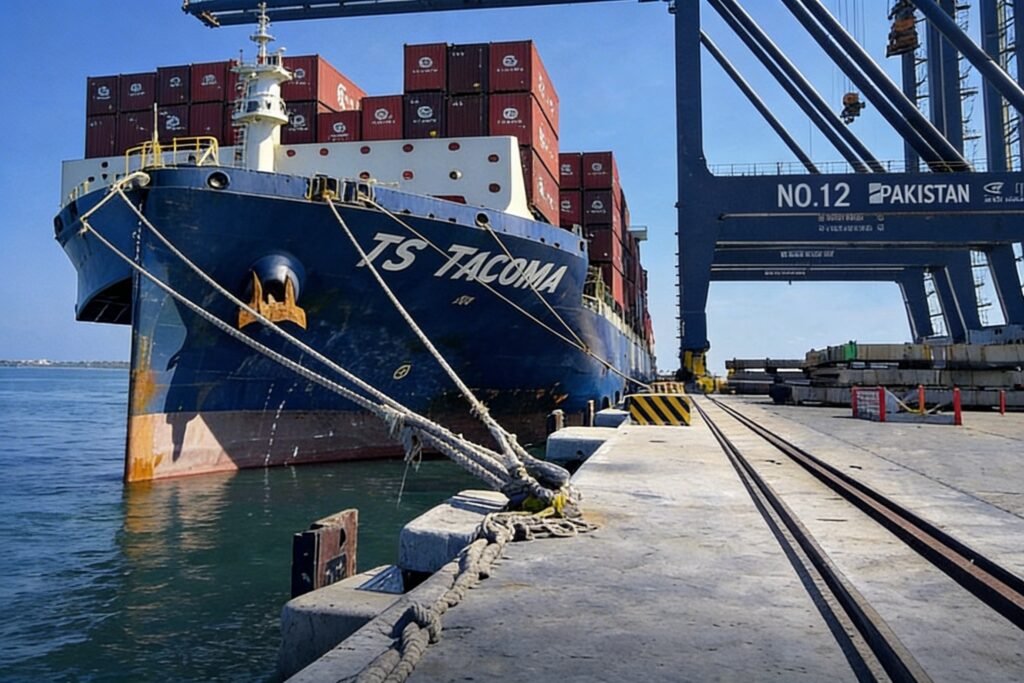
KARACHI: The Karachi Chamber of Commerce and Industry (KCCI) has formally requested the Ministry of Maritime Affairs to urgently intervene and direct shipping lines, terminal operators, and port authorities to waive, suspend, or substantially reduce demurrage and detention charges for consignments that remained stuck at ports solely due to the nationwide goods transporters’ strike from 8th to 17th December 2025.In a letter sent to Federal Minister for Maritime Affairs Junaid Anwar Chaudhry, Chairman Businessmen Group Zubair Motiwala and President KCCI Rehan Hanif highlighted an extraordinary situation due to transporters strike that caused severe financial distress to the trading and industrial community. The strike resulted in a near-complete suspension of cargo movement to and from Karachi Port, Port Qasim, and associated terminals. During this period, import and export consignments remained immobilized at ports and terminals through no fault of the consignees or shippers, leading to the accumulation of heavy demurrage and container detention charges on a daily basis. They said that the prolonged disruption had a crippling impact on supply chains, production cycles, and export commitments. Exporters faced shipment delays, order cancellations, and loss of credibility with international buyers, while importers were unable to clear raw materials and essential inputs required for industrial operations. The demurrage and detention charges imposed during this forced stoppage have become an unbearable financial burden, particularly for small and medium enterprises, and threaten to erode already thin margins in an environment characterized by high energy costs, elevated interest rates, and overall cost pressures, they added.Chairman BMG and President KCCI mentioned that throughout the duration of the strike, KCCI, as the largest chamber of commerce in Pakistan, remained fully engaged in efforts to resolve the crisis. They actively mediated between goods transporters, port stakeholders, and relevant authorities, repeatedly cautioning that the continued paralysis of cargo movement amounted to economic sabotage and would inflict long-term damage on national trade and exports. KCCI’s consistent engagement and advocacy played an important role in facilitating dialogue and restoring normal operations; however, the financial consequences of the disruption continue to persist in the form of accrued demurrage and detention liabilities. They urged the Ministry of Maritime Affairs to intervene immediately and direct shipping lines, terminal operators, and port authorities to waive, suspend, or substantially reduce demurrage and detention charges for consignments that remained stuck at ports solely due to the transporters’ strike. They also requested that extraordinary facilitation measures be undertaken to ensure swift clearance of the backlog of containers so that trade flows may return to normal without additional financial strain on the business community. They firmly believe that timely intervention will not only mitigate the immediate losses suffered by the business community but will also reinforce confidence in the government’s commitment to safeguarding trade and industry during unforeseen crises.

Pakistan’s Foreign Exchange Reserves Surge on IMF Inflows
Pakistan

Pakistan’s Foreign Exchange Reserves Surge on IMF Inflows

Pakistan’s liquid foreign exchange reserves recorded a strong weekly increase in December 2025, driven primarily by fresh inflows from the International Monetary Fund (IMF). The latest data released by the State Bank of Pakistan (SBP) highlights improving external liquidity conditions and renewed confidence in Pakistan’s macroeconomic stabilization efforts. This business blog breaks down the current foreign reserves position, compares it with the previous week, and explains why the IMF disbursement is significant for Pakistan’s economy. Pakistan’s Current Foreign Exchange Reserves Position (as of 12 December 2025) As of 12 December 2025, Pakistan’s total liquid foreign reserves stood at USD 21.09 billion, marking a notable week-on-week increase. In text form, the reserves position is as follows:• Foreign exchange reserves held by the State Bank of Pakistan (SBP): USD 15.89 billion• Net foreign reservesiled exchange reserves held by commercial banks: USD 5.20 billion• Total liquid foreign exchange reserves: USD 21.09 billion Weekly Increase in SBP Reserves During the week ended 12 December 2025, SBP’s foreign exchange reserves rose by USD 1.3 billion, increasing from USD 14.59 billion to USD 15.89 billion. According to SBP, this sharp rise was mainly due to the receipt of SDR 914 million (approximately USD 1.2 billion) from the IMF under: • The Extended Fund Facility (EFF), and• The Resilience and Sustainability Facility (RSF). This inflow significantly strengthened Pakistan’s reserve buffers and improved short-term external financing comfort. Foreign Exchange Reserves Position: Previous Week (as of 5 December 2025) For comparison, Pakistan’s liquid foreign reserves position one week earlier, on 5 December 2025, was as follows: • SBP-held foreign exchange reserves: USD 14.59 billion• Net foreign exchange reserves held by commercial banks: USD 5.03 billion• Total liquid foreign exchange reserves: USD 19.61 billion During that week, SBP’s reserves increased only marginally by USD 12 million, reflecting relatively stable inflows before the IMF tranche was formally accounted for. SBP had already confirmed that the SDR 914 million IMF disbursement was received during that period, with its impact scheduled to appear in the reserves data for the week ending 12 December 2025 which is now fully reflected in the latest figures. Why the IMF Inflow Matters for Pakistan’s Economy The IMF-linked increase in foreign exchange reserves carries several positive implications for Pakistan’s economy, including: • Improved external sector stability, reducing immediate balance-of-payments pressure• Greater confidence in the Pakistani rupee, supporting exchange rate stability• Enhanced investor sentiment, particularly among foreign portfolio and direct investors• Stronger import cover, improving Pakistan’s ability to finance essential imports The rise in reserves also signals continued policy alignment with IMF reform commitments, a key factor closely watched by global financial markets and rating agencies. Outlook: What to Watch Next Going forward, market participants will closely monitor:• Further IMF-related inflows or program reviews• Export performance and remittance trends• SBP’s monetary and exchange rate policy stance• External debt repayments and rollover plans Sustaining reserve accumulation will be critical for Pakistan as it navigates global economic uncertainty and domestic fiscal challenges in 2026.

PSX Hits Fresh Record, Nears 172,000 Milestone
Pakistan

PSX Hits Fresh Record, Nears 172,000 Milestone

KARACHI, Dec 18 — The Pakistan Stock Exchange (PSX) extended its record-breaking rally on Wednesday, nearing 172,000 milestone, with the benchmark KSE-100 Index closing at a new all-time high of 171,961 points after gaining 1,646 points, or 0.97%.The bullish momentum remained robust throughout the session, fueled primarily by better-than-expected current account figures for November, which boosted investor sentiment and triggered fresh buying across major sectors.Fertilizer, banking, and cement stocks led the advance, collectively contributing over 1,500 points to the index. Key performers included ENGRO Holdings, Fauji Fertilizer Company (FFC), United Bank Limited (UBL), Lucky Cement (LUCK), and Bank AL Habib (BAHL).Market participation stayed healthy, with total traded volume reaching 947.7 million shares and turnover hitting Rs 54 billion. TPL REIT Fund I (TPLRF1) topped the volume charts with around 75.8 million shares changing hands.Corporate developments added to the positive vibe. Maple Leaf Cement Factory (MLCF) announced a public offer to acquire an additional 11.72% stake in Pioneer Cement at Rs 478.43 per share, complementing an earlier share purchase agreement for 58.03%, taking its intended total holding to 69.75%.In another notable deal, the Nishat Group signed an SPA to acquire up to 75.69% of Rafhan Maize Products Limited (RMPL), a leading maize-based food processor with annual sales of approximately Rs 75 billion. DG Khan Cement (DGKC) is set to secure a significant 32.71% stake as part of the transaction, underscoring rising M&A activity in the market.Analysts noted that sustained foreign inflows and improving macroeconomic indicators continue to support the bullish trend.Outlook: The index may push toward further highs in Thursday’s session, the last of the week. However, a decisive weekly close above the psychological 170,000 level will be crucial to confirm the uptrend and maintain investor confidence.

Scroll to Top