Pakistan

Sindh Govt, US Delegation Discuss Security Cooperation in High-Level Virtual Meeting
Pakistan

Sindh Govt, US Delegation Discuss Security Cooperation in High-Level Virtual Meeting

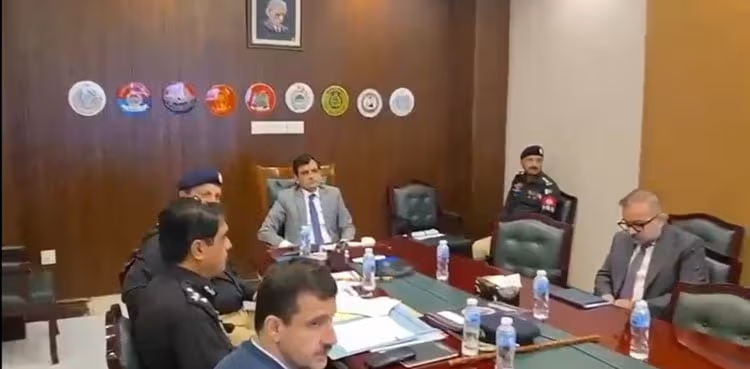
The Sindh government, the Home Department, and a US delegation held a high-level virtual meeting to discuss law and order, public safety, and measures to strengthen the operational capacity of the Sindh Police. The meeting brought together Additional Chief Secretary Home Sindh Muhammad Iqbal Memon, Inspector General of Police Sindh Javed Alam Odho, Special Secretary Home Saeed Sheikh, DIG Faizullah Korejo, and Bilal Sheikh. Representatives of the US government and the International Narcotics and Law Enforcement Affairs (INL) bureau also joined the session virtually. Longstanding Partnership Appreciated Participants appreciated the longstanding partnership between the Sindh government, Sindh Police, and the United States in supporting law enforcement and public safety initiatives. The meeting reviewed ongoing cooperation and discussed ways to further strengthen institutional capacity and policing capabilities across the province. Focus on Security Challenges in Riverine Areas Officials discussed security challenges in the riverine (Katcha) areas of Sindh and reviewed measures against criminal networks operating in those regions. The participants stressed the importance of modern policing techniques, improved operational capabilities, and enhanced mobility for law enforcement agencies to respond effectively to emerging security threats. Strengthening Institutions and Capacity Building Additional Chief Secretary Home Muhammad Iqbal Memon said assistance programmes are not limited to providing resources but also focus on institutional strengthening and capacity building. He emphasized the need to equip law enforcement agencies with the tools, training, and expertise required to address modern security challenges. Commitment to Public Safety and Rule of Law The meeting reaffirmed a shared commitment to public safety, the rule of law, and transparent policing practices. IG Sindh Javed Alam Odho noted that international cooperation remains essential in addressing evolving security threats and ensuring effective law enforcement. Agreement to Enhance Cooperation Participants agreed to further strengthen collaboration between the Sindh Police, the Home Department, and international partners. The meeting concluded with participants expressing confidence that continued cooperation would contribute to improved security, greater public trust, and a more stable law and order environment across Sindh.

Saudi-Pak Business Council show interest in motorway infrastructure investment
Pakistan

Saudi-Pak Business Council show interest in motorway infrastructure investment

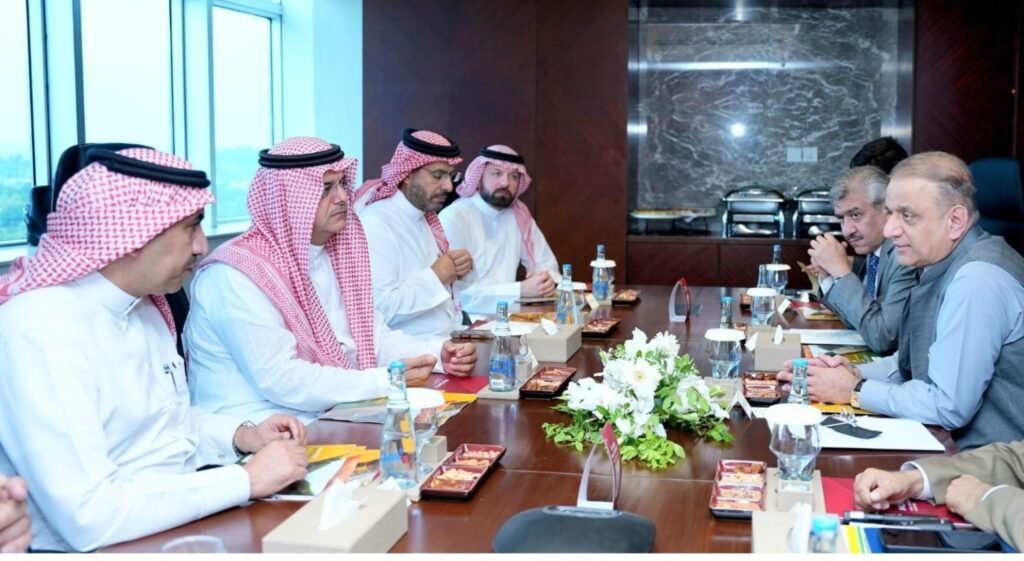
ISLAMABAD: Chairman of the Saudi-Pak Business Council, Prince Mansour Bin Muhammad Al Saud, on Friday expressed keen interest in exploring investment opportunities in Pakistan’s motorway infrastructure during a high-level meeting with Federal Minister for Communications Abdul Aleem Khan. Saudi-Pak Business Council show interest in motorway infrastructure investment. The meeting discussed matters of mutual interest and the strategic promotion of bilateral relations including investment in Motorways of Pakistan, said a press release. During the meeting, Abdul Aleem Khan extended invitation to the Saudi Pak Business Council to invest in Pakistan’s rapidly growing infrastructure, specifically highlighting the construction of new Motorways and key transport networks currently underway across the country. Focusing on specific ventures ripe for foreign capital, Federal Minister for Communications offered strategic partnerships in the M-6 Sukkur-Hyderabad, M-10 Karachi Port and M-13 Kharian-Rawalpindi Motorway Projects. He emphasized that these particular routes are highly viable, commercially lucrative and represent prime investment opportunities for the Saudi Business Community due to their significant commercial importance. Chairman Saudi Pakistan Business Council Prince Mansour bin Muhammad Al Saud expressed strong interest on behalf of the Saudi Business Council to explore partnership and investment opportunities in these specific Motorway Projects, affirming that the Council is well-positioned to collaborate extensively in Pakistan’s Communications and infrastructure sectors. During the dialogue, Abdul Aleem Khan assured the delegation that Saudi Investors would be provided with highly viable and profitable investment models, noting that the country’s expanding road network plays a pivotal role in boosting regional trade activities. He reiterated that Pakistan and Saudi Arabia share long-standing, time-tested and deep-rooted fraternal ties, adding that every Pakistani shares a profound spiritual and emotional bond with the Kingdom of Saudi Arabia which has consistently demonstrated goodwill towards Pakistan. Concluding the meeting, Chairman Saudi Pakistan Business Council Prince Mansour bin Muhammad Al Saud assured the Federal Minister for Communications Abdul Aleem Khan of full cooperation through his Forum and expressed great optimism regarding the outcomes of his visit to Pakistan. Abdul Aleem Khan reiterated that he highly valued Saudi Arabia’s collaboration in major national projects, emphasizing that the platform of the Saudi Pakistan Business Council will continue to strengthen and solidify the bilateral and economic ties between the two brotherly nations. The Federal Secretary for Communications and high raking officers from both sides where also present in the meeting.

PIA Resumes Direct Islamabad-Beijing Flights from July 3
Pakistan

PIA Resumes Direct Islamabad-Beijing Flights from July 3

Pakistan International Airlines (PIA) has announced the resumption of its direct flight service between Islamabad and Beijing from July 3. The move restores an important air link between Pakistan and China and strengthens travel connectivity between the two countries. PIA said the route will serve growing demand from students, business travelers, tourists, and families. The airline expects the direct service to provide a faster and more convenient travel option compared to connecting flights. Students and Business Travelers to Benefit The restored route is likely to benefit thousands of Pakistani and Chinese students studying in each other’s countries. Educational institutions and student groups have welcomed the decision, especially ahead of the new academic session. Industry experts believe the direct flights will make travel easier for students, researchers, and academics. They also expect the service to support educational cooperation between Pakistan and China. Business professionals are also expected to benefit from improved connectivity. The direct route will help reduce travel time and support growing commercial ties between the two countries. Tourism Sector Sees Positive Impact The resumption of direct flights is expected to boost tourism as well. Families and tourists planning summer travel will have more flexibility and convenience. Travel agencies and tourism operators have reported strong interest since PIA announced the route’s return. Many travelers have praised the decision, saying it will make travel more affordable and efficient. PIA Reaffirms Commitment to Bilateral Connectivity PIA management said the airline remains committed to strengthening links between Pakistan and China. The national carrier emphasized its role in supporting tourism, trade, education, and cultural exchanges. According to the airline, the restored Islamabad-Beijing service will help increase people-to-people contacts and further strengthen relations between the two countries. Strengthening Pakistan-China Relations The return of the Islamabad-Beijing route marks another step toward improving transportation links between Pakistan and China. The service highlights PIA’s efforts to facilitate travel and support the longstanding friendship and strategic partnership between the two nations.

Govt Approves Faceless Digital Tax System to Curb Evasion and Reduce Corruption
Pakistan

Govt Approves Faceless Digital Tax System to Curb Evasion and Reduce Corruption

Prime Minister Shehbaz Sharif has approved in principle a new centralized digital tax operating model aimed at reducing corruption, improving tax enforcement, and minimizing direct interaction between taxpayers and tax officials. The reform, known as Pakistan’s New Tax Operating Model, will be implemented in three phases beginning in October. The system draws inspiration from digital tax frameworks already operating in countries such as United Kingdom, Australia, Netherlands, Singapore and India. Officials say the new model will create a “faceless” tax administration where audits, assessments, and taxpayer interactions will take place through digital platforms rather than physical meetings. Tax Data Reveals Massive Under-Reporting The reform follows findings by Pakistan Revenue Automation Limited, which identified widespread under-reporting and significant leakages in the tax system. According to official data, 8,697 individuals holding a combined Rs750 billion in bank deposits reported zero income in their tax returns. Authorities also found that nearly 98.9 percent of individuals with high bank deposits had materially under-reported their financial transactions. The real estate sector showed similar trends. Around 80 percent of major property buyers who maintained active filer status were found to have systematically under-declared property transaction values to reduce their tax liabilities. Three Separate Wings to Replace Existing Structure Currently, a single tax officer often handles the entire tax process, including identification, notices, assessments, and recoveries. Officials believe this concentration of authority creates opportunities for taxpayer harassment, under-assessment, and compromised recoveries. Under the new model, Inland Revenue operations will be divided into three independent wings with clearly defined responsibilities. National Faceless Audit Wing The National Faceless Audit Wing (NFAW) will operate from Islamabad through a fully digital and anonymous system. This wing will conduct risk-based audits, monitor withholding and advance taxes, and use a Central Data Hub to analyze taxpayer information. Cases will be assigned through algorithms rather than manual selection. Officials said taxpayers will not be allowed to visit the NFAW or submit documents physically. The wing will also have no authority to issue tax demands or recover revenue. National Assessment Wing The National Assessment Wing (NAW) will handle assessment orders, show-cause notices, refund approvals, and exemption matters. The wing will function digitally and anonymously. Hearings will be conducted online, although dedicated hearing rooms will be available at tax offices nationwide. The NAW will not conduct audits or field enforcement activities. Field Operation Wing The third component, the Field Operation Wing, will focus on enforcement. Its responsibilities will include revenue recovery, taxpayer registration, prosecution, field verification, and tax-base expansion. However, it will not have powers to assess taxes or alter tax demands. Easier Filing and Greater Transparency The government plans to appoint around 200 officers to the audit and assessment wings through a merit-based process. These officers will receive market-based salaries and operate under enhanced monitoring systems. Officials believe the reforms will make tax compliance easier for honest taxpayers while tightening enforcement against tax evaders. The new system will provide pre-populated tax returns using data from salaries, bank accounts, property records, and vehicle ownership. Authorities expect this feature to reduce tax filing time from hours to just minutes. In addition, taxpayers will receive a single integrated account that combines income tax, sales tax, and federal excise obligations within one digital platform. The system will also introduce time-bound processing and automated escalation mechanisms to improve transparency and predictability. The government expects the faceless tax model to reduce discretionary powers, eliminate direct contact between taxpayers and officials, and strengthen confidence in Pakistan’s tax administration system.

130 Million Pakistani Women Cannot Be Excluded from Economic Decision-Making: FPCCI
Pakistan

130 Million Pakistani Women Cannot Be Excluded from Economic Decision-Making: FPCCI

Lahore: President of the Federation of Pakistan Chambers of Commerce and Industry (FPCCI), Atif Ikram Sheikh, and Vice President, Qurrat-ul-Ain, while addressing a press conference at the launch of the Pakistan Women Economic Charter 2035, emphasized that Pakistan’s nearly 130 million women constitute 52 percent of the country’s population and represent one of its most valuable sources of human capital. They asserted that such a significant segment of the population cannot be excluded from the national economic decision-making process. They stated that women in Pakistan are not a minority group; rather, they are the nation’s largest economic force and an indispensable pillar of its human resource base. However, despite their critical contribution to the economy, meaningful consultation with women business leaders, women chambers of commerce, women industrialists, exporters, and representative organizations of businesswomen was largely absent during the formulation of the national budget. “We are not seeking special privileges or concessions; we are demanding rightful representation,” they remarked. Speaking on the occasion, Qurrat-ul-Ain highlighted the absence of an effective institutional mechanism to systematically incorporate women’s economic priorities into the budget-making process and broader economic policymaking framework. She urged the Prime Minister of Pakistan and the Federal Minister for Finance to ensure the formal inclusion of women’s representative leadership in all future budget consultations, economic policy formulation, development planning, and economic reform initiatives. Qurat-ul-Ain stressed that the principle of “No decision about women without the participation of women” must be adopted as a cornerstone of national policy. She maintained that economic decisions affecting women cannot be made effectively or equitably without their direct involvement and representation. She further stated that the Pakistan Women Economic Charter 2035 is not merely a policy document but a comprehensive roadmap for Pakistan’s economic growth, competitiveness, export expansion, investment promotion, and long-term prosperity. The FPCCI Vice President also proposed the establishment of a National Women Economic Council under the patronage of the Prime Minister of Pakistan. The proposed council would comprise representatives from the Ministry of Finance, Planning Commission, State Bank of Pakistan, FPCCI, Women Chambers, the private sector, and other relevant stakeholders. Its primary objective would be to institutionalize women’s participation and ensure that their voices are consistently reflected in national economic policymaking and decision-making processes. The FPCCI leadership reaffirmed its commitment to advancing women’s economic empowerment and promoting inclusive growth by ensuring that women play a central role in shaping Pakistan’s economic future.

‘IMF Programme is no Excuse to Squeeze Businesses and the Public through budget; Business Community
Pakistan

‘IMF Programme is no Excuse to Squeeze Businesses and the Public through budget; Business Community

Karachi: The Pakistan Business Forum (PBF) says the success of the upcoming budget will depend on whether the government can raise revenue from under-taxed sectors instead of placing most of the burden on the already documented business community. Talking to ET on thursday PBF Chief Organiser Ahmad Jawad said that Pakistan’s economic growth has remained stuck at 3 percent average for the past four years, highlighting the urgent need for policies that stimulate investment, production, and employment. “The decision to enter the IMF programme was the government’s own choice. However, the IMF does not require governments to place an additional burden on the business community and the public every year. If the economy is to move forward, meaningful relief measures must be introduced,” he stated. Jawad emphasized that Pakistan’s cost of doing business is currently around 34 percent higher than many countries in the region, making local industries less competitive. He warned that the imposition of new taxes in the upcoming budget could further slow economic activity and push the economy towards stagnation. He also stated that the Ministry of Commerce, in a written submission to the National Assembly Standing Committee on Commerce, acknowledged that Pakistan’s high cost of doing business stems from several structural challenges, including an anti-export bias in the tax regime, limited access to finance, elevated energy costs that undermine industrial competitiveness, and inadequate trade facilitation measures that increase compliance burdens and transaction costs. PBF official stated that these official findings validate the concerns repeatedly raised by the business community and underscore the need for meaningful reforms in the upcoming budget to enhance competitiveness, boost exports, attract investment, and accelerate economic growth. The forum also proposed the abolition of the petroleum levy and its replacement with an 18 percent General Sales Tax (GST) on petroleum products to create a more transparent taxation framework in the new finance bill scheduled on June 10th. Highlighting the importance of the agricultural sector, Jawad described cotton as Pakistan’s “white gold” and called for targeted incentives and relief measures to revive cotton production and strengthen the textile value chain. He further stressed the need for concrete budgetary initiatives to promote the Blue Economy and modernise the agriculture sector, both of which have significant potential to drive sustainable growth and increase exports. “The government must decide whether investment capital should flow towards industry and exports or continue to be diverted into real estate and speculative activities,” the PBF stated. The forum also recommended the introduction of a simplified one-page tax return system instead of the existing lengthy and complex tax filing process. According to PBF, a simplified tax return would encourage greater compliance and help broaden the national tax base. Addressing Prime Minister Shehbaz Sharif, CO PBF Jawad said, “The business community still has high expectations from your leadership. We hope the upcoming budget will provide a clear direction and restore confidence by delivering policies that support growth, investment, and economic stability.” PBF reiterated that a growth-oriented budget, focused on reducing business costs, encouraging productive investment, supporting agriculture, and simplifying taxation, is essential for achieving sustainable economic recovery and long-term prosperity.

PCDMA Demands GST Cut to 16%, FTR Revival & Customs Reforms Ahead of Budget 2026-27
Pakistan

PCDMA Demands GST Cut to 16%, FTR Revival & Customs Reforms Ahead of Budget 2026-27

KARACHI: The Pakistan Chemicals & Dyes Association (PCDMA) has urged the Federal Board of Revenue (FBR) to ease the compliance burden on businesses, cut the General Sales Tax (GST) rate, and restore protections for importers in its pre-budget proposals submitted ahead of the federal budget 2026-27. PCDMA Chairman Salim Valimuhammad warned that mounting compliance requirements and aggressive audits are steadily driving taxpayers into the informal economy. “People generally want to pay taxes, but due to limited awareness and tech-savviness they make honest mistakes — and FBR takes advantage of that,” he said, stressing that officers should guide taxpayers instead of issuing harsh notices. “Taxpayers generally want to comply with tax laws, but complicated procedures and lack of guidance often result in genuine mistakes,” Mr. Valimuhammad said, adding that the FBR should adopt a facilitative and educational approach instead of relying on notices and enforcement measures. Among the association’s key recommendations is a reduction in the GST rate from 18 per cent to 16pc, followed by a gradual transition to single-digit taxation. Mr. Valimuhammad argued that lower tax rates would improve compliance, broaden the tax base and ultimately increase government revenues. The PCDMA chairman also called for the restoration of the Final Tax Regime (FTR) for commercial importers and the return of audit exemptions that were previously linked to the payment of additional sales tax. He said the withdrawal of these protections had increased uncertainty and compliance costs for importers. To ease liquidity constraints faced by traders and wholesalers, PCDMA proposed restoring Section 8B facilities for commercial importers. As an interim measure, he suggested allowing businesses to adjust up to 95pc of output tax against input tax, with only 5pc payable in cash. Highlighting concerns over fake invoicing, the PCDMA chief recommended reducing the further tax rate from 4pc to 1pc, arguing that a lower rate would encourage compliance and reduce incentives for fraudulent practices. On income tax, PCDMA proposed lowering withholding tax on local supplies of raw materials from the current rates of 5pc and 5.5pc to 2pc and 2.5pc respectively. He maintained that lower withholding taxes would encourage businesses to operate within the documented economy. The association also objected to what it described as unequal tax treatment between commercial and industrial importers under Section 148 of the Income Tax Ordinance. Mr. Valimuhammad said identical imports should be taxed uniformly, regardless of whether they are imported by traders or manufacturers. Among customs-related proposals, the PCDMA chairman called for the abolition of the Rs500 WeBOC token fee on goods declarations, arguing that importers were effectively paying duplicate charges after the introduction of the Pakistan Single Window (PSW) system. He further sought the restoration of NTN-based self-clearance facilities for commercial importers, saying the withdrawal of the facility had increased delays and administrative bottlenecks at customs offices. PCDMA also recommended discontinuing the Export Facilitation Scheme (EFS), claiming it was vulnerable to misuse and revenue leakage. Instead, he urged the government to strengthen and expedite the tax refund system to support genuine exporters. The proposals have been submitted to the FBR and are expected to be discussed during pre-budget consultations with trade and industry stakeholders ahead of the federal budget announcement.

Pakistan Upgrades Reko Diq Security While Govt Promises Gas Tariff Relief in July
Pakistan

Pakistan Upgrades Reko Diq Security While Govt Promises Gas Tariff Relief in July

Pakistan and Barrick Mining Corporation are working together to upgrade security arrangements at the Reko Diq Copper-Gold Project in Balochistan. The review comes in response to the prevailing security situation and will result in increased security costs. A Barrick Gold team is currently in Pakistan to discuss the upgrades in detail. OGDCL CEO Confirms Security Talks Ahmad Hayat Lak, CEO of Oil and Gas Development Company Limited (OGDCL) and a key Reko Diq partner, confirmed the ongoing discussions. He said the project agreement already includes provisions for security arrangements. Both sides are now conducting a formal review of security arrangements and procurement plans. Lak stressed that Pakistan, as the host country, bears sole responsibility for protecting the site. Lenders Express Confidence in Project Lak said lenders expressed confidence in existing security protocols during a recent meeting held in Canada. Financial institutions completed their own due diligence before committing funds to the project. He added that new financiers are also showing strong interest in joining the venture. Barrick Delegation Visits Islamabad Petroleum Minister Ali Pervaiz Malik said Barrick Executive Chairman John L. Thornton recently led a high-level delegation to Islamabad. The delegation met with government officials to discuss the security situation and procurement strategy. It also explored the acquisition of advanced heavy-duty equipment through competitive bidding. The delegation further discussed expanding the project’s lending and credit structures. The minister said it was reassuring that Barrick remained committed to Reko Diq despite global and local challenges. Gas Tariff Relief Expected from July 1 Petroleum Minister Ali Pervaiz Malik hinted at relief in gas tariffs for domestic consumers in the upcoming pricing review from July 1. He told journalists to expect good news on gas prices instead of the increase demanded by gas companies. The government has already decided to charge Rs2,000 per million British thermal units (mmBtu) for gas supplied to power generation. This replaces the earlier rate of Rs3,500 per mmBtu applied in the case of LNG. A formal summary will be moved to the federal cabinet for implementation shortly. Local Gas Production Increased by 400 MMCFD The minister said local gas production increased by 400 million cubic feet per day in response to supply disruptions. The government has also prepared proposals to address the chronic circular debt problem in the gas sector. Officials are working to align local gas pricing with market realities while shielding consumers from higher costs. IMF Talks on Refinery Upgrades Progress Petroleum Secretary Hamed Yaqoob Sheikh said the division is optimistic about receiving a positive IMF response on concessions for upgrading local oil refineries. He said the minister made a strong case before the IMF during recent discussions. Sheikh warned that failure to modernise Pakistan’s refineries would not serve the country’s long-term interest.

Karachi, June 05: Meezan Bank’s Easy Home Housing Finance has achieved a significant milestone under the Prime Minister’s Apna Ghar Housing Finance Program – “Ghar Ho Tu Apna”, surpassing PKR 1 billion in housing finance disbursements since the launch of the initiative. This achievement reflects Meezan Bank’s strong commitment to supporting the Government of Pakistan’s vision of promoting affordable homeownership and expanding access to housing finance for underserved segments of society. As Pakistan’s leading Islamic bank, Meezan Bank remains dedicated to making homeownership more accessible through Shariah-compliant financing solutions that address the needs of salaried individuals and low-to-middle-income households. The Bank is actively offering housing finance facilities under the program through its network of over 350 designated branches across Pakistan, with a particular focus on enabling lower-income and salaried customers to realize their dream of owning a home. Through its customer-centric and Shariah-compliant financing approach, Meezan Bank continues to play a key role in advancing financial inclusion and supporting the development of the housing sector in the country. The milestone also contributes to the State Bank of Pakistan’s broader objective of promoting affordable housing and expanding access to formal housing finance, supporting national efforts aimed at financial inclusion, economic development, and improved living standards.
Editor pick, Pakistan

Meezan Bank Surpasses PKR 1 Billion in Housing Finance Disbursements under Prime Minister’s Apna Ghar Program

Karachi, June 05: Meezan Bank’s Easy Home Housing Finance has achieved a significant milestone under the Prime Minister’s Apna Ghar Housing Finance Program – “Ghar Ho Tu Apna”, surpassing PKR 1 billion in housing finance disbursements since the launch of the initiative. Read More: https://theboardroompk.com/pakistans-pine-nut-chilgoza-exports-to-china-nearly-double-in-two-years/ This achievement reflects Meezan Bank’s strong commitment to supporting the Government of Pakistan’s vision of promoting affordable homeownership and expanding access to housing finance for underserved segments of society. As Pakistan’s leading Islamic bank, Meezan Bank remains dedicated to making homeownership more accessible through Shariah-compliant financing solutions that address the needs of salaried individuals and low-to-middle-income households. The Bank is actively offering housing finance facilities under the program through its network of over 350 designated branches across Pakistan, with a particular focus on enabling lower-income and salaried customers to realize their dream of owning a home. Through its customer-centric and Shariah-compliant financing approach, Meezan Bank continues to play a key role in advancing financial inclusion and supporting the development of the housing sector in the country. The milestone also contributes to the State Bank of Pakistan’s broader objective of promoting affordable housing and expanding access to formal housing finance, supporting national efforts aimed at financial inclusion, economic development, and improved living standards.

El Nino and Dry Weather Threaten Asia's Food Supply as Crop Prices Surge
Pakistan

El Nino and Dry Weather Threaten Asia’s Food Supply as Crop Prices Surge

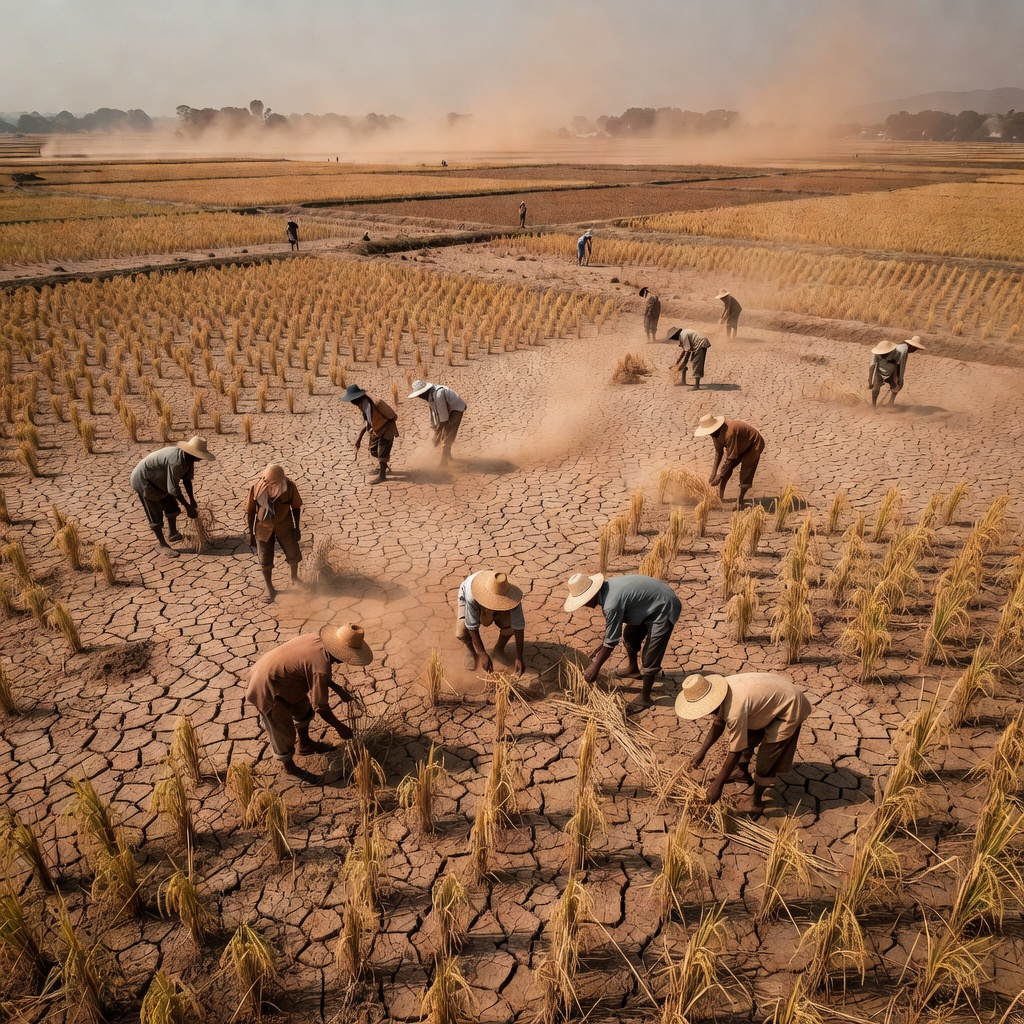
Dry weather is disrupting crop planting across Asia and raising serious concerns about regional food supplies. Farmers from India to Indonesia are reducing planting as hot temperatures and below-normal rainfall damage crops. Analysts and traders warn the situation could worsen significantly in the months ahead. El Nino Set to Deliver a Second Blow One of the strongest El Niño patterns on record is expected to develop in the second half of 2026. The weather phenomenon brings hot and dry conditions to Asia while triggering excessive rainfall in the Americas. Climate change is making the impact of El Nino even more severe. Farmers are already struggling with fertiliser and diesel shortages caused by the Iran war, and El Nino-driven dryness adds another layer of pressure. Expert Warns Early Signs Are Already Visible US-based meteorologist Chris Hyde of satellite firm SkyFi said El Nino’s global impact begins in Southeast Asia, India, and Australia before spreading to the Americas. Hyde confirmed that high-resolution satellite imagery already shows early signs of drought across parts of Asia. He warned of wider downstream consequences for North and South America as conditions develop. India’s Monsoon Forecast Cut Again India’s meteorological department recently reduced its forecast for the four-month monsoon season. The monsoon delivers around 70% of India’s annual rainfall. A New Delhi-based dealer at a global trade house said temperatures are well above normal and conditions are unfavourable for timely sowing of summer crops. He warned of possible below-normal rainfall and prolonged dry spells even after the monsoon arrives. India grows rice, soybeans, pulses, sugarcane, and corn during the summer season. Southeast Asia Farmers Fear Crop Losses Dryness is reducing rice and palm oil yields across Southeast Asia. Nerawat Oramah, a 47-year-old farmer in Thailand’s Chainat province, said everyone is worried about drought. He said he may only get one harvest instead of two this season. Thailand and the Philippines plant their main rice crops in June and July. Vietnam and Indonesia are currently sowing their second-season crops. Indonesia’s Java island and parts of northern Sumatra, south Kalimantan, and Sulawesi have seen no rain for more than 10 days. Food Prices Rise Sharply Wheat prices have risen around 20% since the start of 2026, driven largely by drought concerns in key US growing regions. Rice prices at major Southeast Asian export hubs have climbed around 15% over the past month. A Singapore-based trader said rice prices are rising sharply despite no major shortage yet. He warned that India, which controls 40% of global rice exports, may introduce export restrictions if early monsoon conditions disappoint. India currently holds stockpiles several times larger than its domestic needs. Fertiliser Shortage Could Cut Rice Output by 20% KKP Research, a unit of Thailand’s Kiatnakin Phatra Bank, said strong reservoir levels could cushion some of the drought’s impact. However, the bank expressed greater concern about fertiliser supply. It estimated that a fertiliser shortage could reduce rice production by up to 15 to 20% in the worst case. Australia Faces El Nino Risk After Late Sowing Recent rains over dry Australian farmland triggered late wheat sowing, but growers remain cautious about El Nino. Australia’s Bureau of Meteorology predicts cropping areas in New South Wales and Queensland will receive 20 to 40 millimetres less rain than usual over the next three months. Farmer John Lowe near Burcher in central New South Wales said his total cropping area remains around 30% smaller than it could have been. Americas and China Face Different Outlook El Nino is expected to bring more rainfall to the Americas and remain largely neutral for China and the Black Sea region. Agricultural meteorologist Drew Lerner of World Weather Inc said there is little statistical correlation between El Nino and US summer weather. He noted that some El Nino years bring slightly more moisture to the US but not necessarily above-normal rainfall.

Scroll to Top