Pakistan

Militants Strike FC Headquarters in Peshawar; Three Officials Lose Lives
Pakistan

Militants Strike FC Headquarters in Peshawar; Three Officials Lose Lives

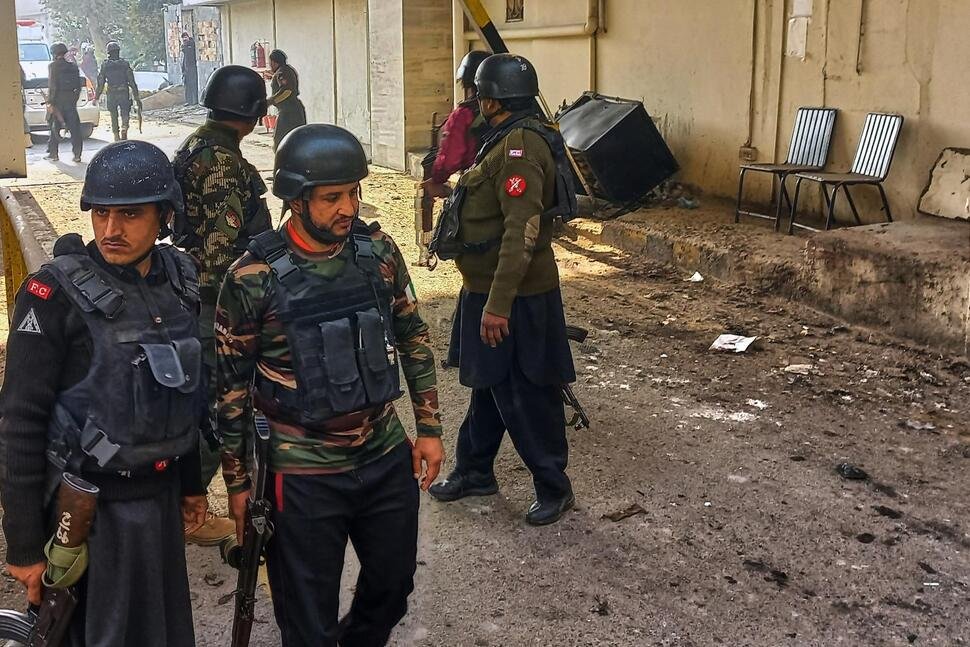
Early Monday morning, Peshawar once again faced a frightening reminder of the security challenges confronting the region. Around 8 am, militants launched an attack on the Federal Constabulary (FC) headquarters located in the busy Saddar area. According to officials, three attackers approached the main entrance, where one of them detonated an explosive vest at the gate. The remaining two attempted to enter the compound but were swiftly taken down by security personnel. Unfortunately, three FC officials stationed at the gate were martyred in the blast, while two others sustained injuries. Rescue teams and ambulances arrived quickly, shifting the wounded to nearby hospitals for urgent medical treatment. The FC headquarters is not just an administrative facility — it includes barracks, residential quarters, and a hospital, making the attack particularly alarming. Security forces immediately cordoned off the area and launched a clearance operation to ensure no additional threats remained. Traffic on Saddar Road was temporarily halted as part of the emergency response. The incident prompted strong condemnation from national and provincial leaders, who praised the quick reaction of the security forces. They emphasized that the attackers failed to achieve their objective due to the alertness and bravery of the personnel on duty. Authorities have also reaffirmed their support for the families of the martyred and injured, stressing that such acts of violence will not deter efforts to maintain peace. This attack serves as another stark reminder of the sacrifices made by frontline forces and the continued need for vigilance in the fight against terrorism.


Khyber Pakhtunkhwa Leads the Way with Pakistan’s First Digital Payments Law
Pakistan

Khyber Pakhtunkhwa Leads the Way with Pakistan’s First Digital Payments Law

Khyber Pakhtunkhwa (K‑P) is poised to become a trailblazer in Pakistan’s digital economy after Chief Minister Sohail Afridi approved the “Khyber-Pakhtunkhwa Digital Payments Act 2025.” This landmark legislation will be taken to the provincial cabinet for formal ratification, making K-P the first province to set up a legal framework specifically for digital payments. Under the new law, all government departments, businesses, and service providers will be required to switch to QR code–based payments. This move is meant to not only make transactions more convenient and efficient but also increase transparency and reduce the reliance on cash. One of the most ambitious and socially impactful aspects of the Act is a two-year exemption: informal or previously undocumented businesses that start accepting QR-based payments under the new law will not be hit with new direct sales tax immediately. This is a smart way to move micro-entrepreneurs into the formal economy without scaring them off with sudden tax burdens. But, if a business refuses to accept digital payments—or tries to charge extra for QR code payments—it will be breaking the law. To make this digital shift work, the government is planning to build out public Wi-Fi zones and offer digital services in markets and commercial areas. They’re also going to include financial and digital literacy lessons in schools, while setting up district-level teams to train businesses and help them adopt the new system. Afridi says that this law isn’t just about payments — it’s a major step toward a “cashless model economy.” He believes that encouraging digital payments will reduce corruption, stabilize revenue collection, and support data-driven governance. All of this, he argues, will help restore public trust in government institutions and drive K‑P’s digital transformation forward.

Pakistan’s 5G Rollout: Industry Demands Lower Taxes to Speed Adoption
Pakistan, Tech

Pakistan’s 5G Rollout: Industry Demands Lower Taxes to Speed Adoption

As Pakistan moves closer to launching 5G services, telecom authorities are stressing the need for major tax reductions to ensure the technology can be adopted smoothly and at scale. The Pakistan Telecommunication Authority (PTA) has urged the government to lower duties on telecom equipment and raw materials, warning that the current tax structure could slow down progress. The government has already set an ambitious target to auction the 5G spectrum by February 2026, a timeline aimed at accelerating the country’s shift toward advanced digital connectivity. With nearly 196 million mobile users and 148 million broadband subscribers, Pakistan has a strong base that could benefit significantly from 5G-enabled services. The arrival of 5G is expected to bring major transformations in everyday digital usage. Features such as e-SIMs, NFC-based payments, barcode banking, nano-finance, and even wireless charging are likely to become more common once smartphones with advanced chips and processors enter the market. However, a major challenge remains: less than 5% of mobile phones in Pakistan currently support 5G. Telecom experts emphasize that affordability will play a crucial role in determining how quickly consumers embrace the new technology. If 5G-enabled smartphones remain expensive, adoption will be slow. Local manufacturers are therefore being encouraged to start integrating modern chipsets so the market can be ready when 5G officially arrives. Industry groups highlight another major hurdle: a large portion of the population still uses basic phones. Estimates suggest that around 40% of mobile users rely on feature phones, while nearly 10% do not own a mobile phone at all. Even so, local production remains strong, with around 1.2 million smartphones and 1.5 million feature phones being manufactured each month. To prepare the market, the PTA is calling for significant tax reforms. These include reducing duties on imported components—some of which are taxed at nearly 20%—and lowering levies on telecom infrastructure. According to officials, making smartphones more affordable will increase internet penetration, which in turn will boost economic activity and generate greater revenue for the government in the long run.

Lower Phone Prices Ahead? PTA Favors Tax Reduction on Imports
Pakistan

Lower Phone Prices Ahead? PTA Favors Tax Reduction on Imports

The Pakistan Telecommunication Authority (PTA) has come out in support of reducing taxes on mobile phones brought into the country. This move aims to make smartphones more affordable for everyday users across Pakistan. According to Amer Shahzad, Director-General (Wireless – Licensing) at PTA, the organization itself doesn’t impose these taxes — that responsibility lies with the Federal Board of Revenue (FBR). He also clarified that PTA staff pay the same import taxes as everyone else; there are no free or tax-exempt phones for employees. High import duties have long pushed the cost of smartphones out of reach for many Pakistanis. Lowering these taxes could bring several benefits: reduce the financial burden on students and lower-income families, discourage smuggling, increase legal imports, and ultimately boost mobile usage. More affordable devices mean broader internet access, which in turn supports growth in the telecom industry. While PTA doesn’t set tax rates, its public support for tax relief sends a powerful message. The authority’s stance underscores its commitment to both affordability and transparency. By making mobile devices cheaper and more accessible, Pakistan can foster greater digital inclusion and fuel long-term growth in its technology ecosystem.

PM’s Committee Moves to Document Gemstone Trade and Boost Exports
Pakistan

PM’s Committee Moves to Document Gemstone Trade and Boost Exports

Islamabad: A meeting of the Prime Minister’s Committee on Gemstone Policy was held today, chaired by Special Assistant to the Prime Minister, Haroon Akhtar Khan. Minister of State for Finance and Railways Bilal Azhar Kayani and Adviser to the Prime Minister Rana Ihsan Afzaal also attended the meeting. During the briefing, it was highlighted that Pakistan’s actual gemstone exports remain undocumented and will soon be formally registered. The Committee noted that nearly half of the total gemstone output is wasted due to outdated mining practices and obsolete technology. The Committee further observed that 30–40% of precious stones are lost because of non-scientific blasting and drilling methods. It was also emphasized that a significant portion of gemstones is exported in raw form without value addition, reducing Pakistan’s export potential. The Committee pointed out that the sector faces serious challenges due to the lack of international cooperation and investment. Haroon Akhtar Khan stated that the use of modern mining technologies can substantially enhance both gemstone production and exports. He added that comprehensive value addition to gemstones could multiply export figures. Pakistan currently holds an undocumented export potential of USD 2 billion in the gemstone sector, while only USD 7 million worth of gemstone exports are formally recorded at present. Haroon Akhtar Khan also noted that nephrite exports remain largely undocumented and directed stakeholders to present a clear five-year export analysis for the gemstone sector.

Cloudflare Outage Shuts Down Pakistan Online — Urgent Need for Local Internet Strength
Pakistan

Cloudflare Outage Shuts Down Pakistan Online — Urgent Need for Local Internet Strength

A recent Cloudflare outage that disrupted digital services nationwide has once again underscored Pakistan’s deep dependence on foreign internet infrastructure and highlighted the need for a comprehensive national resilience strategy. Officials from the Federal Ministry of IT and Telecommunication (ITT) told The Express Tribune that Pakistan maintains a 24/7 vigilance system through the National Cyber Emergency Response Team (NCERT). While the system continuously monitors cyber risks, authorities offered limited clarity on the country’s preparedness for failures originating in global networks. With ITT Minister Shaza Fatima Khawaja abroad, further comment could not be obtained. Cloudflare—a major U.S.-based provider of cybersecurity and content delivery services—faced a technical fault that rendered numerous essential websites inaccessible, including the Pakistan Stock Exchange, Sindh High Court, X, and OpenAI. The incident slowed browsing speeds and interrupted routine online transactions for millions of users. Industry specialists noted that although the glitch did not originate in Pakistan, its impact was felt almost instantly, exposing how vulnerable the country remains to disruptions outside its control. IT experts argue that Pakistan must urgently invest in indigenous infrastructure—local data centres, Internet Exchange Points (IXPs), and content-caching systems—to keep critical digital traffic within national borders. Noman Ahmed Said, CEO of Sai Global, described the outage as evidence of a structural imbalance: Pakistan’s rapid digital expansion has outpaced the infrastructure required to sustain it. Past disruptions—subsea cable faults, regional routing issues, and political shutdowns—have already caused substantial economic losses. In 2024 alone, internet restrictions cost Pakistan an estimated $1.6 billion. In contrast, P@SHA Chairman Sajjad Syed downplayed the incident, likening it to routine global outages experienced by major platforms like Google, Facebook, and Microsoft. He stressed that Pakistan was not at fault and that Cloudflare-dependent websites were temporarily affected like elsewhere in the world. The Pakistan Telecommunication Authority (PTA), however, faced criticism for its muted response. While Cloudflare issued detailed updates and apologies, the PTA released only a brief statement acknowledging a “global outage,” offering little guidance to affected users. Experts now call for a more strategic approach—treating internet access as essential national infrastructure, enforcing stronger redundancy standards, building domestic capacity, and developing a unified cyber-resilience framework. Without such measures, they warn, Pakistan will continue to experience nationwide disruption from even minor international technical failures.

Daraz Pakistan Extends 11.11 Excitement with Big Friday Sale from 21 to 30 November
Pakistan

Daraz Pakistan Extends 11.11 Excitement with Big Friday Sale from 21 to 30 November

After powering one of the biggest online shopping moments of the year with 11.11, Daraz Pakistan is extending the celebration with its Big Friday Sale, live on the Daraz app and website from 21 November (8 PM onwards) until 30 November. The extension gives customers across Pakistan more time to enjoy major savings, explore new brands and take advantage of high-value deals during one of the busiest shopping periods of the year. This year’s 11.11 delivered discounts of up to 90%, savings worth more than PKR 1 billion, free delivery on eligible orders and one of the largest assortments ever offered on the platform. The event brought together top national and international brands across fashion, electronics, home appliances, beauty, lifestyle and groceries, making it the biggest sale of 2024 for Pakistani shoppers. With demand peaking, Daraz is extending the experience through Big Friday to keep offers accessible for customers who want to complete their November and wedding season shopping. Big Friday carries forward the most loved mechanics of 11.11 while adding fresh surprises throughout the campaign. Customers can continue playing the 1 Rupee Game, unlock Rs. 11 deals at 3 PM and enjoy themed days for Electronics, Beauty, Fashion, Grocery and Lifestyle. These curated days bring focused assortments, new product drops and additional vouchers that can be stacked on top of existing discounts. Surprises such as Shop & Win prizes, app-only flash vouchers and short window Rush Hour deals keep the campaign dynamic throughout the week. The sale also features strong value through partner bank and wallet promotions. During 11.11, customers enjoyed grand savings through partner banks for digital payments. These incentives remain central to Big Friday, with multiple partners continuing to unlock additional savings at checkout. For customers who want to shop with the confidence of verified products, DarazMall continues to offer an authenticity guarantee backed by up to 3X moneyback if an item is proven to be counterfeit. More than 200 new brands joined DarazMall during 11.11, giving customers a wider assortment of official stores to choose from. The 14-day return policy on eligible products remains active during Big Friday, making it easier for shoppers to upgrade electronics, appliances or fashion items with peace of mind. “11.11 has become a national shopping moment in Pakistan and customers turned it into a celebration this year,” said Ehsan Saya, Managing Director, Daraz Pakistan. “Big Friday allows that excitement to continue. We want people to enjoy more days, more deals and more chances to save, whether they are restocking essentials or buying something special for themselves or their families.” The Daraz Big Friday Sale runs from 21 November (8 PM onwards) to 30 November, exclusively on the Daraz app and website.

Manufacturing Sector Carries 60% Tax Burden, Four Times Higher Than Rest of Economy: Hafiz Pasha
Business, Pakistan

Manufacturing Sector Carries 60% Tax Burden, Four Times Higher Than Rest of Economy: Hafiz Pasha

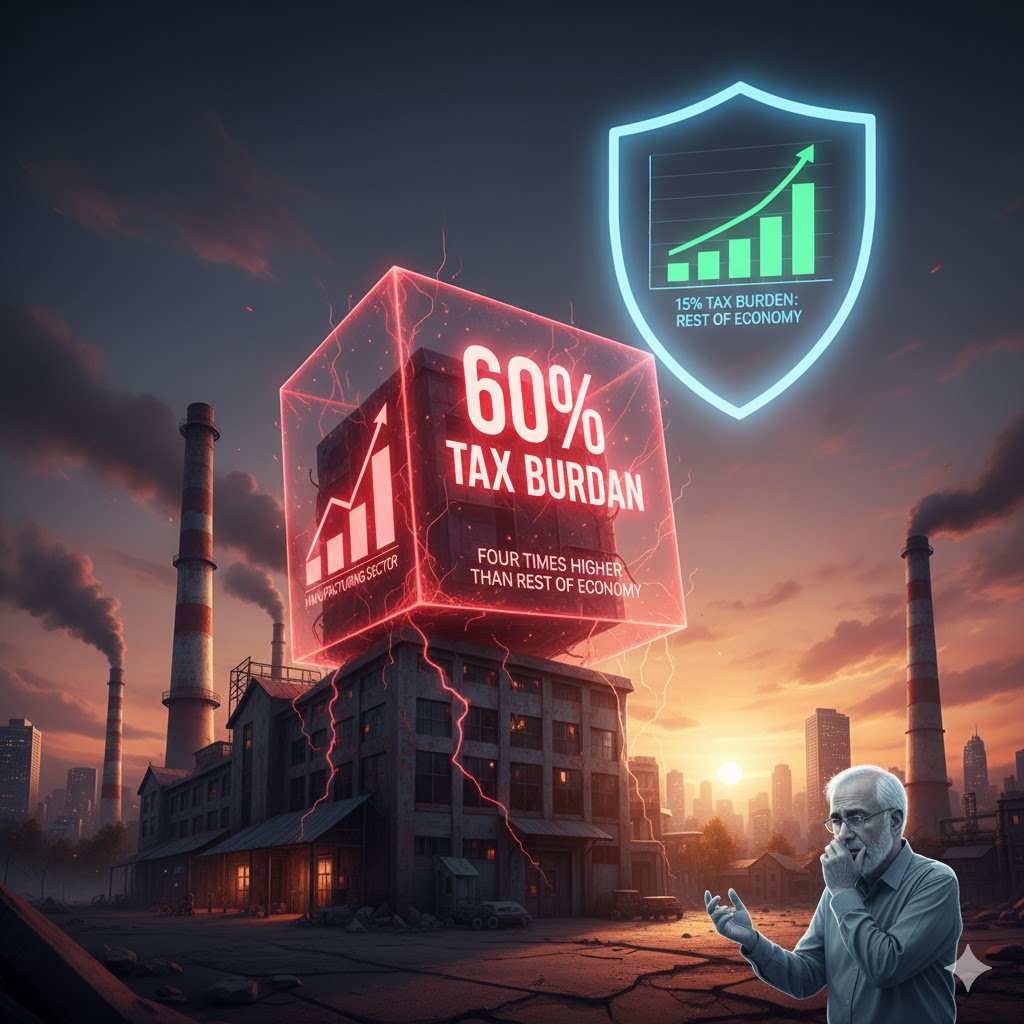
LAHORE: Former federal finance minister Dr Hafiz A Pasha has revealed that Pakistan’s large-scale manufacturing (LSM) sector shoulders a staggering 60% of the country’s total tax revenue – four times the burden borne by all other sectors combined – pushing the vital industry toward decline instead of growth.Speaking at the Lahore Chamber of Commerce and Industry (LCCI), Pasha highlighted the glaring tax imbalance, noting that high-potential sectors like agriculture contribute almost nothing despite 1% of landowners controlling 22% of prime farmland. Under IMF pressure, the government expects to collect a mere Rs4 billion from agriculture next year against Rs4,500 billion from manufacturing.He warned that investment in LSM has plummeted to levels lower than 25 years ago, with depreciating capital stock going unreplaced, choking sustainable expansion. Meanwhile, the non-productive real estate sector attracts the lion’s share of investment while contributing just 0.2% in taxes – 12 times less than industry.Pasha painted a grim socio-economic picture: 2.1 million unemployed youth, 2.6 million out-of-school children, and a record 22% workforce jobless. Only 6% of bank credit reaches three million small enterprises, with 80% diverted to government borrowing.LCCI President Faheemur Rehman Saigol blamed poor policies and governance for failing to harness Pakistan’s true economic potential, stressing that manufacturing and exports remain the real backbone of the economy.

Winter Demand Triggers Massive Dry Fruit Price Hike Amid Tension with Afghanistan
Pakistan

Winter Demand Triggers Massive Dry Fruit Price Hike Amid Tension with Afghanistan

ISLAMABAD: As winter sets in, dry fruit prices have skyrocketed in Pakistan including Rawalpindi and Islamabad amid tensions with Afghanistan, leaving consumers frustrated over unchecked profiteering and weak enforcement by district price control authorities. Residents report that shopkeepers are arbitrarily inflating rates, exploiting the seasonal surge in demand, particularly in colder and hilly regions. Common complaints highlight the absence of official price lists at most outlets, allowing traders to charge whatever they deem fit. Current market rates show peanuts at Rs450-650 per kg, pine nuts Rs7,000-14,000, almonds and cashews Rs3,000-4,000 each, walnuts Rs800-2,000, pistachios Rs3,000-4,000, raisins Rs700-1,000, and sesame sweets Rs600-800 per kg. Citizens allege many items are smuggled from Afghanistan and Iran, bypassing quality checks and enabling sale of substandard stock at premium prices. Major markets in Rawalpindi (Narnkari Bazaar, Canning Road, Bank Road) and Islamabad (Aabpara, Jinnah Super, F-10, Bara Kahu) remain hotspots for overpricing. Consumers Shakil Sheikh, Zahid Khan, and Rizwan Abbasi urged immediate activation of price control committees to curb exploitation. Despite earning $100 million annually by exporting just 10,000 tons against global demand of 1.05 million tons, domestic consumers continue to bear the brunt of unregulated pricing and poor oversight this winter.

PM Shehbaz Orders Urgent Monsoon Preparations, Approves Climate Resilience Plan
Pakistan

PM Shehbaz Orders Urgent Monsoon Preparations, Approves Climate Resilience Plan

ISLAMABAD: With devastating monsoon floods now an annual reality, Prime Minister Shehbaz Sharif on Wednesday directed federal and provincial authorities to immediately begin preparations for the 2026 monsoon season, approving the Ministry of Climate Change’s short-term resilience plan for instant rollout.Chairing a high-level review meeting as winter grips the country, the premier warned that Pakistan cannot endure another cycle of avoidable catastrophe. He ordered seamless integration of planning, data-sharing, and response systems across all institutions and stressed coordinated efforts between the Ministry of Climate Change, Ministry of Planning, NDMA, and provincial governments.PM Shehbaz also instructed preparations for an early meeting of the National Water Council to formulate comprehensive national water management strategies.Highlighting the economic toll, he lamented that Pakistan, despite contributing less than 1% to global emissions, is forced to divert significant GDP portions toward climate damage control instead of development. “We face severe consequences of climate change we did not create,” he said.Ministers Ahsan Iqbal, Ahad Khan Cheema, Muhammad Aurangzeb, Musadik Malik, Attaullah Tarar, and senior officials were briefed on global weather forecasts and short-, medium-, and long-term preparedness measures. The prime minister demanded visible progress before the next monsoon to protect lives and infrastructure nationwide.

Scroll to Top