Pakistan

Over 90% of Pakistan’s $8–12B Gold Trade Occurs Outside Govt Record, CCP Report
Pakistan

Over 90% of Pakistan’s $8–12B Gold Trade Occurs Outside Govt Record, CCP Report

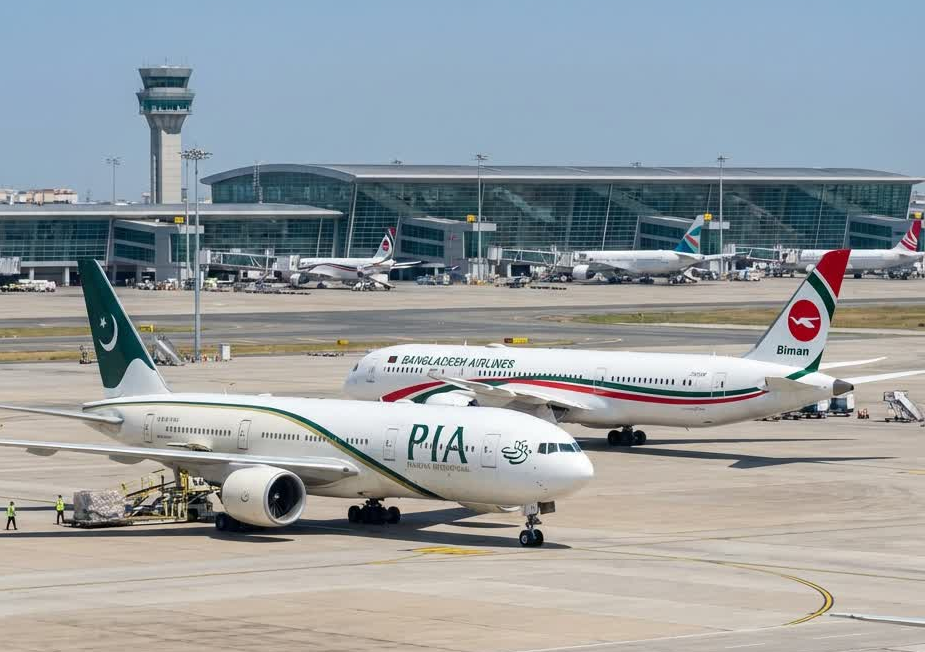
ISLAMABAD: Pakistan’s annual gold demand is estimated at 60 to 90 tonnes, valued at roughly $8–12 billion, yet over 90% of this trade occurs in the informal and undocumented market, according to the Competition Commission’s latest report. To put this in perspective, the total demand is comparable to the empty weight of a Boeing 767 airliner, which ranges between 80–82 tonnes depending on the model. The Competition Commission of Pakistan (CCP) has released its maiden Competition Assessment Study of the Gold Market in Pakistan, providing the first evidence-based analysis of the sector’s structure, regulatory landscape, and competitiveness challenges. The study, conducted by CCP’s Center of Excellence in Competition Law (CECL), maps a market historically dominated by informality, fragmented oversight, and pricing opacity. According to the report, Pakistan’s annual gold consumption ranges between 60 to 90 tonnes, driven largely by cultural demand, while over 90% of gold trading occurs outside formal channels. The market relies almost entirely on imports, with USD 17 million worth of gold imported in FY 2023-24. The study highlights the transformative potential of the Reko Diq copper-gold project, expected to generate up to USD 74 billion over its 37-year of useful life and significantly reshape domestic supply chains. The report identifies deep-rooted barriers that suppress competition and distort market functioning: Informal market dominance: Weak documentation and cash-based transactions allow large informal networks to set prices and influence supply. Opaque price-setting: Daily gold rates are largely influenced by associations rather than transparent market mechanisms. Fragmented regulation: Overlapping and unclear mandates of Ministry of Commerce, Federal Board of Revenue (FBR), State Bank of Pakistan (SBP), Pakistan Gems and Jewelry Development Company (PGJDC) , and Trade Development Authority of Pakistan (TDAP) create policy inconsistencies and enforcement gaps. High taxes and compliance costs: Complex procedures, and inconsistent taxation encourage smuggling and under-invoicing. Limited refining, assaying and hallmarking capacity: Pakistan has negligible refining capability and inadequate assaying and hallmarking facilities, leading to widespread purity issues and weak consumer protection. Data deficiencies: Absence of reliable import, traders registration, sales, and purity data prevents evidence-based policymaking. To address these challenges, CCP has proposed a comprehensive reform package: 1. Establish a unified regulator: CCP suggest to establish the Pakistan Gold & Gemstone Authority to harmonize rules, licensing, imports, and Anti Money Laundering (AML) and Counter Financing Terrorism (CFT) compliance. 2. Mandatory assaying and hallmarking nationwide to ensure purity, protect consumers, and enable exports. 3. Digital transformation of the gold value chain with blockchain-based traceability integrated with FBR’s Track & Trace system. 4. Creation of a Gold Banking System, inspired by the Türkiye, Gold Banking System to mobilize household gold into the formal sector. 5. Strengthen data governance through centralized reporting, market documentation, and scientific price-monitoring mechanisms. CCP emphasizes that modernizing the gold sector will boost transparency, safeguard consumers, reduce illicit trade, and unlock significant economic value, particularly as Pakistan prepares for the commercial rollout of Reko Diq.

PM Shehbaz to Inaugurate “Made in Pakistan MSME Clusters 2025” Mega Exhibition in Jan 2026
Pakistan

PM Shehbaz to Inaugurate “Made in Pakistan MSME Clusters 2025” Mega Exhibition in Jan 2026

Islamabad: In a major push to realise Prime Minister Shehbaz Sharif’s “Made in Pakistan” vision, the 35th Board meeting of the Small and Medium Enterprises Development Authority (SMEDA), chaired by Special Assistant to the Prime Minister on Industries & Production Haroon Akhtar Khan on Tuesday formally announced the landmark “Made in Pakistan MSME Clusters 2025” national exhibition, scheduled for January 2026. The high-profile event, to be personally inaugurated by the Prime Minister, will showcase hundreds of MSME products, feature dedicated exhibition stalls, host a prestigious national MSME awards ceremony, and include panel discussions with top national and international experts. A special high-level panel in collaboration with D-8 countries is also being formed, while invitations are being extended to global buyers and partners. Auto sector expert Mashood Ali Khan, who attended the meeting, welcomed the decisions, stating, “These steps will drive the Made in Pakistan initiative, enhance SME competitiveness and create millions of sustainable jobs.” The meeting was attended by Federal Secretary Industries & Production Saif Anjum, Acting CEO SMEDA Nadia Jahangir Seth and senior officials. SAPM Haroon Akhtar Khan described Pakistan’s SME clusters as possessing “immense untapped potential” and confirmed that a detailed SME Business Plan – prepared with strategic support from A.T. Kearney – will soon be presented to the Prime Minister. He announced that top 100 MSMEs will be shortlisted for national recognition. Key initiatives approved in the meeting include: Launch of a dedicated e-commerce portal exclusively for women-led enterprises Deployment of specialised designer and digital marketing teams to promote SME products globally Reserved 50–100 acres in upcoming Special Economic Zones (SEZs) for ready-to-use SME facilities Aggressive push for single-digit markup long-term financing to bridge the SME funding gap Full policy alignment across Ministries of Finance, Commerce and Industries Provincial coordination led by SMEDA Board members for nationwide implementation The Board was briefed that cluster-specific business models are being finalised for both urban and rural regions, while Pakistani handicrafts will receive facilitated access to international trade fairs. Reiterating government priorities, SAPM Haroon Akhtar Khan said enabling women entrepreneurs through digital commerce and boosting exports via stronger digital advertising remain at the top of the agenda.

Karachi’s Traffic System to Completely Shift from Traffic Police to Automation by 2030
Pakistan

Karachi’s Traffic System to Completely Shift from Traffic Police to Automation by 2030

Karachi: Deputy Inspector General (Traffic) Pir Muhammad Shah said that under the government’s Vision 2030, Karachi’s traffic system will eventually be managed entirely through automation, with no traffic police personnel deployed on major roads. He was speaking at a meeting with industrialists at the Korangi Association of Trade and Industry (KATI).The DIG Traffic said the introduction of the e-challan system has already brought visible improvements in traffic discipline, with increased use of helmets and seat belts and greater compliance with traffic signals. He disclosed that in the past month, 58 per cent of e-challans were issued to luxury vehicles, while motorcycles, which make up nearly 60 per cent of the city’s traffic accounted for only 23 per cent of violations.Rejecting the perception that fines in Sindh are higher than in Lahore, he said the motorcycle fine in Lahore is Rs. 2,000 while in Sindh it is Rs. 2,500. The standard fine in Sindh is Rs. 5,000, however a 50 per cent discount is allowed if paid within 14 days, a facility not available in Lahore.Pir Muhammad Shah announced that from Monday a chatbot service would be launched to provide citizens with complete information regarding e-challans and other traffic-related matters. He added that a proposal has been submitted to the government for the establishment of a Karachi Traffic Management Company (KTMC), which would receive a share of challan revenue to fund improvements in road infrastructure. He informed that 1,076 cameras have so far been installed across the city, with a long-term plan to increase the number to 12,000, while Karachi currently requires at least 400 traffic signals. He also revealed that separate lists are being compiled for vehicles without proper registration records, and a pool of around 2,000 blacklisted vehicles has already been prepared. Citizens concealing or removing number plates to avoid e-challans, he warned, are committing a punishable offence.The DIG further stated that legislation requiring trackers in heavy vehicles has now been enforced, and automation is also being introduced in the transport system. While the Sindh Assembly is in session and fines may be revised, he maintained that heavy penalties, as practiced in developed countries, remain key to effective enforcement of traffic laws.Speaking on the occasion, KATI President Muhammad Ikram Rajput said that the implementation of e-challans has significantly improved road discipline, with widespread compliance with helmet and seat belt use and reduced signal violations. He noted a visible decline in traffic accidents since the system’s introduction and said it has also created difficulties for criminal elements. He stressed that the amount of e-challan fines remains very high and should be reduced. He also called for the rapid completion of the Safe City Project in Karachi and expressed concern that deputation of traffic personnel to other police duties could create a manpower shortage on roads. Deputy Patron-in-Chief Zubair Chhaya said the absence of a mass transit system has contributed to traffic chaos in the city and demanded across-the-board enforcement against tinted windows. He also highlighted the urgent need to curb violations by dumpers and heavy vehicles, adding that while the e-challan initiative is commendable, it is a new system with shortcomings that are expected to improve with time. He said the business community wants a stronger traffic management framework, removal of encroachments and an increased number of signals so that Karachi can operate as a properly organized metropolitan city and leave a positive impression on foreign visitors.

PSX Rebounds by 1,496 Points; Fertilizer & Banks led the Show
Pakistan

PSX Rebounds by 1,496 Points; Fertilizer & Banks led the Show

Finally, as the Roll-over week progressed, PSX began to show signs of recovery, with the KSE-100 Index closing at 163,189 points, up 1,496 points or 0.93%, said Ali Najib, Deputy Head of Trading at Arif Habib Ltd. The session opened on a flattish note but quickly came under selling pressure once trading resumed, dragging the index to an intra-day low of 160,565 (-1,128 points or 0.70%) and briefly slipping below the 161k mark. However, value hunters stepped in, providing much-needed support and helping the benchmark rebound into positive territory by the close. On the macro front, Pakistan’s unemployment rate has climbed to 7.1%, the highest in 21 years. The Planning Minister attributed this rise to the IMF program and climate-related disruptions, which constrained economic activity and job creation. FFC dominated the positive contributors with 532 points, while renewed interest in banking stocks including MEBL, HBL, NBP and UBL added another 523 points to the day’s rally. Market activity remained moderate, with over 635 million shares traded and a turnover of Rs 38.9 billion. WTL once again topped the volume chart with 47.7 million shares. Outlook: Market momentum continues to strengthen as the Roll-over week progresses. Going forward, the index is expected to maintain a positive trajectory and may march toward the 165k level in the two remaining sessions of the week

Pakistan’s Unemployment Hits 21-Year High of 7.1% in 2024-25
Pakistan

Pakistan’s Unemployment Hits 21-Year High of 7.1% in 2024-25

Islamabad: Pakistan’s unemployment rate climbed to 7.1% in fiscal year 2024-25, the highest since 2003-04, according to the long-delayed Labour Force Survey released Tuesday by the Pakistan Bureau of Statistics. The figure marks a sharp rise from 6.3% in 2020-21 and surpasses the previous peak of 6.9% recorded in 2018-19.Planning Minister Ahsan Iqbal blamed the surge on the IMF’s stringent $7 billion stabilisation programme, climate-induced disasters, and global price shocks that curbed economic growth to under 3% annually. “These factors severely constrained job creation,” he said, noting that 3.5 million new workers enter the market yearly.Khyber Pakhtunkhwa recorded the highest rate at 9.6%, followed by Punjab (7.3%). Sindh had the lowest at 5.3%. Of nearly 180 million working-age Pakistanis, a staggering 118 million—two-thirds—are unpaid, largely performing household chores, childcare, livestock rearing, or fetching water.The survey also revealed agriculture’s employment share dropped over 4% to 33.1%, while manufacturing fell marginally to 14.4%, hit by high interest rates and energy costs. Over 72% of non-agricultural jobs remain informal.Released under IMF conditions, the report underscores Pakistan’s struggle to absorb its growing labour force amid structural challenges and external pressures.

After MNCs Exit, Govt Wakes Up to Reduce the Taxes– But Economists Say Investor Trust is Very Hard to Regain
Pakistan

After MNCs Exit, Govt Wakes Up to Reduce the Taxes– But Economists Say Investor Trust is Very Hard to Regain

ISLAMABAD: Leading economists have sharply criticised the government’s belated move to slash or abolish super tax rates, saying the decision comes only after irreparable damage to investment and exports, caused by a narrow “accountancy mindset” rather than an economic one. The backlash intensified on social media after value investor Abdul Rehman Najam revealed that super tax rates are expected to be significantly reduced, with complete removal likely for exporters in the next budget. “After exit of multinationals, Govt is realising such high tax rates are back-breaking,” he posted, highlighting how effective tax rates nearing 50% on profits drove companies away. Former PTI economic spokesperson Muzzammil Aslam echoed the sentiment, stating: “This is the dilemma — we apply policy on the basis of accounting approach and ignore the economic approach. By the time investor decides to quit, it’s not easy to resume.” Economists argue the FBR’s obsession with short-term revenue collection blinded policymakers to long-term consequences. “You cannot tax growth to death and then act surprised when factories close and multinationals leave,” said one senior analyst. The recent exits of global giants, including Unilever, are cited as direct fallout of the super tax regime introduced in 2022. While some welcome the reported rollback as a step forward, most experts warn the harm — lost FDI, shuttered plants, and eroded investor confidence — cannot be quickly reversed. “Policy made by accountants destroys economies,” a Lahore-based economist remarked, summing up the widespread frustration now dominating economic discourse.

PSX: Another Lackluster Day; -KSE-100 Index Closed at 161,693 Points, Down Around 300 points
Pakistan

PSX: Another Lackluster Day; -KSE-100 Index Closed at 161,693 Points, Down Around 300 points

KARACHI: PSX had another lackluster day as the KSE-100 Index closed at 161,693 points, down 292 points or 0.18%. Throughout the session, investors largely stayed on the sidelines amid the absence of meaningful positive triggers. The benchmark moved within a range of 1,543 points, recording an intra-day high of 162,820 (+836 points; 0.52%) and a low of 161,277 (-707 points; 0.44%), said Ali Najib, Deputy Head of Trading at Arif Habib Ltd. On the corporate front, OGDC notified the exchange that it has received the fifth instalment of Rs 7.725 billion as interest payment from Power Holding (Private) Limited (PHL), in line with the Government of Pakistan’s approved mechanism. Sector-wise, Fertilizer, E&P, Banks and Power bore most of the selling pressure, with ENGROH, PPL, NBP, BAHL and HUBC collectively eroding 304 points. Meanwhile, FFC, LUCK, BAFL, POL and SYS saw renewed buying interest, adding a combined 317 points to the index. Market activity remained moderate, with 589.2 million shares traded and a turnover of Rs 22.1 billion. WTL led the volume chart with over 59 million shares. Outlook: PSX experienced another range-bound day, with the benchmark fluctuating within a narrow band of 1,543 points. Looking ahead, the index is expected to consolidate within the 157k–164k zone for the remainder of the week. To preserve stability and build a base for any potential rebound, the market should ideally avoid posting a new low in the upcoming sessions.

Business Community Rejects OGRA’s Gas Price Hike, Terms Decision Devastating for Economy
Pakistan

Business Community Rejects OGRA’s Gas Price Hike, Terms Decision Devastating for Economy

Karachi: The Korangi Association of Trade and Industry (KATI) President, Ikram Rajput, has strongly rejected the Oil and Gas Regulatory Authority’s (OGRA) decision to increase gas tariffs for Sui Southern Gas Company, warning that the move will intensify economic hardships for both industries and the public.Rajput said the price hike is unjustified in the current economic environment and places an unfair burden on already struggling manufacturers and households. He stressed that the decision ignores key positive economic indicators, including a reduction in UFG (unaccounted-for gas) losses and declining interest rates, which should have supported stable or reduced gas tariffs.The KATI president called on Prime Minister Shehbaz Sharif to immediately intervene and direct the withdrawal of the revised gas tariff, noting that the increase will make Pakistani industries uncompetitive in global markets and undermine export performance.He reminded the government of its earlier commitments to support export-oriented industries, saying the tariff hike is contradictory to those promises. Rajput urged policymakers to prioritize pro-industry and pro-consumer measures that would help stabilize the economy and reduce unemployment.Rajput also criticized the tariff increase without first addressing gas theft and systemic inefficiencies, arguing that pushing the financial burden onto consumers is unjust. He cautioned that rising gas costs will particularly harm industries dependent on gas-fired plants, already grappling with high production costs and weakening international demand.He warned that escalating gas prices will further erode export competitiveness, deter investment, and heighten uncertainty among the business community. Rajput reiterated his appeal to the prime minister, urging him to place the welfare of citizens and industries at the center of national economic decision-making.“Pakistan’s economic recovery depends on sustainable industrial growth,” he said. “Raising gas prices at this stage risks undermining both industry and employment. The government must act swiftly in the national interest.”

COP30: Pakistan Tells World It's Rooftop Panels to Outstrip Daytime Grid Demand in 2026
Pakistan

COP30: Pakistan Tells World It’s Rooftop Panels to Outstrip Daytime Grid Demand in 2026

BELEM, Brazil: In a landmark shift for an emerging economy, Pakistan’s rooftop solar generation will exceed daytime grid demand in major industrial regions next year, according to Aisha Moriani, Secretary of the Ministry of Climate Change and Pakistan’s lead negotiator.She confirmed that cities like Lahore, Faisalabad, and Sialkot will experience “negative grid-linked demand” during peak sunshine hours in 2026 as behind-the-meter solar completely offsets consumption in large areas.Driven by frequent power outages and steep tariff hikes, Pakistan has become the world’s third-largest solar panel importer. Its solar adoption rate now surpasses even neighbouring China on a per-capita basis, slashing emissions and household bills but hammering the finances of debt-laden distribution companies.“Pakistan’s challenge is no longer whether renewables will grow, but how fast the grid, regulations, and market design can adapt,” Moriani said.To address revenue losses, the government plans new tariffs for large solar users and revised fixed charges to ensure fair contributions toward grid maintenance. The solar boom has also prompted Islamabad to renegotiate LNG contracts with Qatar, cancel Eni cargoes, and seek greater flexibility and lower prices.While grid demand is still projected to rise 3-4% this year, the rapid solar surge means traditional consumption growth will be increasingly suppressed during daylight hours, marking a turning point for South Asia’s energy landscape.

Pakistan’s flagship Reko Diq mining project will remain unaffected by any corporate changes at Barrick Gold, senior officials of Oil and Gas Development Company Limited (OGDCL) said on Monday. Addressing market concerns triggered by reports of a possible Barrick split or asset sales, OGDCL management stated during an analyst briefing that the Canadian miner has repeatedly assured Pakistani stakeholders that Reko Diq is a core, long-term holding and is not under consideration for divestment. “Barrick has made it very clear to us — both formally and informally — that Reko Diq is a strategic priority and will not be impacted,” the company said. OGDCL further highlighted the project’s robust governance framework involving multiple Pakistani government entities, which effectively rules out any surprise moves. With first production targeted for 2028, OGDCL expects the mine to generate $150–200 million in average annual cash flow for the company from its interest in the federal 25% stake, marking one of the most significant non-oil revenue streams in Pakistan’s history.
Pakistan, World

Reko Diq safe despite Barrick restructuring talks, OGDCL tells investorsNovember 25, 2025

Pakistan’s flagship Reko Diq mining project will remain unaffected by any corporate changes at Barrick Gold, senior officials of Oil and Gas Development Company Limited (OGDCL) said on Monday.Addressing market concerns triggered by reports of a possible Barrick split or asset sales, OGDCL management stated during an analyst briefing that the Canadian miner has repeatedly assured Pakistani stakeholders that Reko Diq is a core, long-term holding and is not under consideration for divestment.“Barrick has made it very clear to us — both formally and informally — that Reko Diq is a strategic priority and will not be impacted,” the company said.OGDCL further highlighted the project’s robust governance framework involving multiple Pakistani government entities, which effectively rules out any surprise moves.With first production targeted for 2028, OGDCL expects the mine to generate $150–200 million in average annual cash flow for the company from its interest in the federal 25% stake, marking one of the most significant non-oil revenue streams in Pakistan’s history.

Scroll to Top