Pakistan

Telenor Pakistan and UNICEF Advance Child Online Protection, Championing Safety in Pakistan’s Digital Space
Pakistan

Telenor Pakistan and UNICEF Advance Child Online Protection, Championing Safety in Pakistan’s Digital Space

Islamabad: Telenor Pakistan and UNICEF jointly hosted the closing ceremony of their three-year partnership (2022–2025) dedicated to advancing child online protection. The event brought together representatives from government bodies including Pakistan Telecommunication Authority (PTA), the National Commission on the Rights of Child (NCRC) and the National Cyber Security emergency Response Team, Cabinet Division (NCERT), UN agencies, diplomatic missions, private sector partners, civil society, academia, as well as children and youth, providing a platform to celebrate achievements, foster dialogue, and envision the future of child online safety in Pakistan. The ceremony marked a milestone in advancing children’s safety in the digital space, highlighting achievements through collaboration between government, private sector, and civil society. Children’s voices were celebrated through creative showcases and youth-led messages promoting safe, responsible, and inclusive digital citizenship. The launch of the “Child Online Protection Anthem” by the NCRC Child Advisory Panel reinforced the collective commitment to protecting children online and tackling child sexual exploitation and abuse.Read more: PTCL-Telenor Acquisition Review is Now in Final Stages Speaking at the ceremony, Fridtjof Rusten, CEO, Telenor Pakistan, said, “Online safety is a global emergency, with one in three internet users being a child, many facing exploitation and abuse. In Pakistan, the situation is particularly urgent. Protecting children’s digital rights requires collaboration across all sectors. Through our partnership with UNICEF, we have laid the foundations, and at Telenor Pakistan, we know that keeping children safe online is a shared responsibility.” During the event, preliminary insights were shared from the ongoing Disrupting Harm II study, conducted in partnership with ECPAT International and INTERPOL. The study represents one of the most comprehensive research initiatives on online child sexual exploitation and abuse in Pakistan. Its full findings, expected in April 2026, are set to inform evidence-based policies, legislative reforms, and a costed national action plan to strengthen child online protection across the country. The ceremony also featured an engaging panel discussion with experts from government, civil society, academia, and the private sector, who shared perspectives on sustaining child online protection, highlighting key priorities, and exploring collaborative solutions to emerging digital risks. “As Pakistan’s connectivity grows, so does our responsibility to protect children from online risks. Our collaboration with Telenor and national partners has laid the foundations of a safer digital environment – from evidence generation, to establishing the first Child Online Protection Committee and to empowering children, parents, and educators. We are united around one shared goal: keeping every child safe online,” said Pernille Ironside, UNICEF Representative in Pakistan. Over the past three years, the UNICEF–Telenor partnership has empowered children, youth, parents, and teachers through digital campaigns, community engagement, and capacity-building initiatives, while advocating for stronger policies and embedding child online safety within national education frameworks. By combining expertise, evidence-driven interventions, and sustained advocacy, the partnership has strengthened Pakistan’s digital protection ecosystem and set a benchmark for collaborative, sustainable efforts in safeguarding children online.

Pakistan Stock Exchange Drops Dewan Farooque Motors from Futures Trading List
Pakistan

Pakistan Stock Exchange Drops Dewan Farooque Motors from Futures Trading List

Karachi: The Pakistan Stock Exchange (PSX) has removed Dewan Farooque Motors Limited (DFML) from its list of stocks that can be traded in futures contracts. This means investors can’t start new 90-day futures deals for DFML shares anymore. The decision comes after DFML was labeled “non-compliant” in a notice on December 1. In simple terms, futures contracts are like agreements to buy or sell shares at a set price in the future. DFML was allowed for these before, but now it’s off the list because it doesn’t meet the rules anymore. However, any ongoing deals—like those ending in December 2025, January 2026, or February 2026—will still go on until they finish. PSX’s General Manager Jawad H. Hashmi shared this update in a notice to all traders, regulators, and companies involved. He asked everyone to take note and adjust their plans. This change aims to keep trading fair and follow strict guidelines. Investors in DFML should check with their brokers for what this means for their holdings. The full notice is on the PSX website.

K-Electric to Build 26MW Dedicated Grid Station at Port Qasim
Pakistan

K-Electric to Build 26MW Dedicated Grid Station at Port Qasim

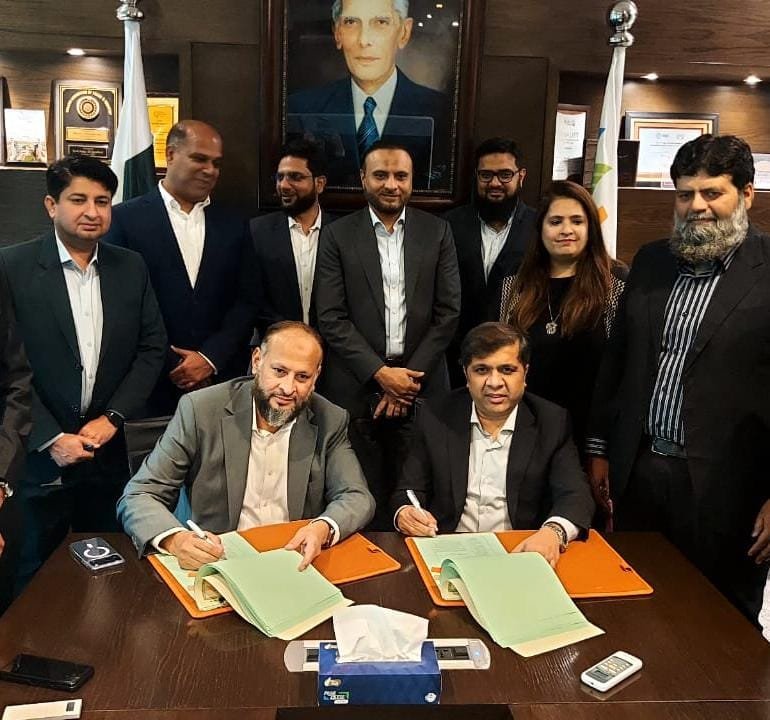
Karachi: In a significant development, DP World, a global provider of end-to-end logistics solutions, and K-Electric entered into an agreement under which a dedicated 132 kV grid station will be built at the Qasim International Container Terminal (QICT), a key trade gateway for Pakistan. The project will ensure reliable and efficient 26MW power supply, supporting the terminal’s growing operations and Pakistan’s expanding role in global trade. The new grid station is aimed at enhancing power resilience, improving operational efficiency, and supporting future electrification at the terminal, aligning with the companies’ shared commitment to sustainability, reliability, and innovation. Reinforcing KE’s mission to drive sustainable industrial growth through dependable, high-quality power solutions, the partnership will cater to the growing energy demand of port operations, enabling uninterrupted logistics and trade activity. Sadia Dada, Chief Distribution & Marcomms Officer at KE, said, “The move to grid power represents growing confidence in the system’s reliability and cost competitiveness especially for industries with expanding operations. Our agreement with DP World reflects a shared understanding that stable, high-quality electricity is fundamental to growth and efficiency.” Junaid Zamir, DP World’s CEO of QICT, said, “Port Qasim is one of Pakistan’s most vital trade gateways, and reliable energy is the backbone of its continued growth. This partnership with KE to install a dedicated grid station enables us to strengthen our terminal’s resilience and supports our goal of enabling more sustainable trade across Pakistan and beyond.” The grid station will cater to QICT’s expanding operations, ensuring uninterrupted power for continuous trade activity. By energising and empowering critical sectors such as ports, manufacturing, and logistics, KE continues to strengthen the country’s economic backbone, ensuring that reliable, efficient power remains central to progress and productivity. DP World is a leading global provider of end-to-end logistics solutions, enabling the flow of trade across six continents, including operations in Port Qasim.

USF Unleashes Rs 13.05 Billion Digital Investment to Connect 5.5 Million Rural Citizens
Pakistan

USF to Spend Rs13B Telecom Initiative to Connect Over 5 Million in Rural Areas of Pakistan

Islamabad: The Universal Service Fund (USF) is poised to achieve another monumental milestone toward the Prime Minister’s vision of Digital Pakistan with the approval of nine new Telecom projects valued at Rs. 13.05 Billion. These projects are set to provide high-speed internet and voice services to 5.55 million unserved and underserved residents across 178 Towns/UCs and 753 mauzas of 11 districts across the country, significantly empowering the rural population to participate in the digital economy & connect with Digital World. APPROVED PROJECTS: • Next Generation – Broadband Services for Sustainable Development (NGBSD):Six projects will deliver high-speed broadband and voice services to 1,267,225 population of 753 Mauzas across seven districts. • Optical Fiber Network (OFC) Expansion:Three projects will lay 1,428 kilometers of Optical Fiber Cable across 178 Town/Union Councils in four districts and enable connectivity to 4,292,639 population. The new projects received formal approval during the 101st meeting of the USF Board of Directors, chaired by the Chairman USF Board and Secretary IT & Telecommunication, Zarrar Hasham Khan.The meeting was attended by, Chairman PTA Major General (R) Hafeez Ur Rehman, Member Telecom Jahanzeb Rahim, Independent Board Members, Muhammad Yousuf and Ms. Ayla Majid, Chief Executive Officer USF Ch. Mudassar Naveed, and other senior officials.The USF Board awarded the projects to various service providers following a rigorous and transparent process, selecting the lowest compliant bidders. Chairman USF Board, Zarrar Hasham Khan, underscored the urgent imperative need to enhance the fiberization of mobile towers and Base Transceiver Stations (BTS) nationwide, proactively encouraging USF to spearhead this crucial effort within its mandated areas.He emphasized the government’s commitment:“In line with the vision of Prime Minister Mian Shehbaz Sharif and Federal Minister IT & Telecommunication Ms. Shaza Fatima Khawaja, we are fully committed to providing superior quality connectivity to the rural population, thereby definitively bridging the digital divide between urban and rural communities.” He lauded USF’s instrumental role in empowering rural communities, asserting that connectivity is the key driver for digital growth and the IT sector. He specifically noted the fund’s vital support for the IT Industry, freelancers, and essential Health and Education services. To date, he stated that approximately 39.4 million of the rural population have been served or enabled with broadband, voice, and fixed-line services through USF’s projects. DETAILS OF THE PROJECTS:The CEO USF, Ch. Mudassar Naveed, in his presentation to the Board members, outlined the highlights of the new projects, provided a comprehensive briefing on the transparent bidding process, and detailed the expected positive impact in the designated areas.The resulting portfolio, which totals over Rs. 13.05 Billion, is geographically widespread across the country: NEXT GENERATION BROADBAND SERVICES (NGBSD) PROJECTS: • In Umar Kot District (Sindh), a project valued at Rs. 914.6 million will provide high-speed broadband and voice services to 243,695 residents across 142 Mauzas. • In Gujranwala & Mandi Bahuddin District (Punjab), a project worth Rs. 737.3 million will extend services to 234,573 residents across 160 Mauzas. • Kohat District (KPK) will see a project valued at Rs. 359.3 million, covering 41,404 residents across 24 Mauzas. • A major investment of Rs. 2.94 billion has been allocated to Khuzdar District (Baluchistan), where broadband services will reach 75,637 residents across 144 Mauzas. • Muzaffargarh District (Punjab) will benefit from Rs. 1.50 billion project, connecting 498,927 residents across 138 Mauzas. Finally, Mansehra District (KPK) will receive a project valued at Rs. 1.36 billion, enabling services for 172,989 residents across 145 Mauzas. OPTICAL FIBER NETWORK (OFC) PROJECTS: • Sialkot District (Punjab) will see the laying of 488 km of OFC through a project worth Rs. 1.64 billion, benefitting 2.29 million people across 75 Town/Union Councils. • Narowal District (Punjab) has been approved for an OFC project worth Rs. 1.51 billion, covering 447 km of OFC and enabling connectivity for 1.14 million residents across 66 Town/Union Councils. • The Quetta-Ziarat Project (Baluchistan), will see the laying of 493 km of OFC valued at Rs. 2.06 billion, will enable high-speed connectivity for 858,783 residents across 37 Town/Union Councils.

PM Promises Live TV Coverage for PIA Privatization Bids on December 23
Pakistan

PM Promises Live TV Coverage for PIA Privatization Bids on December 23

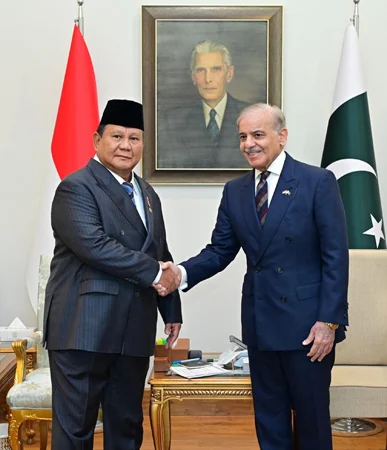
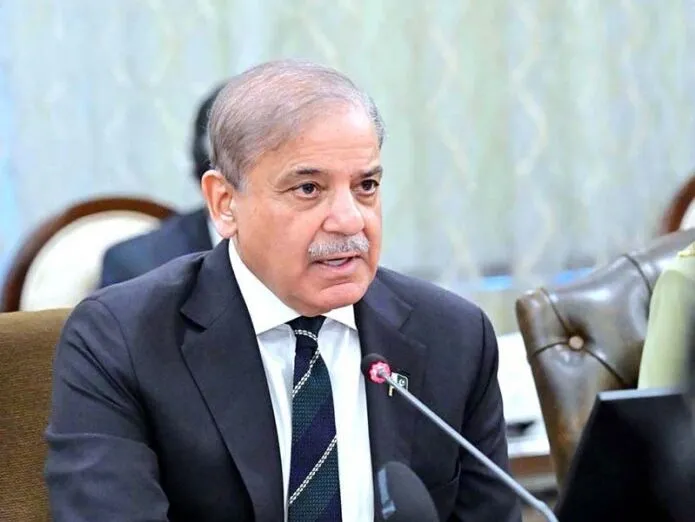
Islamabad: Prime Minister Shehbaz Sharif pledged full transparency and merit in the privatization of Pakistan International Airlines (PIA), announcing that the bidding process on December 23 will be aired live on national television. Addressing a meeting at the Prime Minister House with business leaders and representatives from all bidding entities, Sharif emphasized the government’s commitment to reviving the national flag carrier’s tarnished image and aligning it with global aviation standards. “The privatization is advancing smoothly to make PIA competitive again,” Sharif stated, expressing optimism that the new management would restore its iconic slogan, ‘Great People to Fly With.’ He highlighted that resuming international flights would benefit overseas Pakistanis and boost the country’s tourism sector. The gathering, attended by key federal ministers including Muhammad Ishaq Dar, Ahsan Iqbal, and Muhammad Aurangzeb, along with advisers and officials, saw participants commend the government’s professional approach. Sharif reiterated that restoring PIA’s operations is vital for economic growth and national pride.

Pakistan PM Panel Pushes Rs975b Tax Cuts for Businesses and Salaried Class Amid IMF Talks
Pakistan

Pakistan PM Panel Pushes Rs975b Tax Cuts for Businesses and Salaried Class Amid IMF Talks

Islamabad: Prime Minister Shehbaz Sharif has directed officials to negotiate with the International Monetary Fund (IMF) on implementing a proposed Rs975 billion tax relief package, aimed at easing burdens on businesses and the salaried class. The recommendations, presented by a private-sector-led panel chaired by Shehzad Saleem, include a 25% reduction in taxes for salaried individuals, abolition of the 10% income surcharge on earnings over Rs10 million, and elimination of the wealth tax on foreign assets via capital value tax. The package’s immediate relief is estimated at over Rs600 billion, with key proposals prioritizing the scrapping of super tax (Rs190b relief), halving the minimum income tax rate before full elimination (Rs160b), ending the 15% corporate dividend tax (Rs80b), and reducing corporate income tax to 25% over two years (Rs170b). Additional measures involve abolishing provincial cesses like Sindh’s 1.9% and Punjab’s 0.9% infrastructure levies, advance income tax on exporters, workers’ welfare and participation funds (Rs50b combined), and withholding taxes on goods and services (Rs175b). Due to IMF program constraints, implementation hinges on lender approval. Sharif formed a committee under Finance Minister Muhammad Aurangzeb to develop an actionable roadmap. Sources highlight a growing consensus among government, military, and business leaders that such reforms are essential for economic growth, alongside lowering energy costs to regional levels. The PM emphasized that robust businesses are key to generating revenue and driving export-led expansion, amid criticisms of excessive taxation stifling industry.

Pakistani Cement Sector Faces November Slump Amid Export Challenges and Domestic Slowdown
Pakistan

Pakistani Cement Sector Faces November Slump Amid Export Challenges and Domestic Slowdown

Islamabad, December 3, 2025 – Pakistan’s cement industry experienced a significant downturn in November 2025, with total dispatches falling 13% month-on-month (MoM) to 4.14 million tons, according to the latest sector update from Taurus Securities Limited. The decline was driven by a sharp drop in both domestic and export sales, highlighting ongoing pressures from rising costs, border closures, and international trade barriers.Domestic sales, which form the bulk of the industry’s output, decreased by 10% MoM to 3.55 million tons. Industry experts attribute this to subdued construction demand, exacerbated by higher material costs, duties, and taxes. Cement manufacturers have urged the government to introduce industry-friendly policies, including concessions on duties, to make cement more affordable and stimulate local construction activities.Exports fared even worse, plummeting 29% MoM to 0.59 million tons. The northern region, heavily reliant on trade with Afghanistan, saw exports virtually halt due to an indefinite border closure amid regional tensions. Southern exporters, meanwhile, faced headwinds from newly imposed U.S. tariffs on imports from several countries, including Pakistan. Manufacturers in the north are exploring alternative markets like Sri Lanka and Bangladesh via sea routes, but the outlook for FY26 remains subdued, with exports expected to stay under pressure. Read More:https://theboardroompk.com/cement-exports-increase-28-58-to-134-516-million-in-4-months/ On a year-on-year (YoY) basis, total dispatches dipped 3%, though domestic sales edged up 2% to 3.55 million tons, supported by improving macroeconomic indicators and increased construction in the north. Exports, however, tumbled 27% YoY, underscoring the impact of geopolitical issues and trade restrictions.Breaking it down regionally: North Region: Domestic dispatches fell 11% MoM to 3.02 million tons but rose 6% YoY, reflecting a revival in construction tied to positive FY26 budget measures. Exports were negligible, down from 0.15 million tons in October.South Region: Local sales dropped 3% MoM and 16% YoY to 0.53 million tons, amid weaker construction activity. Exports declined 13% MoM and 7% YoY to 0.59 million tons. For the first five months of FY26 (5MFY26), the picture is more optimistic on the domestic front. Total local dispatches surged 15% YoY to 17.44 million tons, fueled by lower inflation, interest rates, and stable material prices. North-based domestic sales grew 16% YoY, while the south saw a 9% increase. Exports remained flat YoY at 4.01 million tons, with northern declines offset by slight southern gains.Cement prices showed mixed trends. Average retail prices in the north stood at approximately PKR 1,374 per bag as of November 27, down 5% YoY. In the south, prices rose 4% YoY to PKR 1,440 per bag. International coal prices, a key input cost, provided some relief, falling 24% YoY to USD 85.10 per ton (around PKR 35,000 per ton in local currency terms).Looking ahead, analysts at Taurus Securities anticipate a rebound in domestic demand, driven by flood rehabilitation efforts expected to ramp up after Ramadan (March-April 2026). The FY26 budget includes PKR 10 billion in mark-up and housing subsidies to promote affordable housing, alongside tax credits on loans for homes up to 250 square yards or flats under 2,000 square feet. These measures, combined with broader economic stability, are poised to boost construction.However, exports face ongoing challenges from the Afghan border closure and U.S. tariffs, potentially limiting growth in FY26. Taurus highlights Lucky Cement (LUCK), Maple Leaf Cement Factory (MLCF), and Fauji Cement Company Limited (FCCL) as top investment picks in the sector. The report, sourced from the All Pakistan Cement Manufacturers Association (APCMA) and other data, underscores the industry’s resilience amid volatility. Industry stakeholders continue to call for policy support to navigate these hurdles and capitalize on domestic recovery opportunities.

Pakistan Cotton Market Under pressure and heavily relying on Imports
Pakistan

Pakistan Cotton Market Under pressure and heavily relying on Imports

Karachi: Cotton remains the backbone of Pakistan’s economy, supporting millions of farmers and powering the country’s massive textile export industry. However, the cotton market on December 3, 2025 reflects a challenging phase marked by low international prices, heavy reliance on imports, and pressure on farmer incomes. While sowing progress for the current season has been encouraging, the economic impact of weak global demand and last year’s production shortfall is still being felt across the supply chain. This detailed cotton market update explains what is happening in Pakistan’s cotton sector today, how global trends are influencing local prices, and what it means for farmers, traders, and textile exporters. Global Cotton Prices Continue to Weigh on Pakistan: International cotton markets remain under pressure, limiting any meaningful recovery in domestic prices. The Cotlook A Index, which serves as the global benchmark, is hovering near 75 cents per pound, far below last year’s level of around 82 cents. This sharp year-on-year decline shows how weak global textile demand has become due to slow retail sales and economic uncertainty in major importing countries. Similarly, cotton futures on the New York exchange are trading in the mid-60 cent per pound range, reflecting cautious buying and the absence of strong speculative interest. Prices in China remain relatively high due to government reserve policies, while India’s Shankar-6 cotton has dropped sharply, making Indian exports more competitive in the global market. Brazilian cotton is also being offered at lower rates, adding to the pressure on Asian suppliers like Pakistan. For Pakistan, these global conditions mean that local cotton rates cannot rise significantly, even when domestic supply tightens. Karachi Cotton Market Under Pressure: In the domestic market, rates set by the Karachi Cotton Association show that lint cotton is trading around PKR 15,300 per maund, which is equivalent to nearly 61.5 cents per pound. On the same date last year, prices were close to 76 cents per pound, indicating a steep decline in farmer returns. While lower prices reduce costs for textile mills, they severely impact:• Farmer profitability• Ginners’ margins• Rural purchasing power This is one of the main reasons many farmers have been shifting away from cotton to alternative crops in recent years. Cotton Sowing Shows Improvement in 2025-26: Despite pricing pressures, the current cotton sowing season shows a relatively positive trend. Pakistan set a national target of 2.260 million hectares for the 2025-26 season. As of the latest estimates, about 89% of the total target has already been achieved.• Punjab has achieved around 90% of its target• Sindh stands close to 89%• Balochistan is near 76%• Khyber Pakhtunkhwa remains marginal in cotton cultivation This improved sowing performance reflects better early weather conditions and higher cost of alternative crops. However, final production will depend on:• Weather during picking• Pest control• Availability of quality water• Input costs such as fertilizer and diesel Last Season’s Cotton Production Shortfall Still Hurting the Economy: The negative economic impact of the 2024-25 cotton crop failure is still being felt. Against a national production target of nearly 11 million bales, Pakistan produced only about 7 million bales. This massive shortfall forced the country to import record quantities of cotton to keep textile mills running. Punjab and Sindh, Pakistan’s two main cotton-producing provinces were hit hard by:• Climate stress• Pest attacks• High farming costs• Water shortages As a result, Pakistan’s dependence on imported cotton sharply increased, directly affecting the trade balance. Seed Cotton Arrivals Remain Nearly Flat: As of mid-November 2025, total seed cotton arrivals across Pakistan are just under 4.9 million bales, almost unchanged compared to the same period last year. Most of the cotton is being bought by local textile mills, while exports of raw cotton remain negligible. Unsold stocks are still present in the market, showing that:• Mills are buying only as per immediate needs• Traders remain cautious due to uncertain price direction• Future demand is being driven strictly by export orders According to the Pakistan Cotton Ginners Association, the steady flow of arrivals suggests adequate short-term supply, which is also limiting any sharp rise in prices. Current Seed Cotton, Lint & By-Product Prices in Pakistan: Across major producing regions, seed cotton prices are moving in a wide band between PKR 6,400 and PKR 7,700 per 40 kg, depending on quality and location. Raw lint cotton is averaging around PKR 15,500 per maund nationwide. Cotton by-products are also holding steady:• Cotton seed: around PKR 3,100 to 3,200 per 40 kg• Cotton seed cake: roughly PKR 3,200 to 3,300 per 40 kg These by-products are crucial for Pakistan’s edible oil and livestock feed industries, and stable prices are helping keep inflation in check in these segments. Cotton Imports Surge, Exports Collapse: The most alarming indicator for Pakistan’s cotton economy is the sharp imbalance in trade. During the first four months of 2025-26, Pakistan imported nearly 300,000 metric tons of cotton, while exports of raw cotton were almost non-existent. For the full 2024-25 fiscal year, cotton imports crossed 680,000 metric tons, while exports dropped to only a few hundred tons. This dramatic shift has:• Increased the current account burden• Raised pressure on the Pakistani rupee• Exposed the textile sector to global price volatility Pakistan is now relying heavily on cotton from:• Brazil• The United States• Central AsiaThis import dependence is a major structural challenge for the economy. Impact on Pakistan’s Textile & Export Sector: Cotton prices directly determine the cost structure of Pakistan’s:• Spinning industry• Weaving and processing units• Garment export sector While lower cotton prices support mill profitability in the short term, they also signal weak global demand for textiles and apparel. If export orders remain slow, mills may reduce production, affecting:• Employment• Energy consumption• Tax revenues• Export earnings At the same time, low farm prices discourage cotton cultivation, creating long-term supply risks. Cotton Market Outlook for Pakistan: In the near term, Pakistan’s cotton market is expected to remain range-bound with a slightly bearish tone. Price recovery will depend on:• Improvement in global retail demand• Stability in the rupee–dollar exchange rate• Weather conditions

Pakistan Targets $2 Billion in Fruit and Vegetable Exports Within Three Years
Pakistan

Pakistan Targets $2 Billion in Fruit and Vegetable Exports Within Three Years

Karachi: Pakistan has set an ambitious target to increase its fruit, vegetable, and value-added agricultural exports from $700 million to $2 billion within the next three years, following the completion of a comprehensive export growth strategy. This was announced by Pakistan Fruit and Vegetable Exporters, Merchants Association (PFVA) Patron-in-Chief Waheed Ahmed during a press conference at the PFVA office, alongside Trade Development Authority of Pakistan (TDAP) Secretary Shehryar Taj. Waheed Ahmed said the new roadmap has been finalized with close coordination between Pakistan Horticulture Development Company (PHDC) and TDAP to strengthen Pakistan’s agricultural economy and aggressively pursue export targets. He added that all four provinces and Gilgit-Baltistan have been given representation in PHDC to ensure inclusive agricultural development. FoodAg Pakistan 2025 Delivers Strong Export Results: Highlighting the success of the recently held Food & Agriculture Exhibition, Waheed Ahmed revealed that the event generated $35 million in immediate export orders, with Pakistani exporters securing first-time shipments to the United Kingdom, Germany, and Oman. He said the exhibition played a vital role in showcasing Pakistan’s agricultural potential on the global stage. This year, 25 Pakistani fruit and vegetable exporting companies participated, while buyers from 35 countries showed strong interest in Pakistan’s fresh produce and value-added food products. Record Global Participation and Business Deals: Speaking at the same press conference, TDAP Secretary Shehryar Taj described FoodAg Pakistan 2025 as the most successful edition in the event’s history. “The exhibition not only highlighted the true global potential of Pakistan’s agro-food sector but also opened new doors for international cooperation, partnerships, and sustainable growth,” he said. According to TDAP:• Over 370 exhibitors from across Pakistan participated• More than 20 agro-food sub-sectors were represented, including fruits and vegetables, rice, agri-tech, seafood, meat and poultry, dairy, spices, processed foods, beverages, honey, dry fruits, oilseeds, and tobacco• 850+ international buyers and delegations from 80+ countries attended• A record 5,700+ B2B meetings were held• Total confirmed and expected business deals reached $730 million These figures establish Pakistan as a reliable and growing partner in the global agri-food supply chain, Taj added. Strengthening Pakistan’s Global Agri Export Position: TDAP officials said this success reflects the authority’s continued focus on innovation, sustainability, and export diversification within the agricultural sector. With consistent policy support and private sector collaboration, Pakistan is positioning itself as a competitive global exporter of high-quality horticulture and food products.

Pakistan Exempts Export Development Surcharge to Boost Exporter Confidence
Pakistan

Pakistan Exempts Export Development Surcharge to Boost Exporter Confidence

The State Bank of Pakistan (SBP) has officially implemented the exemption of the 0.25% Export Development Surcharge (EDS) on all exported goods, as per the Federal Government’s S.R.O 2335(I)/2025 dated December 1, 2025. This move withdraws previous SBP circulars immediately, providing significant relief to exporters by reducing business costs and enhancing global competitiveness. Khurram Schehzad, Advisor to the Finance Minister of Pakistan said the Federal Government has exempted all exported goods from Export Development Surcharge levied under sub section (1) of section 11 of the Finance Act 1991, with immediate effect, see the notification attached by the State Bank of Pakistan. Accordingly, the SBP’s Circular Letters stand withdrawn immediately. Decision taken by the Prime Minister in a few days of forming the focused Working Groups with the Private Sector in the lead, to revoke the Export Development Surcharge, amongst other key restructuring decision, including giving charge of hanging export development fund to the exporters, has now been implemented as well. The speed of decision and implementation has shown the will and committment of the Government of Pakistan to reduce cost of doing business while providing an enabling environment for investors and exporters.

Scroll to Top