Pakistan

KSE-100 Index in Intraday Surges Past 171,000 as Strong Demand Fuel Market Optimism
Breaking News, Pakistan

KSE-100 Index in Intraday Surges Past 171,000 as Strong Demand Fuel Market Optimism

Pakistan’s stock market kicked off the week on a powerful note, with the KSE-100 Index extending its bullish run on December 15, 2025, reflecting renewed investor confidence and improving macroeconomic signals. By mid-session, the benchmark index was trading at 170,960.91 points, up 1,096.39 points, marking a 0.65% gain from the previous close. During intraday trading, the index touched a high of 171,000.37 points, highlighting strong buying interest across multiple sectors. What’s Driving the Market Rally? The current momentum at the Pakistan Stock Exchange (PSX) is being powered by a convergence of positive developments: IMF Loan Approval Boosts Investor Confidence The International Monetary Fund’s approval of a major financial assistance package has significantly improved market sentiment. Investors view the move as a strong vote of confidence in Pakistan’s economic reform agenda and fiscal discipline. Stable Foreign Reserves and External Support Continued backing from traditional international partners, coupled with stable foreign exchange reserves, has helped ease concerns over balance-of-payments pressures. the rally is not limited to a few heavyweight stocks but is supported by wider market confidence. Top Performing Stocks Today Among the leading gainers on the KSE-100 Index were:• Maple Leaf Cement (MLCF): +4.99%• International Steels (ISL): +4.79%• Service Industries (SRVI): +4.46%• Tariq Glass Industries (TGL): +4.25%• Sui Northern Gas Pipelines (SNGP): +3.26% These stocks benefited from strong sector-specific demand and improving earnings expectations. Stocks Under Pressure Despite the overall positive tone, a few names traded in the red:• KAPCO: -3.19%• Lotte Chemical Pakistan: -2.45%• Nishat Mills (NML): -1.21%• Kohinoor Textile Mills (KTML): -1.12%• Dawood Hercules Pakistan (DHPL): -0.75% Analysts attribute the declines to profit-taking and stock-specific factors rather than broader market weakness. Outlook: Can the Rally Continue? With macroeconomic stability improving, IMF backing in place, rising remittances, and solid domestic demand, market participants remain cautiously optimistic about further upside in the KSE-100 Index. If these supportive factors persist, the market may continue testing new highs in the near term.

Pakistan's Wealth Gap Widens: Top 10% Hold 59% of Total Wealth, Report Reveals
Pakistan

Pakistan’s Wealth Gap Widens: Top 10% Hold 59% of Total Wealth, Report Reveals

Islamabad, December 15, 2025 – A new report from the World Inequality Lab (WIL) highlights stark economic disparities in Pakistan, revealing that the richest 10% of the population control 59% of the nation’s total wealth, while the top 1% alone account for 24%.The World Inequality Report 2026, published by the Paris School of Economics-hosted WIL, also shows significant income inequality: the top 10% capture 42% of total national income, compared to just 19% for the bottom 50%. Pakistan’s average per capita income stands at around 4,200 euros (in purchasing power parity), with average wealth at 15,700 euros (PPP). Despite a marginal narrowing of the income gap between the top 10% and bottom 50%—from 22.0 to 21.4 times between 2014 and 2024—the report notes that inequality “remains high and shows limited progress over the past decade.” Gender disparities persist, with female labour force participation declining from 9.8% to 8.5%.Globally, the report paints a grim picture: the top 10% own three-quarters of wealth, while the bottom half holds only 2%. The wealthiest 0.001%—fewer than 60,000 multi-millionaires—control more wealth than half of humanity, with their share rising from 4% in 1995 to over 6% today. Billionaires’ wealth has grown at 8% annually since the 1990s, nearly twice the rate for the global bottom half.Experts warn that without structural reforms, including progressive taxation and inclusive policies, such concentrations could exacerbate social divides and hinder sustainable growth in Pakistan.

Pakistan and Binance Ink MoU to Tokenize $2B Assets, Amid Crypto's Unregulated Boom
Pakistan

Pakistan and Binance Ink MoU to Tokenize $2B Assets, Amid Crypto’s Unregulated Boom

ISLAMABAD – In a landmark move signaling Pakistan’s embrace of blockchain innovation, the Ministry of Finance signed a Memorandum of Understanding (MoU) with Binance Investments Company Limited on Friday, paving the way for tokenizing up to $2 billion in sovereign assets. The non-binding agreement, inked by Finance Minister Senator Muhammad Aurangzeb and Binance CEO Richard Teng, aims to bolster capital markets through emerging financial technologies, enhancing liquidity and global investor access.This collaboration comes against a backdrop of explosive crypto adoption in Pakistan, where Binance has thrived as one of the most downloaded finance apps—ranking fourth in the category as of early 2025—despite operating without formal government registration or regulatory oversight. With over 20 million smartphone users engaging in peer-to-peer trading and digital asset exchanges, the platform’s popularity has fueled a shadow economy estimated at billions in annual volume. However, this unregulated surge raised red flags: experts warn of heightened risks including money laundering, investor fraud, and capital flight, as transactions evaded anti-money laundering (AML) checks and consumer protections. The State Bank of Pakistan had previously cautioned against crypto’s volatility, yet enforcement lagged, leaving users exposed to scams and market manipulations.The MoU establishes a framework for blockchain-based distribution of assets like government bonds, treasury bills, and commodity reserves, subject to regulatory approvals. Binance may offer technical expertise, training, and advisory support to build compliant infrastructure, ensuring sovereign control and adherence to Pakistani laws. Definitive agreements are targeted within six months.“This is a strong signal of Pakistan’s reform trajectory—a very strong message not only for Pakistan but for the entire world,” Aurangzeb said, crediting top leadership’s vision. Binance founder Changpeng Zhao, present as an advisor to the Pakistan Crypto Council, hailed it as a “landmark development” for the nation’s tech-driven future, promising “positive and lasting outcomes.”This pact underscores Islamabad’s pivot toward responsible innovation, aligning with global standards while mitigating past regulatory voids. As Pakistan’s digital economy matures, it could unlock foreign investment but demands vigilant governance to avert pitfalls seen in other emerging markets.

Matric arts students allowed to get admission in Intermediate – Pre-Medical & Pre-Engineering Groups
Pakistan

Matric arts students allowed to get admission in Intermediate – Pre-Medical & Pre-Engineering Groups

Islamabad, December 13, 2025 – In a groundbreaking shift for Pakistan’s education landscape, the Inter Boards Coordination Commission (IBCC) Forum has approved allowing students who pass their Secondary School Certificate (SSC) in the Arts Group to register for Higher Secondary School Certificate (HSSC) programs in Pre-Medical and Pre-Engineering, effective from the SSC 1st Annual Examination 2026. This policy, unanimously endorsed in the Forum’s 183rd meeting on December 4-5, aims to dismantle longstanding barriers, offering greater academic mobility and career options to thousands of students. The decision stems from years of advocacy amid Pakistan’s rigid stream selection system, where students as young as 14-15 must choose between Arts, Science, or Commerce without room for reversal. Many, influenced by parental pressure, family expectations, or limited counseling, opt for Arts only to discover later passions for STEM fields like medicine or engineering. This mismatch has left countless talented youth sidelined, forcing them into unrelated humanities degrees or the job market prematurely. Educators and stakeholders have long highlighted how early specialization stifles potential, exacerbating skill gaps in critical sectors. A November proposal by the federal government underscored the need to “broaden access to scientific and technical education,” providing “equal opportunities for academic and professional growth.” Feedback from bodies like the Pakistan Engineering Council (PEC), Pakistan Medical & Dental Council (PM&DC), Higher Education Commission (HEC), and National Curriculum Council (NCC) emphasized boosting STEM enrollment to meet national demands, while addressing dropout rates linked to mismatched streams. The notification, issued December 12, resolves that Arts passers may enroll in these groups, but boards must implement safeguards like minimum marks, merit criteria, or aptitude tests to maintain standards. Final approval rests with Boards of Intermediate and Secondary Education (BISEs) and Boards of Technical Education (BTEs) via their governing bodies. This reform is poised to empower students, fostering a more inclusive system where aptitude, not early choices, dictates futures.

KSE-100 Ends the Week on a Strong Note as Momentum Builds Toward New Highs
Pakistan

KSE-100 Ends the Week on a Strong Note as Momentum Builds Toward New Highs

Pakistan’s equity market closed the week with renewed optimism as the KSE-100 Index surged 1,289.83 points, ending Friday’s session at 169,864.52, up 0.77%. The bullish finish reflects the market’s growing confidence driven by strong sectoral performance, robust investor participation, and ongoing macroeconomic stability. The benchmark index traded in a wide intraday range of 1,631 points, touching a high of 170,052.87 and a low of 168,421.55, showcasing heightened activity and increased buying interest across major sectors. Total traded volume for the KSE-100 clocked in at 309.7 million shares, underscoring solid investor sentiment. Market Leaders and Laggards: Who Moved the Index? Out of 100 companies on the benchmark index:• 65 closed positive• 32 closed negative• 3 remained unchanged Top Gainers The session’s top performers were:• NML (+5.40%)• KAPCO (+3.76%)• CHCC (+3.74%)• MLCF (+3.19%)• MCB (+2.97%) Top LosersMeanwhile, the biggest decliners included:• PGLC (-3.88%)• SRVI (-3.57%)• JVDC (-3.16%)• GADT (-2.64%)• SSGC (-2.50%) Who Powered the Rally? Index Point Contributions: The stocks contributing the most points to the upside were:• FFC (+371.67pts)• MCB (+150.03pts)• SYS (+115.61pts)• PPL (+73.63pts)• HUBC (+72.37pts) Conversely, companies dragging the index lower included:• SRVI (-45.95pts)• ENGROH (-38.39pts)• DHPL (-17.56pts)• JVDC (-14.77pts)• DGKC (-12.91pts) Sector Performance: Fertilizers & Banks Lead the Charge Sector-wise, the KSE-100 gained strong support from:• Fertilizer (+442.80pts)• Commercial Banks (+312.43pts)• Cement (+176.23pts)• Oil & Gas Exploration (+155.20pts)• Technology & Communication (+123.67pts) A few sectors weighed on the index, including:• Investment & Securities (-53.98pts)• Leather & Tanneries (-45.95pts)• Property (-14.77pts)• Insurance (-8.87pts)• Tobacco (-5.71pts) Broader Market Overview: Healthy Activity Despite Lower Volume The All-Share Index closed at 102,725.12, gaining 553.85 points (0.54%). Market-wide:• Total volume: 873.03 million shares (down from 1.28 billion)• Traded value: Rs40.87 billion (down by Rs14.36bn)• Total trades: 378,060 across 482 companieso 259 closed upo 180 closed downo 43 remained unchanged Despite lower volumes compared to the previous session, the market displayed strong breadth and resilience. The Bigger Picture: A Remarkable Year for Pakistan’s Stock Market The KSE-100 continues its impressive run:• Up 44,237 points (35.21%) during the current fiscal year• Up 54,738 points (47.55%) in the 2025 calendar year so far These gains place the Pakistani equity market among the world’s top-performing indices, highlighting renewed investor confidence backed by improving macroeconomic indicators, strong corporate earnings, and positive foreign interest. Outlook: Can the Market Break New Records? The KSE-100’s strong close near the psychological level of 170,000 suggests that the momentum may continue into the coming sessions. With key sectors showing strength and macroeconomic conditions stabilizing, analysts anticipate further upside though volatility may persist as global markets react to geopolitical and oil price developments. Pakistan’s stock market continues to show that despite challenges, investor confidence and market fundamentals remain firmly on an upward trajectory.

Nationwide transport strike threatens to paralyze Pakistan’s economic lifeline, Business Community
Pakistan

Nationwide transport strike threatens to paralyze Pakistan’s economic lifeline, Business Community

KARACHI: President Karachi Chamber of Commerce and Industry (KCCI) Rehan Hanif has expressed grave alarm over the ongoing countrywide strike by goods transporters, warning that the complete suspension of cargo movement is pushing Pakistan toward an unprecedented trade and industrial crisis. He stressed that with import and export consignments now stranded across ports, highways, and industrial zones, the consequences for businesses, manufacturing, and national revenue could be severe, long-lasting, and extremely costly. In a statement issued, President KCCI stated that the halt in transportation has effectively shut down the movement of raw materials to factories and the dispatch of finished goods to domestic and international markets. He cautioned that this disruption, if prolongs further, can cause irreversible damage to Pakistan’s supply chains, severely undermine export commitments, and weaken the country’s credibility in global markets. S.I.T.E. Association of Industry (SAI) has have sounded the alarm over the nationwide strike by goods transporters, warning that the halt in cargo movement is rapidly strangling Pakistan’s industrial and trade supply chain. In a detailed statement, SAI President Ahmed Azeem Alvi said the recurring strikes by transporters are causing deep and lasting damage to the national economy. He urged the government to step in without delay, stressing that no group should be allowed to disrupt the flow of essential goods or undermine economic stability. Mr Alvi called on the government to immediately revive and expand railway freight services between Karachi and major cities across the country. He said the introduction of high speed cargo trains could dramatically cut transportation time and costs while ensuring a steady and reliable movement of goods. “The strike has brought export and import cargo to a standstill. Exporters are unable to meet delivery deadlines promised to international buyers, and this raises serious concerns about potential order cancellations,” he cautioned. He noted that containers stranded at ports are now incurring heavy demurrage and detention charges, placing an additional financial burden on the business community. Mr Alvi warned that if industries do not receive raw materials soon, production could grind to a complete halt—triggering a ripple effect across the economy. “This is an extremely alarming situation,” he said. “The government must act immediately to restore cargo movement and prevent long term damage to Pakistan’s industrial and commercial sectors.”

Gold Prices Surge in Pakistan as Global Market Hits New Highs
Pakistan

Gold Prices Surge in Pakistan as Global Market Hits New Highs

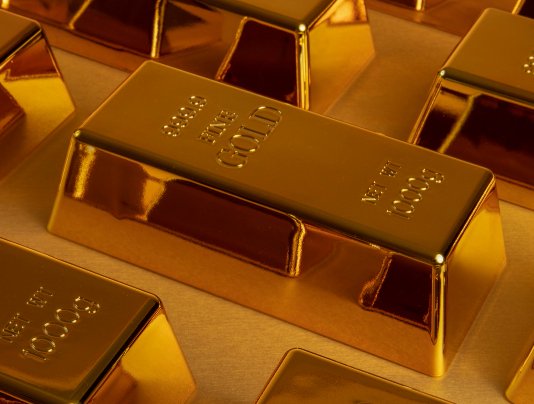
Gold prices in Pakistan recorded a sharp jump on Friday, continuing the strong upward trend driven by a weaker US dollar and bullish momentum in the international market. The local bullion market experienced notable gains across all major categories of gold and silver, reflecting global market strength. 24K Gold Jumps Rs10,700, All-Time High: According to the latest data released by the All-Pakistan Gems and Jewelers Sarafa Association (APGJSA), the price of 24-karat gold rose by Rs10,700, pushing the per-tola rate to Rs454,262. Gold prices also increased on a 10-gram basis:: • 24K Gold (10 grams): Rs389,456 (up Rs9,174)• 22K Gold (10 grams): Rs357,014 This steady rise brings gold to one of its highest levels in Pakistan’s history, tightening investor interest and raising concerns for consumers ahead of the year-end wedding season. Silver Prices Also Rise : Silver followed in gold’s footsteps, witnessing a significant price jump in the domestic market.• 24K Silver (per tola): Rs6,684 – up Rs232• 24K Silver (10 grams): Rs5,730 – up Rs199 Silver’s upward momentum continues to attract small-scale investors who see it as a more affordable alternative to gold. Day-on-Day (DoD) & Monthly Performance: A quick look at the performance table shows just how much gold has appreciated during the year: Gold & Silver Price Summary (Pakistan Market)Date: 12 December 2025GOLD (24K per tola)• Today (Dec 12): Rs 454,262• Yesterday (Dec 11): Rs 443,562• Day Change: +Rs 10,700• 1 Month Change: +Rs 11,200• FYTD: +Rs 104,062• CYTD: +Rs 181,662 SILVER (per tola)• Today (Dec 12): Rs 6,684• Yesterday (Dec 11):: Rs 6,452• Day Change: +Rs 232• 1 Month Change: +Rs 1,022• FYTD: +Rs 2,902• CYTD: +Rs 3,334 The numbers make it clear: gold is one of the strongest-performing assets of the year, offering massive returns to investors who entered early. Global Market Update: In the international market, spot gold traded close to $4,329 per ounce, gaining nearly $53.4 (+1.25%) from the previous session. The rally was supported by: • A weaker US dollar• Safe-haven demand amid financial uncertainty• Increased speculative buying as markets expect a shift in US monetary policy This global push is directly fueling the domestic surge in Pakistan’s bullion market. Bottom Line: Gold Near Record Territory as Investors Shift Toward Safe Havens With both global and domestic markets posting strong gains, gold continues to establish itself as a top-performing safe-haven asset. As uncertainty persists across global markets and currencies fluctuate, investors in Pakistan are steadily increasing their exposure to bullion. Meanwhile, silver’s consistent climb also signals renewed confidence among retail investors. If current trends continue, Pakistan may witness another record high in gold prices before the end of the year.

Renowned Economist says Pakistan's Remittances Boon Could be Hidden Curse
Pakistan

Renowned Economist says Pakistan’s Remittances Boon Could be Hidden Curse

ISLAMABAD – In a nation grappling with chronic economic woes, remittances from overseas Pakistanis have long been hailed as a vital lifeline, injecting $38 billion annually – equivalent to 10% of GDP – into the economy. Yet, a provocative new analysis by economist Atif Mian questions this narrative, arguing that these funds, born from the grueling sacrifices of 10 million expatriates toiling in low-wage jobs abroad, are ensnaring Pakistan in a “macroeconomic trap” rather than propelling it forward.Mian’s essay, published on his Substack, paints a stark picture of remittances as a double-edged sword. On one hand, they represent “free foreign exchange” from migrants enduring cramped living conditions in Gulf states and beyond, far exceeding the norm for countries at Pakistan’s income level – twice the expected ratio, as shown in comparative economic charts. Families back home rely on these transfers for survival, boosting immediate consumption and stabilizing household finances amid inflation and unemployment.However, the influx appreciates the rupee, triggering a classic “Dutch disease” effect: exports in tradable sectors like textiles and agriculture suffer as the currency becomes overvalued, making Pakistani goods uncompetitive globally. Investment-to-GDP ratios languish at historic lows, while consumption soars, perpetuating a cycle of stagnation. “If remittances are not managed properly, they can become a restraint on growth,” Mian warns, highlighting how this dynamic sustains elite rent-seeking in non-tradable industries like real estate, where politically connected tycoons convert windfalls into foreign assets.The irony is bitter: the sweat of poor laborers abroad inadvertently bolsters the purchasing power of the privileged at home. Pakistan’s export slump and prolonged currency overvaluation underscore the malaise, with bad policy – not migrant toil – as the culprit.Mian offers a roadmap out: The State Bank should aggressively build reserves during inflow spikes to curb overheating. A targeted foreign direct investment (FDI) strategy could channel funds into high-tech, export-oriented greenfield projects, mandating local partnerships for technology spillovers. Discourage speculative portfolio inflows and real estate bubbles to prioritize productivity.“Remittances don’t have to be a drag on growth. With the right macro policy, they can become a catalyst for financial stability, investment, and long-run development,” Mian concludes. As Pakistan eyes IMF talks and fiscal reforms, this critique arrives at a pivotal moment. Will policymakers heed the call, transforming expatriate resilience into national renewal, or let the trap tighten?

Pak-Qatar Family Takaful IPO Takes Off: Oversubscribed on Day One
Pakistan

Pak-Qatar Family Takaful IPO Takes Off: Oversubscribed on Day One

In a strong show of confidence from Pakistan’s capital market, Pak-Qatar Family Takaful Limited (PQFTL) made an impressive debut with its Initial Public Offering (IPO) being oversubscribed on the very first day of book building. The overwhelming investor interest underscores the company’s solid fundamentals and its position as a market leader in the fast-growing takaful industry. A Powerful Market Response on Day One: According to Shahid Ali Habib, CEO of Arif Habib Limited, a substantial volume of funds has already been deposited during the book-building process. He shared on his X (formerly Twitter) account that many more investors are expected to place their final bids on the last day of the offer a sign that sentiment around the IPO remains highly positive. The IPO consists of 50 million shares, representing 21.67% of post-IPO paid-up capital, with a floor price of Rs14 per share. Using the Dutch auction method, PQFTL will allocate 75% of shares to successful bidders while 25% is reserved for retail investors. A Market Leader With a Strong Track Record: Founded in 2006, Pak-Qatar Family Takaful is Pakistan’s first and largest dedicated Family Takaful operator. Today, it dominates the sector with: • 44% share of the overall family takaful market• Over 90% share of the dedicated takaful segment Such commanding strength doesn’t happen overnight. PQFTL has built its reputation by delivering consistent growth in net income and profit-after-tax (PAT). Its single-contribution products have played a vital role in accelerating asset accumulation while maintaining low acquisition costs of just 5% in FY24, a notable advantage in a competitive industry. A Forward-Looking Company With Long-Term Vision: The company’s ambition for innovation and diversification became clearer in 2022, when it became Pakistan’s first takaful operator to receive a Voluntary Pension Scheme (VPS) license. This strategic move positions PQFTL to capture long-term retirement savings, giving it a sustainable growth path for the coming decades. What the Oversubscription Really Means: The immediate oversubscription of PQFTL’s IPO indicates three important trends in Pakistan’s financial markets: For investors, PQFTL represents a rare opportunity to invest in a high-growth segment of Pakistan’s financial industry, one that continues to expand even during economic volatility. Pak-Qatar Family Takaful’s IPO success story is more than a market event, it’s a reflection of how Islamic finance, digital distribution, and long-term savings products are reshaping Pakistan’s financial landscape. As bids continue flowing in, all eyes are on the final book-building results, which are expected to set new benchmarks for future Shariah-compliant IPOs.

Pakistan Opens Karachi & Gwadar Ports to Turkmenistan, Unlocking a New Era of Central Asian Trade
Pakistan

Pakistan Opens Karachi & Gwadar Ports to Turkmenistan, Unlocking a New Era of Central Asian Trade

In a significant move that could reshape regional trade dynamics, Pakistan has officially offered Turkmenistan access to its deep-sea ports in Karachi and Gwadar. The development came during Prime Minister Shehbaz Sharif’s two-day visit to Ashgabat, where he met Turkmen President Serdar Berdimuhamedov on the sidelines of an international forum. The proposal marks a strategic shift toward closer regional integration, opening new land and sea routes that could transform Pakistan into a major commercial gateway for Central Asia. A New Trade Corridor for Central Asia: Turkmenistan, a landlocked nation heavily dependent on overland routes, has long sought diversified access to global markets. Pakistan’s offer aims to create: • New alternative trade corridors• Reliable access to South Asia, the Middle East, and the wider global market• Expanded land-and-sea connectivity that benefits both countries According to official statements, the ports of Karachi and Gwadar are well positioned to support Turkmenistan’s growing trade ambitions, particularly as Central Asian nations look to reduce their logistical dependence on traditional routes. Strategic Diplomacy in Ashgabat: Prime Minister Shehbaz Sharif and President Berdimuhamedov met during international celebrations marking 30 years of Turkmenistan’s permanent neutrality, a globally recognized UN designation. During the meeting, the Pakistani premier highlighted how both ports especially Gwadar, located near vital shipping lanes can serve as high-value gateways for Central Asian exports and imports. Sharif also expressed gratitude to the Turkmen government for assisting in the evacuation of Pakistani citizens from Iran earlier this year during heightened tensions between Iran and Israel. High-Level Delegation from Pakistan: The Pakistani delegation included:• Ishaq Dar – Deputy Prime Minister• Awais Leghari – Federal Minister for Energy• Atta Tarar – Federal Minister for Information Their presence signals Pakistan’s intention to expand cooperation in energy, logistics, and trade infrastructure, even though no formal agreements or investment figures were announced during this round of talks. Energy Cooperation: A Long-Term Opportunity: Turkmenistan is one of the world’s major natural gas exporters, while Pakistan continues to face unresolved energy challenges. Both nations have previously explored major energy projects such as the TAPI gas pipeline, which is proposed to run through Afghanistan. While progress has been slow, renewed diplomatic engagement may help revive long-term energy cooperation discussions. Invitations for High-Level Visits in 2026: Prime Minister Shehbaz Sharif extended formal invitations to:• President Serdar Berdimuhamedov, and• Former President Gurbanguly Berdimuhamedov, now recognized as the National Leader of the Turkmen People for official state visits to Pakistan in 2026. These visits could push forward economic agreements, investment frameworks, and energy partnerships. Participation in Global Peace Forum: Shehbaz Sharif is also attending the International Forum on Peace and Trust, organized to mark the UN’s declaration of 2025 as the International Year of Peace and Trust. The forum reflects Turkmenistan’s long-standing diplomatic identity centered around neutrality and peaceful cooperation. Why This Matters for Regional Business & Investment: Pakistan’s offer has the potential to:• Position Karachi and Gwadar as regional trade hubs• Strengthen economic ties between South Asia and Central Asia• Enhance Pakistan’s relevance in global supply chains• Open doors to future energy, logistics, and infrastructure investments If fully realized, the collaboration could reshape commercial flows across the region, making Pakistan a central player in Central Asian trade connectivity.

Scroll to Top