Environment

EU Scientists Term 2025 as Third-Hottest Year on Record, with 3-Year Average Breaching 1.5°C Threshold
Environment

EU Scientists Term 2025 as Third-Hottest Year on Record, with 3-Year Average Breaching 1.5°C Threshold

BRUSSELS — European Union scientists announced on January 14, 2026, that 2025 ranked as the third-warmest year globally since records began, capping a historic streak of exceptional heat. Data from the Copernicus Climate Change Service, operated by the European Centre for Medium-Range Weather Forecasts (ECMWF), showed 2025 was only marginally cooler than 2023 by 0.01°C and trailed 2024, the hottest year ever recorded. Read More: https://theboardroompk.com/prof-dr-abdul-basit-top-2-scientists-recognition-elevates-pakistans-global-medical-standing/ For the first time, the three-year period from 2023 to 2025 averaged over 1.5°C above pre-industrial levels, marking the longest such breach on record. Long-term warming stands at about 1.4°C, but short-term spikes have pushed the planet past the Paris Agreement’s critical threshold temporarily. Unprecedented Heat Streak and Global Rankings The last three years—2024 (warmest), 2023 (second), and 2025 (third)—form the hottest trio in instrumental history. Copernicus data revealed 2025’s global average temperature anomaly reached approximately 1.47°C above pre-industrial levels. The UK Met Office corroborated the third-place ranking since 1850. Experts noted that while natural variability plays a role year-to-year, the underlying trend is driven by human-caused greenhouse gas emissions from fossil fuels. Rising Risks and Urgent Calls for Action Experts warned that the Paris Agreement’s 1.5°C limit—measured as a long-term average—could be exceeded this decade, a decade earlier than anticipated in 2015. Samantha Burgess of ECMWF emphasized that “every fraction of a degree matters” for intensifying extremes like heatwaves, storms, and floods. Carlo Buontempo, Copernicus director, stated the world is “bound to pass” 1.5°C, shifting focus to managing overshoot impacts. Extreme events in 2025, including record European wildfire emissions, deadly Pakistan floods killing over 1,000, and Hurricane Melissa, underscored climate change’s role in worsening disasters. Urgent emission reductions remain essential to limit further escalation.

Overseas Investors Say $565.7 billion investment needed for Pakistan’s climate goals, green taxonomy
Environment

Overseas Investors Say $565.7 billion investment needed for Pakistan’s climate goals, green taxonomy

Karachi, January 14: Pakistan will need a staggering US$565.7 billion in investment to achieve its Nationally Determined Contributions (NDC) 3.0 climate commitments by 2035, it was revealed during a session on Pakistan Green Taxonomy (PGT) and ESG Disclosure Guidelines hosted by the Overseas Investors Chamber of Commerce and Industry (OICCI). Read More: https://theboardroompk.com/pakistan-renewable-energy-transition-gains-momentum-with-solar-and-climate-leadership/ The session, attended by top business executives and industry stakeholders, highlighted the critical role of sustainable finance and transparent ESG reporting in attracting the investments necessary to build Pakistan’s climate resilience. The session was held in the backdrop of the Securities and Exchange Commission of Pakistan’s issuance of the revised ESG Disclosure Guidelines for listed companies, formally aligning them with the Pakistan Green Taxonomy. The move is aimed at strengthening sustainability reporting, enhancing transparency, and supporting Pakistan’s climate transition and environmental commitments.The session outlined that Pakistan’s NDC 3.0 targets include a 17 percent unconditional and 33 percent conditional reduction in greenhouse gas emissions, a 30 percent increase in electric vehicle adoption, and a shift to 60 percent renewable energy. Meeting these ambitious goals will depend heavily on mobilizing green-aligned investments, making frameworks like the Pakistan Green Taxonomy and robust ESG disclosure practices essential for guiding capital toward sustainable projects. The Pakistan Green Taxonomy (PGT), launched by the State Bank of Pakistan in 2024, provides a clear classification system for identifying activities that actively contribute to environmental objectives, including climate change mitigation, sustainable water use, ecosystem protection, pollution prevention, circular economy, and land management. Complementing this, the ESG Disclosure Guidelines, which will transition to mandatory reporting between 2029 and 2031, establish standardized metrics for financial and non-financial sustainability reporting. The session on green financing was conducted by Farrukh Rehman, an expert on climate regulatory compliance and Former President, The Institute of Chartered Accountants of Pakistan (ICAP), who emphasized, “The integration of Pakistan Green Taxonomy into ESG reporting is a roadmap for businesses to align operations with national climate objectives. Transparent and structured reporting will attract sustainable investment and enable companies to contribute to Pakistan’s environmental and social goals.” OICCI Secretary General, M. Abdul Aleem, added, “The corporate sector is aware of growing importance of accountability and sustainability as key to business strategy. By adopting ESG disclosures and PGT-aligned practices, companies can secure investment, drive innovation, and enhance resilience against climate-related risks.” The session also covered technical criteria for PGT alignment, including the substantial contribution test, do-no-significant-harm principles, and minimum social safeguards to ensure ethical and responsible practices. Attendees were guided through reporting formats, international standards such as GRI, ISSB, and TCFD, and stepwise ESG reporting processes to ensure compliance and consistency.

NEPRA Sets Rs22.98/kWh Flat Rate to Boost Industrial, Agri Electricity Use
Environment

NEPRA Sets Rs22.98/kWh Flat Rate to Boost Industrial, Agri Electricity Use

Islamabad – The National Electric Power Regulatory Authority (NEPRA) on Tuesday approved the federal government’s three-year concessional incremental tariff package at a flat rate of Rs22.98 per unit for industrial consumers and private agriculture tube-well connections, setting aside alternative proposals submitted by the industrial sector.The package, effective after federal government notification, will apply only to additional electricity consumption over and above the reference period of December 2023 to November 2024. Consumers in industrial (B1, B2, B3, B4, B5) and private agricultural categories who increase their usage beyond the benchmark will enjoy the discounted rate for three years. Read More: https://theboardroompk.com/nepra-fines-lesco-gepco-and-fesco-rs57-5-million-over-20-preventable-deaths/ NEPRA clarified that consumers with zero reference consumption, those switching from non-Time of Use (ToU) to ToU meters, or changing tariff categories (e.g., commercial to industrial) will be treated as “new consumers” and qualify under separate benchmarking criteria. However, consumers moving within the same industrial category (e.g., B2 to B3) will retain their existing reference consumption.In case of defective meters, locked connections, or disconnection during the reference period, new-consumer rules will apply. Detection bills will not be counted toward benchmark or incremental consumption, though legitimate dial-adjustment corrections will be considered.Despite industry demands for more favourable load factors, NEPRA retained the Power Division’s proposed parameters to prevent additional burden on protected domestic and other consumers through higher quarterly adjustments. The regulator also simplified benchmarking for new connections by using the higher of sanctioned load or recorded Maximum Demand Indicator (MDI) in a manner that maximises eligibility.NEPRA upheld the inclusion of wheeling consumers under the package, stating that exclusion would violate Section 7(6) of the NEPRA Act and defeat the objective of boosting industrial growth through enhanced electricity consumption.The decision followed a public hearing held on November 11, 2025. Distribution companies have been directed to implement the package immediately upon federal government notification.

Al Baraka Bank (Pakistan) Limited Celebrates 'Al Baraka Day' with Environmental Stewardship and Youth Engagement
Business, Environment

Al Baraka Bank (Pakistan) Limited Celebrates ‘Al Baraka Day’ with Environmental Stewardship and Youth Engagement

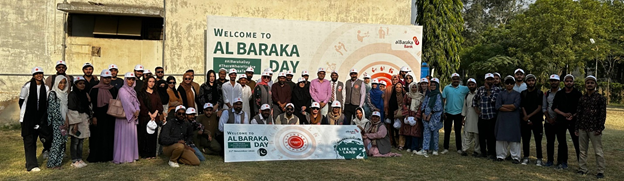
KARACHI Al Baraka Bank (Pakistan) Limited celebrated ‘Al Baraka Day’ by organizing an environmental awareness session and a joint plantation drive of 200 trees in collaboration with the Institute of Environmental Studies at the University of Karachi. This initiative is part of a broader, group-wide (Al Baraka Banking Group) commitment to community-focused volunteering activities under the banner of Al Baraka Day, first launched by (Al Baraka Banking Group) in 2022. The theme for this year’s ‘Al Baraka Day’ is “Life on Land,” a direct alignment with the United Nations Sustainable Development Goal (SDG) 15, which focuses on the protection, restoration, and sustainable use of terrestrial ecosystems and biodiversity. This activity also contributes to its flagship initiative “One Tree Per Staff Every Year” by promoting environmental stewardship and sustainability to reduce banks carbon footprint. This initiative reflects the banks deep-rooted commitment to climate change and its impact. Through this partnership with the University of Karachi, the bank is not only contributing to a greener Pakistan but also engaging the next generation in our collective mission to enable our youth to become the agents of change with the banks shared vision for a sustainable future. The event brought together Al Baraka Bank employees, university staff, and students in a hands-on effort to create a meaningful, lasting impact on the communities and environment.

Environment

Pakistan’s Chilgoza Pine Forest Project wins prestigious UN decade on ecosystem restoration flagship award

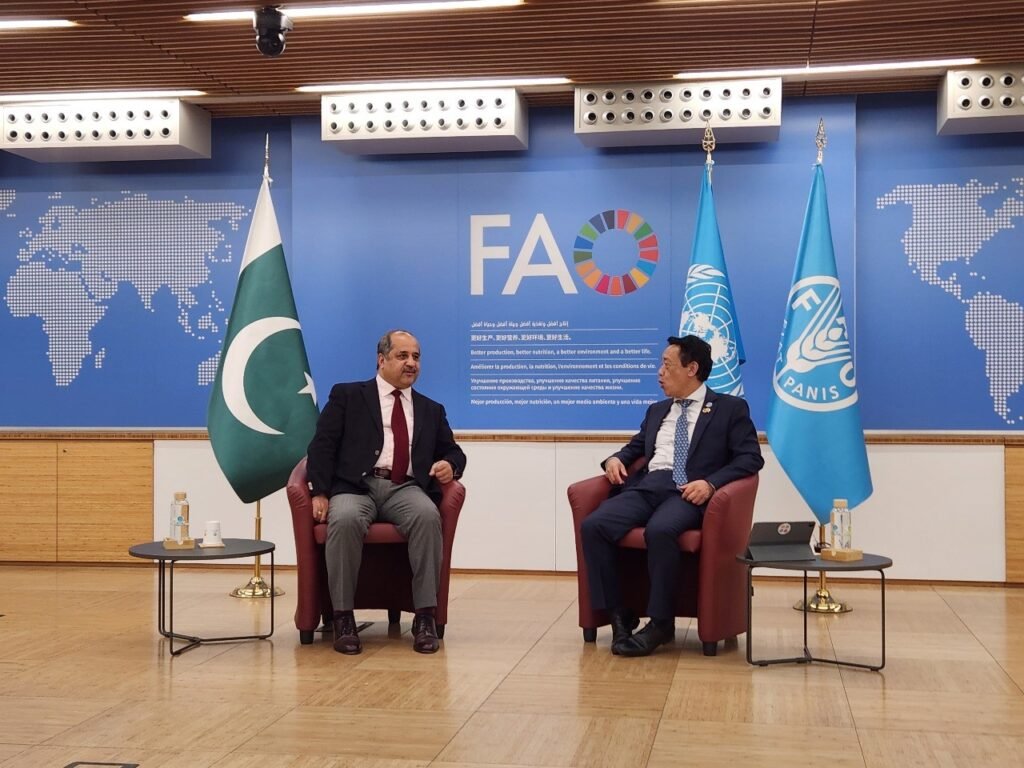
ISLAMABADPakistan received major international recognition as its flagship initiative “Reversing Deforestation and Degradation in High Conservation Value Chilgoza Pine Forests” was honored as one of the UN Decade on Ecosystem Restoration World Restoration Flagships at FAO headquarters in Rome, during FAO’s 80th Anniversary and the World Food Forum. Implemented between 2018 and 2025 under The Restoration Initiative, the project represents a strong collaboration between the Government of Pakistan – Ministry of Climate Change, Provincial Forest Departments, and the Food and Agriculture Organization of the United Nations (FAO), said in a FAO press release issued here. The work focuses on conserving and restoring Pakistan’s unique Chilgoza pine forests across Khyber Pakhtunkhwa, Balochistan, and Gilgit-Baltistan. Addressing the ceremony, Dr. Syed Tauqir Hussain Shah, Advisor to the Prime Minister, highlighted that the initiative restored 3,800 hectares of degraded forest land, developed sustainable forest management plans for 69,000 hectares, and planted over one million Chilgoza pine seedlings.

Scroll to Top