Business

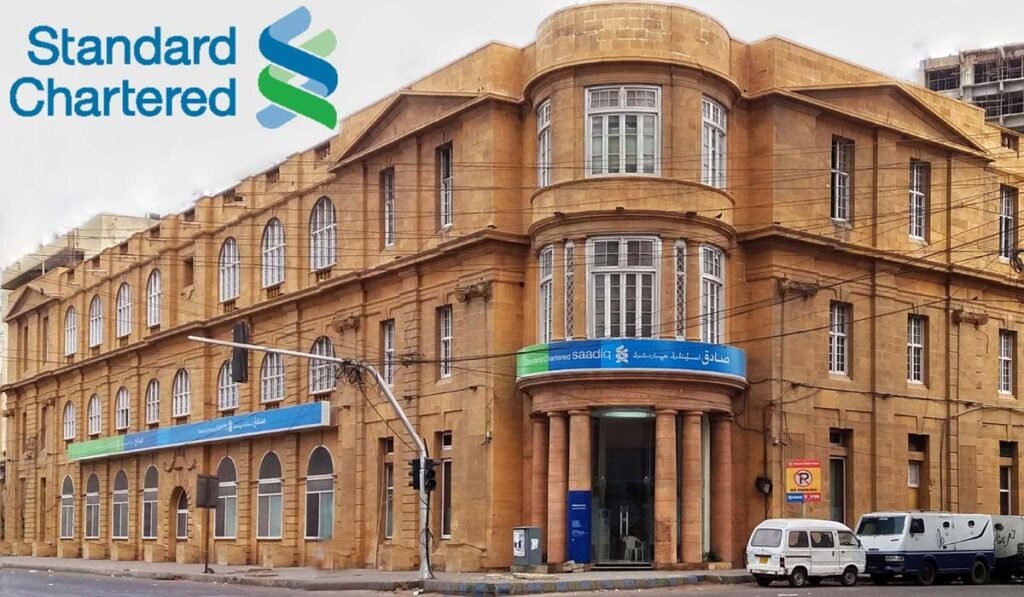
Standard Chartered Pakistan Sees PAT Crash 38%, EPS Halved Amid Deposit Shrinkage
Business

Standard Chartered Pakistan Sees PAT Crash 38%, EPS Halved Amid Deposit Shrinkage

February 26, 2026 – Karachi: Standard Chartered Bank Pakistan Limited (SCBPL) delivered a resilient financial performance with a profit before tax of PKR 58.5bn compared to PKR 100.6bn last year. Read More: https://theboardroompk.com/karachis-circular-railway-set-for-comeback-with-adb-loan-technical-support/ Revenue was lower year on year primarily due to sharp reduction in interest rates. The impact of margin compression on revenue was partially offset by a decrease in cost of funds. Despite a high inflationary environment and continuous investments in our infrastructure, operating expenses were well managed through efficiencies and disciplined spending, with an increase of 6% from last year. Moreover, a prudent risk approach coupled with strong recoveries of bad debts led to a net release of PKR 1.8bn during the year. On the liabilities side, the Bank’s total deposits stood at PKR 650bn; down by 22% from start of the year. This was driven by a deposit optimisation initiative, which is reflected in the improved current accounts mix, comprising 59% of the deposit book as compared to 48% last year. On the assets side, net advances continued positive momentum and were higher by PKR 43bn or 25% since start of the year. The Bank is well placed to cater for the needs of its clients and will continue its strategy to build a profitable, efficient and sustainable portfolio. During 2025, the Bank contributed PKR 52.2bn to the national exchequer in lieu of direct income taxes, as an agent of the Federal Board of Revenue (FBR) and on account of FED / Provincial Sales Taxes. The Bank is investing in its digital capabilities and infrastructure to enhance its clients’ banking experience through the introduction of innovative solutions. We will continue executing on its strategy of combining differentiated cross-border capabilities with leading wealth management expertise. Having strengthened our foundations on controls and conduct, we are well equipped to manage our risks, capital, and liquidity effectively. The prudent and proactive measures that we are taking now are expected to make us leaner and fitter to take advantage of the opportunities that lie ahead. Commenting on the results, Rehan Shaikh, CEO & Head of Coverage, Standard Chartered Bank (Pakistan) Limited, said, “Our results are a reflection of changed market dynamics. They underscore the strength of our robust balance sheet, a diversified portfolio, deep client relationships, and strong business fundamentals. As a bank, we continue to play in our niches and remain committed to serving our clients’ cross-border and affluent banking needs. I would like to extend my heartfelt gratitude to our shareholders, clients, and business partners for their unwavering trust and confidence in our capabilities.” With a strong Return on Equity (ROE) of 25% for the year and a Capital Adequacy Ratio (CAR) of 21.9%, the Bank remains well positioned for future growth. On the back of a resilient performance, the Board of Directors were pleased to announce a final cash dividend of PKR 3.0/- per share, which is in addition to interim cash dividend of PKR 3.5 per share. Standard Chartered has also been recognised by the International Finance Corporation and the Pakistan Business Council as one of the top 10 employers of choice. In addition, the Bank’s efforts in making a difference in the communities it works in are underscored through a variety of initiatives in 2025. Through the launch of the SC Women in Tech Programme, the Bank continues to address gender disparity in the technology sector. Through the Goal Accelerator Programme, a sport-powered initiative, the Bank works to create concrete pathways for disadvantaged girls and young women to become economically resilient. The Bank has also partnered with Karachi United and launched the Eighth Youth League – Football Tournament to promote sports amongst children for the eighth year in a row. The Bank remains fully committed to delivering sustainable growth for its shareholders, bringing best-in-class services and solutions for our clients, and playing our part in the growth story of Pakistan.

Pakistan Non-Bank Financial Sector Growth Surges 21% in H2 2025 .
Business

Pakistan Non-Bank Financial Sector Growth Surges 21% in H2 2025 .

Pakistan Non-Bank Financial Sector Growth has emerged as one of the most compelling financial stories of 2025, signaling a shift in how capital is mobilized and invested across the country. According to the latest report by the Securities and Exchange Commission of Pakistan (SECP), the sector’s total assets surged to Rs. 6.84 trillion by December 31, 2025 marking an impressive 21% increase in just six months. This sharp rise from Rs. 5.635 trillion in June 2025 reflects more than just numbers it highlights increasing investor confidence, expanding financial inclusion, and a maturing alternative financial ecosystem beyond traditional banking. Fund Management Drives Pakistan Non-Bank Financial Sector Growth A major contributor to Pakistan Non-Bank Financial Sector Growth has been the fund management segment, which expanded by 17% during the second half of 2025. Mutual funds continue to dominate the landscape, managing Rs. 4.5 trillion in assets accounting for 66.3% of the entire sector. The number of funds and investment plans also climbed from 369 to 409, offering investors a broader range of opportunities. The asset allocation trend reveals a cautious yet diversified investor approach. A significant portion of investments flowed into relatively low-risk instruments, with money market funds taking the lead, followed by income funds and equity funds. This distribution underscores a balanced appetite for both stability and growth. Investor Boom Strengthens Pakistan Non-Bank Financial Sector Growth Retail participation is rapidly reshaping Pakistan Non-Bank Financial Sector Growth. The number of mutual fund investor accounts reached 845,000 by the end of 2025 an 8% increase in just six months. Even more striking is the long-term trend: investor accounts have doubled since December 2022. This surge reflects a growing awareness among individuals about capital market instruments and wealth-building opportunities beyond conventional savings. Voluntary pension schemes are also witnessing unprecedented traction. Participation surged to 143,154 accounts, marking a 30% increase since June 2025 and an extraordinary 170% rise over the past three years. This signals a cultural shift toward long-term financial planning and retirement security. NBFC Lending Expansion Fuels Pakistan Non-Bank Financial Sector Growth The lending segment of Non-Bank Financial Companies (NBFCs) has been a standout performer, registering a remarkable 65% growth in assets within six months. Total assets in this segment reached Rs. 824 billion, highlighting strong demand for alternative financing solutions. This rapid expansion indicates that businesses and individuals are increasingly turning to NBFCs for flexible and accessible credit options especially in areas underserved by traditional banks. Additionally, Shariah-compliant finance continues to gain traction, with assets reaching Rs. 2.47 trillion making up 36% of the total sector. This growth reflects the rising demand for Islamic financial products across Pakistan. Expanding Ecosystem Signals Long-Term Pakistan Non-Bank Financial Sector Growth The sector’s expansion is further evidenced by the increasing number of registered entities. The total count of NBFCs and Modarabas rose to 185, up from 174 in mid-2025. This steady increase signals strong institutional interest and a favorable regulatory environment. The Securities and Exchange Commission of Pakistan continues to play a pivotal role in fostering a transparent, resilient, and inclusive financial system. Its regulatory efforts are aimed at mobilizing savings, enhancing investor protection, and supporting sustainable economic growth. Why Pakistan Non-Bank Financial Sector Growth Matters Pakistan Non-Bank Financial Sector Growth is more than a financial milestone it represents a structural evolution in the country’s economic framework. With rising investor participation, diversified investment vehicles, and expanding credit access, the sector is becoming a key pillar of economic stability. As Pakistan navigates global economic uncertainties, the continued development of its non-bank financial ecosystem could prove critical in unlocking new growth avenues and strengthening financial resilience.

BankIslami’s aik Introduces Fully Cashless Payments at Islamabad International Airport
Business

BankIslami’s aik Introduces Fully Cashless Payments at Islamabad International Airport

Karachi – February 24, 2026: aik by BankIslami Pakistan Limited has successfully rolled out a fully digital payment ecosystem at Islamabad International Airport, enabling passengers and visitors to complete transactions without the need for cash. Read More: https://theboardroompk.com/jazzcash-shortlisted-for-glomo-awards-2026-in-two-categories/ With merchants across the airport onboarded, QR codes have been deployed at major passenger touchpoints, including retail stores, service counters, and other facilities. The move allows travelers to conduct secure, seamless, and Shariah-compliant digital transactions throughout the airport premises. The implementation aligns with regulatory standards and frameworks established by the State Bank of Pakistan (SBP), positioning the initiative as a practical model for large-scale adoption of cashless systems within public infrastructure. The milestone was commemorated at an event held at the airport, attended by representatives from aik by BankIslami, airport management, and SBP officials. Ashfaque Ahmed, Chief Officer at aik, highlighted that the deployment reflects the institution’s commitment to strengthening digital infrastructure and enhancing everyday payment experiences. He emphasized that transforming a major national gateway into a cashless environment promotes efficiency, transparency, and broader financial inclusion, laying groundwork for Pakistan’s digital financial future. By digitizing one of the country’s key aviation hubs, aik by BankIslami continues to expand secure and accessible financial solutions that drive digital participation and support economic modernization.

KSE-100 Index Decline: A Market on Edge
Business

KSE-100 Index Decline: A Market on Edge

The KSE-100 Index decline dominated market headlines on Tuesday as Pakistan’s stock market extended its losing streak, reflecting rising investor anxiety. The benchmark index closed at 166,258.54, shedding 1,432 points (0.85%), signaling a cautious mood driven by both domestic and global uncertainties. Despite intermittent recoveries during the session, the broader sentiment remained bearish, with investors opting to reduce exposure ahead of key economic developments. KSE-100 Index Decline Driven by IMF Review Concerns One of the biggest triggers behind the ongoing KSE-100 Index decline is the upcoming review by the International Monetary Fund. Market participants are closely watching this development, as it could shape Pakistan’s fiscal direction and economic stability. Uncertainty over potential policy adjustments, fiscal targets, and reform commitments has made investors cautious. Rather than taking aggressive positions, many traders are choosing to sit on the sidelines or book profits, leading to sustained selling pressure. This cautious approach reflects a broader wait-and-see strategy, where clarity on economic policy could determine the market’s next direction. Volatility Signals Nervous Investor Behavior The trading session highlighted extreme volatility a hallmark of uncertain markets. The index swung dramatically within a 5,329-point range, climbing to an intraday high of 169,237 before plunging to 163,907. Such sharp movements suggest that investors are reacting quickly to news flows and macroeconomic signals. While short-lived rallies occurred, they lacked the strength to sustain momentum, reinforcing the ongoing KSE-100 Index decline narrative. Trading activity remained strong, with 345 million shares exchanged, indicating that despite bearish sentiment, market participation stayed active. Global Trade Uncertainty Adds Pressure Beyond domestic concerns, global developments also contributed to the KSE-100 Index decline. A major ruling by the U.S. Supreme Court overturned previous tariff measures, significantly reducing effective tariff rates. However, uncertainty persists after new tariffs were introduced under the Trade Act of 1974, raising concerns about future global trade flows. For emerging markets like Pakistan, such developments often trigger capital outflows and risk aversion, further dampening investor confidence. Market Breadth Reflects Broad-Based Selling The overall market structure painted a clear bearish picture. Out of 100 companies in the index: • A minority managed to post gains• A majority ended in the red• A small number remained unchanged This imbalance highlights widespread selling pressure rather than isolated declines. Stocks such as UNITY, PKGP, and GADT faced steep losses, while selective buying was seen in companies like PABC and ATRL. However, these gains were not sufficient to offset broader declines. Sectoral Impact: Banks and Fertilizers Lead the Fall The KSE-100 Index decline was largely driven by heavyweights across key sectors: • Commercial banks emerged as the biggest drag, reflecting sensitivity to interest rate and policy uncertainty• Fertilizer and energy stocks also weighed heavily due to macroeconomic concerns• Power and investment sectors added further downside pressure On the flip side, limited support came from cement, refinery, and automobile-related stocks, suggesting selective investor interest in cyclical and industrial plays. Broader Market Activity Shows Mixed Signals While the index declined, overall market activity told a slightly different story. Total trading volume surged significantly compared to the previous session, and traded value also jumped. This combination of rising activity and falling prices typically signals distribution where investors are actively selling positions rather than accumulating. Across the broader market: • Hundreds of companies participated in trading• Declining stocks significantly outnumbered advancing ones• Trading frequency increased, pointing to heightened market engagement What Lies Ahead for the KSE-100 Index? Despite the ongoing KSE-100 Index decline, the bigger picture remains nuanced. The index has delivered strong gains over the fiscal year, even though it has faced pressure in the current calendar year. The near-term outlook will largely depend on: • The outcome of the IMF review• Clarity on economic policy direction• Stability in global trade dynamics Until then, volatility is likely to persist, with investors remaining cautious and highly responsive to news triggers. Conclusion: A Market Waiting for Clarity The current KSE-100 Index decline reflects more than just numbers it highlights a market caught between optimism and uncertainty. While strong fundamentals have supported long-term growth, short-term risks continue to dominate investor sentiment. As key economic decisions approach, the market’s next move will depend on confidence and right now, confidence remains fragile.

Ufone and Zong Deposit $30M Pre-Bid for Pakistan's 5G Auction
Business

Ufone and Zong Deposit $30M Pre-Bid for Pakistan’s 5G Auction

Pakistan’s much-anticipated 5G spectrum auction is set for March 10, 2026. Read More: https://theboardroompk.com/hindustan-aeronautics-stock-drops-after-tejas-crash/ Two major telecom operators, Ufone and Zong, have each deposited $15 million as pre-bid earnest money with the Pakistan Telecommunication Authority (PTA). This brings the total pre-bid commitment to $30 million so far. Key Developments and Participation The PTA requires each bidder to submit $15 million upfront, adjustable against final license fees. Jazz is expected to deposit its amount soon, before the February 27, 2026 deadline. With three operators likely participating, the auction is positioned for competitive bidding. Officials believe this will meet the success threshold and boost investor confidence. Auction Structure and Expectations A total of 597 MHz of spectrum is on offer across various bands. At least 50% (around 300 MHz) must be sold for the auction to succeed. Each operator is mandated to secure a minimum of 100 MHz. The process uses a multi-round electronic clock format, starting March 10. Proceeds could exceed $634 million, with estimates ranging from $300-700 million depending on bidding intensity. The auction paves the way for 5G rollout, starting in major cities like federal and provincial capitals. Services aim to deliver ultra-high speeds, low latency, and support for digital economy growth. Industry watchers see this as a milestone for Pakistan’s telecom sector after years of delays.

Security Over Trade? Lawmakers Probe Regional Export Woes
Business

Security Over Trade? Lawmakers Probe Regional Export Woes

The National Assembly Standing Committee on Commerce recently spotlighted Pakistan’s persistent export stagnation. Despite two decades of efforts, exports hover between $25-30 billion, far short of the ambitious $60 billion target. Lawmakers expressed deep frustration over negligible trade growth with neighboring countries, even as diplomatic ties improve. Security concerns appear to overshadow economic opportunities in regional markets. Committee’s Sharp Criticism and Demands MNA Aliya Kamran, who moved the Calling Attention Notice, challenged Commerce Ministry officials to name even one country where Pakistan’s exports have risen meaningfully. She highlighted the irony: better relations with neighbors yield zero or minimal trade gains. Committee Chairman Jawed Hanif Khan noted that security priorities dominate over commerce in these relations. Proposed Actions and Broader Challenges The committee resolved to summon detailed briefings from the Ministries of Defence, Interior, Foreign Affairs, and the State Bank of Pakistan to uncover root causes. Structural issues persist, including high costs of doing business, energy shortages, taxation burdens, provincial cesses, and reliance on imports. Unresolved loopholes in the export framework have lingered for 20 years. Discussions also covered sector-specific woes, such as a 50% drop in rice exports due to India’s subsidized global supplies, causing oversupply and price depression. The panel endorsed Rs15 billion support from the Export Development Fund for rice exporters to target $1 billion in shipments. Proposals for the gem and jewellery sector, including better regulation and export promotion, were reviewed. Inter-ministerial coordination emerged as key to breaking the stasis and fostering sustainable growth, jobs, and economic stability.

KSE-100 Index Crash: Geopolitical Tensions Trigger Massive Market Sell-Off
Business

KSE-100 Index Crash: Geopolitical Tensions Trigger Massive Market Sell-Off

The KSE-100 Index Crash dominated headlines on Monday as Pakistan’s stock market witnessed one of its sharpest single-day declines in recent months. The benchmark index plunged by 5,478.63 points (3.16%), closing at 167,691.08, leaving investors rattled and market sentiment deeply shaken. What started as a volatile trading session quickly spiraled into a broad-based sell-off, highlighting how fragile investor confidence remains in the face of global uncertainty. What Triggered the KSE-100 Index Crash? At the heart of the KSE-100 Index Crash lies a surge in geopolitical risks. Escalating tensions between the United States and Iran sent shockwaves across global financial markets, pushing investors toward safer assets. Closer to home, rising border tensions between Pakistan and Afghanistan further intensified uncertainty, prompting local investors to adopt a risk-off strategy. This dual pressure global and regional created the perfect storm for a steep market correction. Extreme Volatility Marks the Trading Session The session was nothing short of dramatic. The index swung wildly within a 7,450-point range, reflecting panic-driven trading behavior: • Intraday High: 174,336.85 (+1,167 points)• Intraday Low: 166,886.63 (-6,283 points) Such volatility signals not just uncertainty but fear. Trading activity also slowed, with volumes dropping to 204.73 million shares, indicating cautious participation despite heavy selling. Broad-Based Sell-Off: Almost Entire Market in Red The scale of the KSE-100 Index Crash becomes clearer when looking at market breadth: • Only 2 companies closed positive• A staggering 98 companies ended in losses Major losers included: • IBFL (-9.87%)• TRG (-9.04%)• BOP (-8.63%)• HGFA (-8.60%)• PABC (-8.31%) On the flip side, only a handful of stocks showed resilience, with SSOM posting a notable +10% gain, while EFERT remained marginally positive. Sector-Wise Impact: Banking and Cement Hit Hard The KSE-100 Index Crash wasn’t limited to a few stocks it spread across key sectors that typically anchor the market: Commercial banks led the decline, dragging the index down heavily, followed by cement, oil & gas exploration, and fertilizer sectors. These sectors are often considered economic indicators, making their fall even more concerning. Even traditionally stable sectors showed minimal resistance, underlining the depth of bearish sentiment. Market Activity Reflects Panic Selling The broader market mirrored the same negative trend: • All-Share Index: Down 3,347 points (-3.22%)• Total Volume: 461 million shares (declining trend)• Total Trades: Over 310,000 Out of 479 companies traded, the overwhelming majority declined, reinforcing that this was not a selective correction but a market-wide retreat. Interestingly, the most actively traded stocks like KEL, WTL, and BOP also ended lower, showing that high liquidity did not translate into stability. A Year of Gains, But Cracks Begin to Show Despite the sharp downturn, the bigger picture tells a mixed story. The KSE-100 Index has still gained over 42,000 points (33.48%) during the fiscal year, signaling strong long-term momentum. However, on a calendar-year basis, the market has slipped by 3.66%, suggesting that recent instability may be eroding earlier gains. Can IMF Talks Stabilize the Market After the KSE-100 Index Crash? All eyes are now on the upcoming visit of the International Monetary Fund delegation, scheduled to begin discussions with Pakistani authorities on February 25. These talks are crucial. Policy direction, reform commitments, and economic signals emerging from these discussions could either restore investor confidence or deepen concerns. What Investors Should Watch Next The KSE-100 Index Crash is more than just a one-day drop it’s a reflection of how sensitive markets have become to geopolitical developments. Going forward, investors will closely monitor: • Global geopolitical stability• Regional security developments• IMF policy signals• Currency and inflation trends Final Thoughts The KSE-100 Index Crash serves as a stark reminder that markets are deeply interconnected with global politics. While Pakistan’s equities have shown resilience over the fiscal year, short-term shocks like this highlight the importance of cautious investing and diversified strategies. Whether this is a temporary correction or the start of a broader downturn will depend largely on how geopolitical tensions unfold and how effectively policymakers respond in the coming days.

CCP Approves Acquisition of First Women Bank Limited by Abu Dhabi based Eve Holdings
Business

CCP Approves Acquisition of First Women Bank Limited by Abu Dhabi based Eve Holdings

ISLAMABAD: The Competition Commission of Pakistan (CCP) has approved the proposed acquisition of First Women Bank Limited by Eve Holdings RSC Limited, pursuant to a Share Purchase Agreement executed as part of the privatization process, following a Phase-I competition assessment under the Competition Act, 2010. Read More: https://theboardroompk.com/pakistanis-drank-rs-106-billion-worth-of-tea-in-just-seven-months/ Eve Holdings RSC Limited, the acquirer, is a special purpose holding company incorporated in Abu Dhabi. First Women Bank Limited, the target, is a public unlisted commercial bank in Pakistan engaged in providing banking and financial services. Under the approved transaction, Eve Holdings RSC Limited will acquire the entire shareholding of First Women Bank Limited from the Government of Pakistan and existing institutional shareholders, including Habib Bank Limited, MCB Bank Limited, Allied Bank Limited, National Bank of Pakistan, and United Bank Limited. Upon completion, Eve Holdings will assume full ownership and control of First Women Bank Limited. CCP’s competition assessment noted that the target has a limited presence in the commercial banking market, while the acquirer does not have any existing operations in the relevant or related market. The transaction therefore constitutes a conglomerate merger and does not raise competition concerns. The Commission concluded that the proposed transaction is not likely to create or strengthen a dominant position, substantially lessen competition, or adversely affect the competitive structure of the market. Accordingly, the Commission has authorized the transaction in accordance with the provisions of the Competition Act, 2010. This acquisition reflects continued foreign investor interest in Pakistan’s financial sector and highlights the importance of transparent privatization and effective competition regulation in promoting foreign direct investment, strengthening financial institutions, and supporting economic growth.

Scroll to Top