
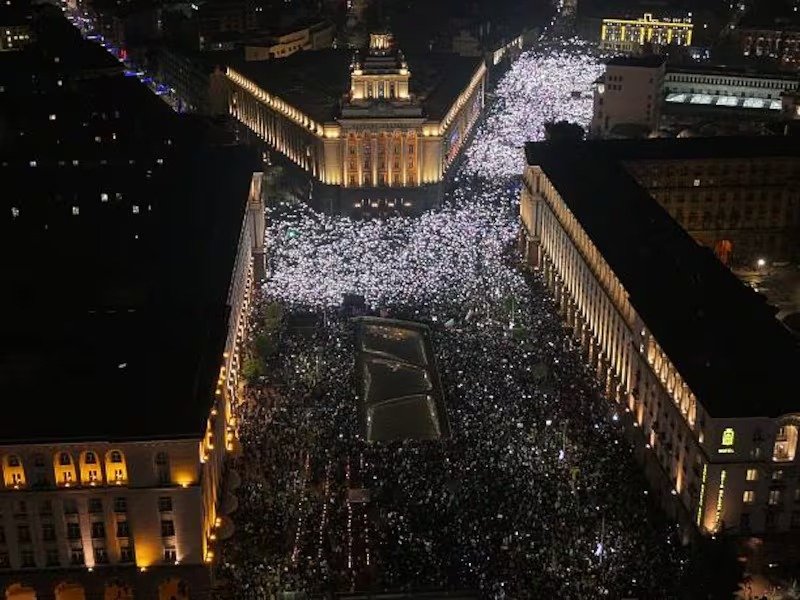
SOFIA – In a dramatic blow to Bulgaria’s fragile political landscape, Prime Minister Nikolay Denkov’s 11-month-old coalition government resigned on Thursday amid massive street protests, plunging the European Union and NATO member into fresh uncertainty just three weeks before it adopts the euro currency on January 1, 2026.
The resignation caps a turbulent year for the Balkan nation of 6.5 million, where public fury over corruption, soaring inflation, and sluggish judicial reforms boiled over into nationwide demonstrations. Tens of thousands rallied in Sofia and other cities, chanting “No to the mafia state!” and demanding snap elections. Denkov, a technocrat from the pro-EU We Continue the Change (PP) party, cited an inability to pass key anti-graft legislation as the tipping point, announcing the government’s collapse in a televised address. “The people’s voice must be heard,” he said, paving the way for President Rumen Radev to appoint a caretaker administration.
For outsiders unfamiliar with Bulgaria’s woes, the crisis stems from a vicious cycle of instability since 2021. Sparked by anti-corruption probes implicating figures from the long-ruling GERB party of ex-premier Boyko Borissov, the country has endured seven parliamentary elections in four years. No single bloc has secured a stable majority in the fragmented 240-seat assembly, leading to short-lived coalitions riddled with infighting. The latest PP-GERB alliance, formed in June 2024, promised EU-aligned reforms to unlock billions in bloc funds but faltered on internal rifts and public distrust—approval ratings plummeted below 20%.
The timing is perilous: Bulgaria’s euro accession, delayed since 2020, symbolizes economic integration after decades of post-communist transition. Adopting the single currency could curb inflation (currently 5.2%) and boost trade, but analysts fear instability might derail final preparations, risking investor flight and credit downgrades.
Protesters are divided. “This is our chance for real change—a corruption-free Bulgaria in Europe,” said Sofia student activist Maria Ivanova, 22, waving an EU flag. Yet others, like retiree Petar Stoyanov, 68, worry about chaos: “We’ve had enough elections; who will govern while we fight over scraps?” With parliament’s term intact, snap polls could come by March, extending the deadlock.
The EU has urged calm, with Brussels monitoring closely to safeguard cohesion funds. As winter bites, Bulgaria teeters between hope and havoc, its euro dreams hanging in the balance.