
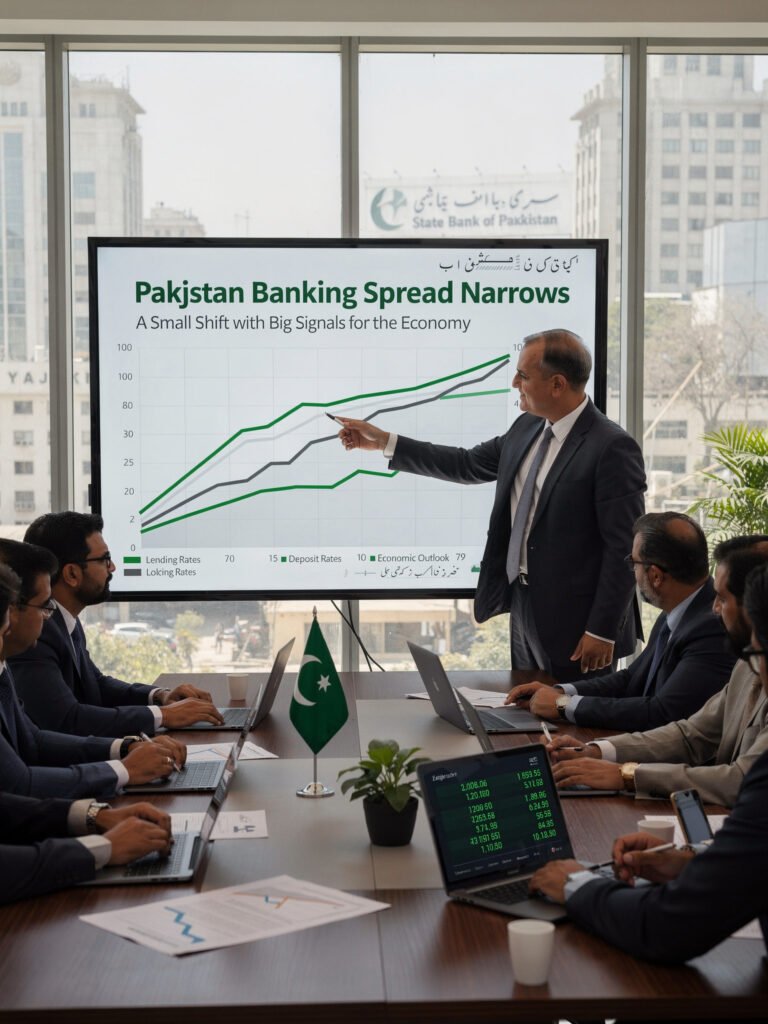
The Pakistan Banking Spread became a major talking point in February 2026 as new data revealed a modest rise in deposit returns alongside a sharper decline in lending rates. According to figures released by the State Bank of Pakistan, the evolving rate dynamics are reshaping the financial outlook for consumers, businesses, and investors across Pakistan.
This shift has sparked curiosity among the public is it a sign of relief for borrowers or a challenge for savers? Let’s break it down in simple terms.
Deposit Returns Show Slight Improvement but Stay Under Pressure
In February 2026, the weighted average return on bank deposits edged up to 5.04%, compared to 4.97% in January. While this increase of 7 basis points signals a marginal improvement, depositors still face weaker returns compared to last year.
On a year-on-year basis, deposit returns fell from 5.46% in February 2025, highlighting how savers continue to struggle to preserve the real value of their money. For many households relying on savings accounts and fixed deposits, this trend means cautious financial planning is more important than ever.
Even though inflationary pressures have eased recently, real deposit returns dropped to 1.94%, down from 2.14% in January. This indicates that the purchasing power of savings remains constrained a concern particularly for retirees and conservative investors.
Pakistan Banking Spread Shrinks as Lending Rates Fall
The most notable development was on the lending side. Banks reduced their weighted average lending rate to 11.02%, reflecting a 37 basis point drop compared to January and a significant 139 basis point decline compared to February 2025.
This decline suggests a more accommodative financial environment, potentially encouraging businesses to borrow for expansion and consumers to consider financing options for homes, vehicles, or education.
As a result, the Pakistan Banking Spread, defined as the difference between lending and deposit rates, narrowed sharply to 5.98% in February from 6.41% in January.
In real terms, lending rates eased further to 8.12%, down from 8.36% a month earlier, reinforcing expectations that borrowing conditions may gradually become more favourable if inflation continues to stabilize.
What This Means for Businesses and Everyday Pakistanis
A narrowing banking spread often signals changing economic conditions. For businesses, lower lending costs can improve cash flow management and support investment in growth projects. Small and medium enterprises, which form the backbone of Pakistan’s economy, could benefit from improved access to credit.
For individuals, the story is mixed. Borrowers may find relief as loan instalments become more manageable, but savers might feel the pinch due to relatively low deposit returns. This shift could also encourage investors to explore alternative avenues such as mutual funds, equities, or real estate in search of higher returns.
At a broader level, the trend reflects the central bank’s ongoing balancing act supporting economic growth while keeping inflation under control.
Looking Ahead: Will the Pakistan Banking Spread Continue to Decline?
Financial experts believe the future direction of the Pakistan Banking Spread will depend largely on inflation trends, monetary policy decisions, and overall economic momentum. If inflation continues to ease and policy rates remain stable or decline further, lending rates could soften even more.
However, sustained improvement in deposit returns may require stronger economic growth and increased competition among banks for customer funds.
For now, February’s data offers a glimpse into a shifting financial landscape one that could gradually reshape borrowing behaviour, savings patterns, and investment decisions across the country.