
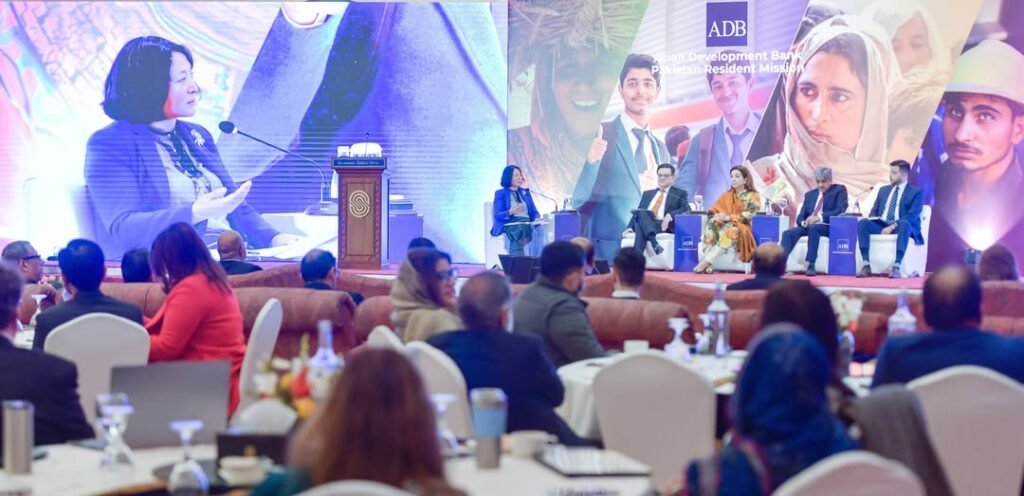
The ADB Country Partnership Strategy Pakistan is set to redefine the country’s economic trajectory for the period 2026–2030. Recently unveiled by the Asian Development Bank, the strategy presents a comprehensive roadmap aimed at driving sustainable growth, boosting private sector participation, and strengthening climate resilience.
Read More:
Athttps://theboardroompk.com/wind-producers-say-their-affordable-electricity-is-not-being-delivered-to-the-public/ a time when Pakistan is navigating global economic uncertainty and structural reforms, the initiative has sparked curiosity among policymakers, investors, and development experts alike. Could this be the catalyst that reshapes Pakistan’s economic future?
ADB Country Partnership Strategy Pakistan and Its Three Core Pillars
The ADB Country Partnership Strategy Pakistan is built on three fundamental priorities designed to address long-standing economic challenges while unlocking new growth opportunities.
First, the strategy emphasizes private sector development as a key engine of economic expansion. By improving the business climate, simplifying regulations, and enhancing access to finance, the initiative seeks to encourage entrepreneurship and investment.
Second, the strategy focuses on inclusion and empowerment. This includes strengthening human capital, expanding access to essential services, and promoting greater participation of women in the workforce. These measures aim to ensure that economic progress benefits all segments of society.
Third, the plan underscores environmental sustainability and resilience. With climate risks becoming more frequent and severe, investments in disaster preparedness, flood control, and clean energy are expected to play a critical role in safeguarding long-term development.
Driving Private Sector Growth and Investment Momentum
A defining feature of the ADB Country Partnership Strategy Pakistan is its strong focus on private sector expansion. The development bank plans to support reforms that reduce regulatory barriers, modernize infrastructure, and encourage public–private partnerships.
According to Emma Fan, targeted investments and policy support under the strategy are designed to stimulate job creation and strengthen macroeconomic stability. The move comes as Pakistan shows signs of gradual stabilization after facing multiple external shocks in recent years.
By fostering export-oriented and investment-led growth, the strategy also aims to improve public financial management and enhance overall competitiveness.
High-Impact Sectors Under the ADB Country Partnership Strategy Pakistan
The strategy identifies several priority sectors with the potential to generate long-term economic value. These include critical minerals development, railway and multimodal transport systems, energy security initiatives, clean energy expansion, agriculture value chains, water resource management, and workforce skills development.
Rather than viewing these areas in isolation, the ADB Country Partnership Strategy Pakistan promotes an integrated approach. Policy reforms, financing support, technical expertise, and knowledge sharing will be deployed simultaneously to maximize impact and accelerate progress.
Social Development and Climate Resilience Take Center Stage
Beyond economic growth, the ADB Country Partnership Strategy Pakistan places significant emphasis on social development. Investments in education, healthcare, and skills training are expected to strengthen human capital and enable inclusive growth.
Climate resilience is another cornerstone of the plan. Proposed interventions include disaster risk management, climate adaptation programs, food security initiatives, and efforts to improve air quality. These measures are critical as Pakistan remains among the countries most vulnerable to climate change.
Global Partnerships and Strategic Alignment
The ADB Country Partnership Strategy Pakistan aligns closely with Pakistan’s national economic transformation goals and the bank’s long-term Strategy 2030 framework. It also highlights continued collaboration with global development partners such as the World Bank and the International Monetary Fund.
This coordinated approach is expected to enhance policy coherence, improve resource mobilization, and ensure sustained support for key reforms.
The Road Ahead
As Pakistan steps into a crucial phase of economic transition, the ADB Country Partnership Strategy Pakistan offers a bold vision for growth that is inclusive, resilient, and future-ready. Its success will depend not only on financial commitments but also on effective implementation and strong institutional collaboration.
For businesses, investors, and the public, the strategy signals new opportunities and a renewed sense of optimism about the country’s long-term economic prospects.