
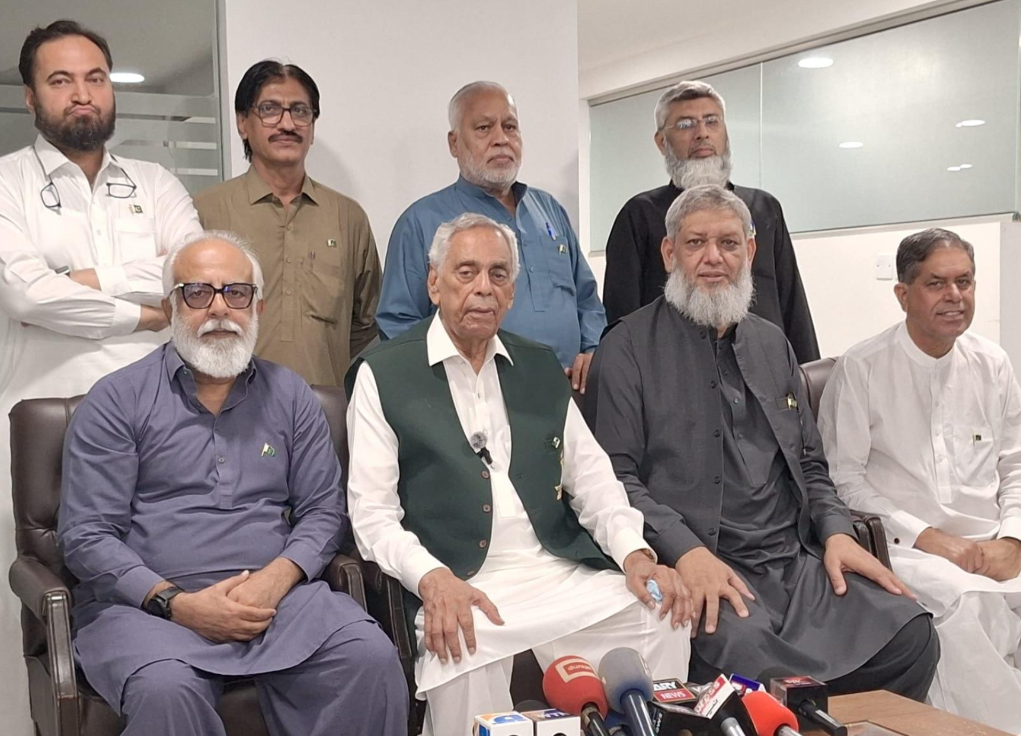
The petroleum dealers margin has been increased by Rs1.34 per litre, taking the total margin to Rs10, after the Pakistan Petroleum Dealers Association threatened to shut petrol pumps across the country. The development highlights the growing pressure on the government from fuel-sector stakeholders and raises fresh questions about how petroleum pricing decisions are being managed.
The Pakistan Petroleum Dealers Association announced on August 14 that it had postponed its planned strike after receiving assurances from the government that the increase had been approved at the highest level and that a summary had been sent to the Economic Coordination Committee.
Petroleum Dealers Margin Rises After Strike Threat
Speaking at an emergency press conference in Karachi, PPDA Chairman Malik Khuda Bakhsh said Petroleum Minister contacted the association following what he described as difficult negotiations in Islamabad and informed the dealers that Prime Minister had approved an increase of Rs1.34 in their margin.
The increase takes the petroleum dealers margin to Rs10, although dealers had demanded a substantially larger adjustment equivalent to 8 percent. Instead of immediately accepting the full demand, the government has agreed to establish a joint committee that will examine the dealers’ broader demand and submit its report within 30 days.
For consumers, however, the key issue is whether this additional margin will eventually put further pressure on petrol prices. Any increase in the distribution chain can become politically sensitive in a country where fuel prices directly affect transportation, food costs and household budgets.
Dealers Accept Rs1.34 Increase but Keep Protest Threat Alive
The association has temporarily withdrawn its strike, but its leadership made clear that the dispute is not over.
Malik Khuda Bakhsh said the strike had been postponed on the basis of government assurances and warned that protests could resume if the remaining demands were not addressed.
Vice Chairman Tariq Hassan claimed that dealers had been deprived of their required margin for three years and alleged that around 50 million dollars was effectively stuck with the government. This claim deserves closer scrutiny because such a large financial figure, if accurate, would raise serious questions about the mechanism through which dealer margins are calculated, adjusted and paid.
The government’s decision to respond only after the threat of a nationwide disruption also exposes a broader weakness in policy coordination. If dealer margins have remained under pressure for years, waiting until a strike becomes imminent suggests that the pricing framework may not be sufficiently responsive to changes in operating costs.
Fuel Price Revision May Also Return to 7 or 15 Days
Another significant development concerns the frequency of petroleum price revisions.
According to the dealers’ association, a new summary has reportedly been sent to the Prime Minister proposing that petroleum prices could again be revised every seven or 15 days instead of being changed daily. The association linked the proposal to reduced tensions in the Middle East and a more stable international oil market.
A return to a less frequent pricing mechanism could provide consumers and businesses with greater predictability. Daily changes, while potentially reflecting international market movements more quickly, can also create uncertainty for transport operators, retailers and households.
However, the government should ensure that any new system works both ways. Consumers should benefit when international oil prices fall, just as they face increases when global prices rise. A transparent formula and timely disclosure of the calculation would be essential to prevent renewed criticism over petroleum pricing.
Pakistan’s Petrol Pumps Face Digitalization Deadline
PPDA Vice Chairman Anwar Kamal also disclosed that the government has given petrol pumps until March 23, 2027, to complete digitalization, with oil marketing companies responsible for facilitating the process.
The association says Pakistan has around 14,000 petrol pumps, but only about 10 percent are currently digitized. This indicates that the sector remains significantly behind the government’s desired level of technological integration.
Digitalization could improve sales monitoring, tax documentation, inventory management and regulatory oversight. But imposing a deadline without clearly explaining financing, technical standards and implementation responsibilities could create another conflict between dealers, oil marketing companies and regulators.
Government Faces Bigger Test After Margin Increase
The petroleum dealers margin increase may have prevented an immediate nationwide strike, but it has not resolved the underlying dispute.
The government’s challenge now is to establish whether dealer margins are being calculated through a transparent and economically sustainable formula rather than adjusted only when industrial pressure reaches a critical point. The 30-day committee process will therefore be more important than the Rs1.34 increase itself.
For consumers, the biggest question remains whether the additional dealer margin, combined with future international oil movements, will translate into higher pump prices. For dealers, the bigger test is whether the government follows through on its promises without requiring another strike threat to force action.
The latest decision may have defused an immediate crisis, but it also sends a clear message about Pakistan’s petroleum pricing system: when long-standing commercial disputes are left unresolved, the cost eventually reaches the entire economy.