
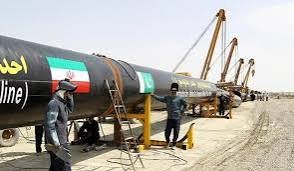
Pakistan has asked Iran to reduce the price of gas supplied through the long-delayed Iran-Pakistan (IP) pipeline by as much as 50 percent, as Islamabad seeks to make the project commercially viable.
The government is also seeking lower contracted gas volumes, citing limited demand from power producers, fertiliser manufacturers and other industries for expensive imported gas.
Pakistan Proposes Lower Gas Pricing Formula
Pakistan currently estimates the price of gas under the existing IP pipeline formula at around $10.6 per mmBtu, based on an oil price of $80 per barrel. An additional $1.25 per mmBtu would be required for transportation from Hub to Nawabshah.
The government believes power producers cannot economically absorb imported gas priced above Rs2,000 per mmBtu, making this level the proposed commercial benchmark for the project.
Islamabad has therefore proposed a new pricing structure calculated at 6.11 percent of Brent crude plus $1.
Under the proposed formula, IP gas would cost approximately $4.67 per mmBtu at a Brent price of $60, $5.28 at $70 and $5.89 at $80.
Proposed IP Gas Could Undercut LNG
The proposed pricing would make Iranian gas significantly cheaper than LNG available under Pakistan’s existing long-term arrangements.
At the same Brent price scenarios, LNG under Pakistan State Oil’s second long-term agreement would cost around $7.14, $8.16 and $9.18 per mmBtu respectively.
This pricing gap is central to Pakistan’s argument that the IP pipeline could become commercially attractive if Iran agrees to a substantial reduction.
Domestic gas is currently supplied to fertiliser plants at around Rs1,500 per mmBtu and to domestic consumers at approximately Rs1,000 per mmBtu. These price differences make expensive imported gas difficult for several sectors to absorb.
Pakistan Also Wants Lower Gas Volumes
Alongside the price reduction, Islamabad wants to revise the contracted volume of gas under the project.
The IP pipeline was originally designed to transport around 750 million cubic feet per day. Pakistan now believes this volume is too high given existing demand conditions and its limited capacity to absorb additional imported gas.
The country must also honour existing LNG commitments, including long-term supplies from Qatar. Increasing gas imports without sufficient domestic demand could therefore create additional financial pressure.
US Sanctions Waiver Remains Critical
A major obstacle remains the sanctions regime affecting Iran.
Pakistan has indicated that it is prepared to move forward with the project only if the United States provides a sanctions waiver allowing the pipeline project to proceed.
Pakistan and Iran originally signed the framework for the pipeline in 2009. However, US sanctions against Iran prevented construction from progressing on the Pakistani side and eventually contributed to arbitration proceedings.
Islamabad is now hoping that any broader understanding between Washington and Tehran could create room for the project to move ahead.
$2.5 Billion Project Faces Commercial Test
The IP pipeline is estimated to require around $2.5 billion in investment and has faced delays for years.
The latest pricing proposal reflects Pakistan’s attempt to address the project’s fundamental commercial challenge: whether local industries will actually purchase the imported gas.
Officials maintain that without a substantial reduction in both price and contracted volume, power producers, fertiliser manufacturers and other potential consumers are unlikely to take the gas.
Pakistan Seeks Cheaper Alternative To LNG
The proposal comes as Pakistan continues to manage the financial and operational challenges associated with imported LNG.
Domestic exploration companies have already faced gas curtailments as authorities seek to accommodate costly LNG supplies. Bringing additional imported gas into the system at an uncompetitive price could further complicate the situation.
A substantially cheaper Iranian gas supply could therefore provide Pakistan with another source of energy while potentially reducing reliance on expensive LNG.
However, the project’s revival will depend on more than pricing. A US sanctions waiver, agreement with Iran on the proposed formula, revised volumes and sufficient domestic demand will all be critical to determining whether the IP pipeline can finally become operational.