
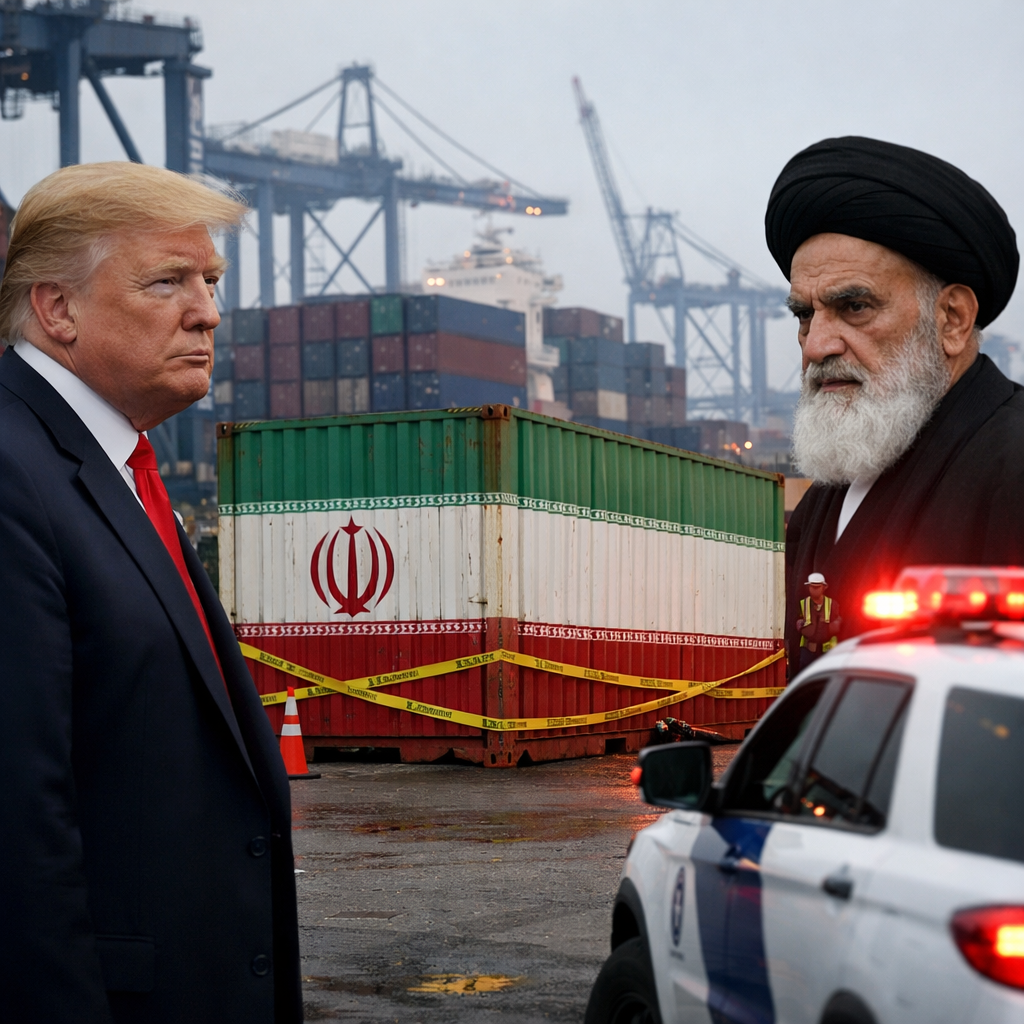
US tariffs on countries trading with Iran mark a significant escalation in Washington’s economic pressure campaign against Tehran, potentially reshaping global trade dynamics and placing allied economies under fresh strain.
The United States has signaled its intent to impose a 25% tariff on any country that continues commercial relations with Iran, applying the penalty across all trade conducted with the U.S. The proposed measure, described as taking immediate effect, was announced by President Donald J. Trump through a post on his Truth Social platform, where he called the decision “final and conclusive.”
According to the announcement, nations maintaining business ties with Iran would face broad trade penalties when exporting to or importing from the United States. While operational details remain unclear, the message alone has sent ripples through international markets and policy circles.
US Tariffs on Countries Trading with Iran and Washington’s Strategic Message
The announcement underscores Washington’s willingness to use secondary tariffs as a geopolitical tool. Unlike traditional sanctions that directly target Iran, US tariffs on countries trading with Iran would effectively penalize third-party economies, forcing governments to choose between access to U.S. markets and engagement with Tehran.
President Trump also framed the move within a broader political narrative, stating that Iran was nearing a period of “major change” and suggesting that the country was “looking at freedom, perhaps like never before.” He added that the United States “stands ready to help,” signaling that economic pressure may be paired with political leverage.
This escalation comes amid ongoing internal unrest in Iran, where protests across multiple cities have drawn global attention and renewed scrutiny of the government’s response.
Pakistan and US Tariffs on Countries Trading with Iran: A Growing Concern
Among the countries closely watching developments is Pakistan, which has recently intensified its economic engagement with Iran. The proposed US tariffs on countries trading with Iran raise serious questions for Islamabad’s regional trade strategy.
In November 2025, Pakistan and Iran agreed to deepen cooperation in agriculture, food security, and bilateral trade. Key areas of collaboration included livestock exports, staple food commodities, and agricultural technology exchange.
Instead of presenting this information in a table, it can be explained as follows: Pakistan plans to export 350,000 livestock to Iran while expanding shipments of wheat, rice, maize, and animal fodder. The two countries also discussed technology transfers, joint ventures in modern irrigation systems, and the development of drought-resistant crops, reflecting a long-term strategic partnership.
Pakistan has publicly set an ambitious target of $10 billion in bilateral trade with Iran, a goal that could now face headwinds if U.S. penalties are enforced broadly.
Economic Implications of US Tariffs on Countries Trading with Iran
The potential fallout from US tariffs on countries trading with Iran extends beyond bilateral relationships. For export-driven economies, even a partial loss of U.S. market access could significantly impact foreign exchange earnings, supply chains, and investor confidence.
From a market perspective, the uncertainty alone may delay trade agreements, discourage long-term contracts, and raise compliance costs for businesses operating across borders. For developing economies like Pakistan, navigating between strategic partnerships and global financial systems dominated by the U.S. dollar presents a delicate balancing act.
Global Response Still Unclear
Despite the strong language used in the announcement, no detailed framework has yet been released explaining how the tariffs would be implemented, enforced, or which countries would be affected first. As of now, U.S. government agencies and foreign governments have not issued official responses.
This lack of clarity has heightened uncertainty in international markets, particularly among U.S. allies and regional partners with existing economic ties to Iran.
What Comes Next for Global Trade?
As tensions remain elevated, US tariffs on countries trading with Iran are expected to remain a focal point for policymakers, investors, and trade analysts. Whether the measure becomes a fully enforced policy or remains a strategic warning will depend on diplomatic engagement, market reactions, and geopolitical developments in the coming weeks.
For countries like Pakistan, the challenge will be balancing regional economic cooperation with global trade realities while avoiding costly disruptions to exports, investment flows, and long-term growth objectives.