
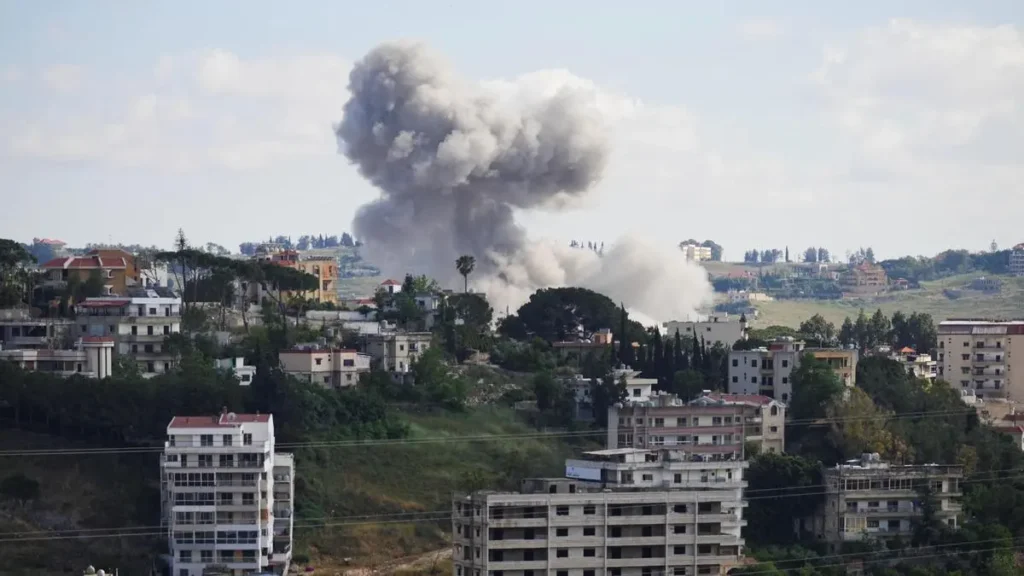
Fresh US military strikes on missile sites and naval assets in southern Iran have raised fears of a renewed regional escalation, casting uncertainty over ongoing ceasefire talks and diplomatic efforts aimed at ending months of conflict in the Middle East.
According to the US Central Command, American forces launched what it described as “self-defence strikes” targeting missile launch facilities and boats allegedly attempting to lay mines near the Strait of Hormuz.
The strikes came as senior Iranian negotiators arrived in Doha for another round of high-stakes negotiations intended to preserve a fragile ceasefire between Washington and Tehran.
Explosions Reported Near Bandar Abbas
Iranian state broadcaster IRIB reported loud explosions near the southern port city of Bandar Abbas around midnight local time.
The broadcaster said local authorities were investigating the blasts while insisting that the situation in the city remained under control.
The latest military action threatens the ceasefire that began on April 8, as both countries attempt to negotiate a broader agreement to end a conflict that has shaken global energy markets and intensified instability across the region.
Oil Markets React to Rising Tensions
Global oil prices fluctuated sharply following the US strikes amid fears that renewed fighting could further disrupt shipping through the Strait of Hormuz, one of the world’s most critical energy corridors.
The strategic waterway remains under pressure after Iranian restrictions reportedly disrupted fuel shipments, contributing to volatility in global oil markets.
On Tuesday morning, West Texas Intermediate crude dropped more than 5 percent, while Brent crude prices remained elevated as traders assessed the risk of broader regional conflict.
Trump Demands Iran Surrender Enriched Uranium
US President Donald Trump further complicated diplomatic efforts by demanding that Iran surrender its enriched uranium stockpile to the United States for destruction.
In a social media post, Trump said the uranium should either be transferred to the US or destroyed inside Iran under international supervision.
However, analysts noted confusion surrounding Trump’s reference to the “Atomic Energy Commission,” an agency that was dissolved decades ago in 1974.
It remains unclear whether Trump’s statement reflects an official negotiating position in the ongoing talks with Tehran.
Abraham Accords Expansion Proposal Sparks Debate
Trump also called for several Muslim-majority nations, including Pakistan, Saudi Arabia, Qatar, Türkiye, Egypt, Jordan, Bahrain, and the United Arab Emirates, to join the Abraham Accords as part of a wider regional peace agreement.
The accords, brokered in 2020, normalized relations between Israel and several Arab nations, including Bahrain and the UAE.
However, the agreements remain controversial across much of the Middle East because they do not address the Palestinian issue.
Saudi Arabia and Qatar have repeatedly stated that normalization with Israel cannot happen without the establishment of an independent Palestinian state.
Analysts Doubt Gulf States Will Accept Pressure
Regional analysts expressed skepticism over Trump’s proposal.
Anna Jacobs of the Arab Gulf States Institute in Washington said Gulf countries were unlikely to accept pressure to normalize ties with Israel under current circumstances.
She argued that rising instability and military escalation have increased security concerns among Gulf nations rather than encouraging diplomatic normalization.
Iran Says Final Deal Not Yet Close
Despite ongoing negotiations, Iranian officials cautioned against expectations of an immediate breakthrough.
Iranian Foreign Ministry spokesperson Esmaeil Baqaei said negotiators had made progress on several major issues but stressed that no final agreement was imminent.
His remarks contrasted with earlier comments from US Secretary of State Marco Rubio, who suggested a possible agreement could emerge within days.
Israel Intensifies Lebanon Operations
Meanwhile, Israeli Prime Minister Benjamin Netanyahu announced an escalation of military operations against Hezbollah in southern Lebanon.
Netanyahu accused Hezbollah of carrying out drone attacks against Israeli forces and vowed to intensify military action.
The Israeli leader also stated that any final agreement with Iran must completely eliminate what he described as the Iranian nuclear threat.
Iranian officials, however, maintain that discussions regarding uranium enrichment and the country’s nuclear program will only take place after an initial political agreement is secured.