
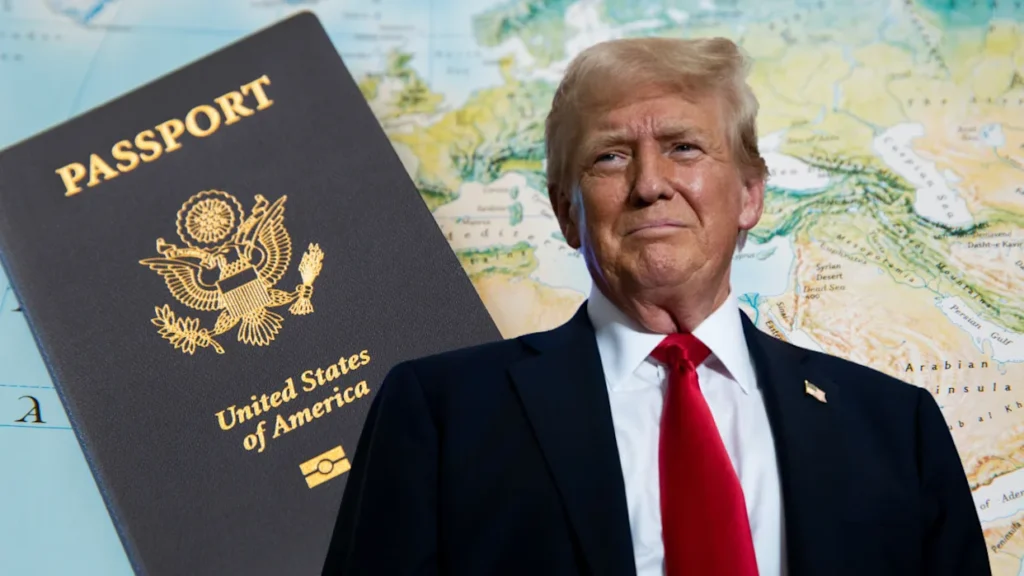
Passports with Donald Trump image will soon be introduced in the United States, marking a significant departure from long-standing traditions. The US State Department confirmed that the special passports will commemorate the 250th anniversary of the United States Declaration of Independence.
The design features Donald Trump superimposed over the historic July 4, 1776 document. His signature appears in gold beneath the image. Officials described the initiative as a tribute to a landmark national celebration.
Break from Traditional Passport Design
The introduction of Passports with Donald Trump image represents a rare move in democratic systems. Historically, US passports have featured symbolic imagery rather than political figures. These include landmarks, historic events, and cultural icons such as the Statue of Liberty and the Moon landing.
Experts say very few countries include images of sitting leaders in passports. Even North Korea avoids this practice. Instead, it uses symbolic national imagery like Mount Paektu.
This shift raises questions about the evolving role of political identity in state institutions.
Limited Availability and Access
Officials said the passports will be released in limited numbers. Applicants can obtain them only through in-person appointments in Washington, subject to availability.
Authorities clarified that the special passports will not carry additional fees. However, they did not confirm whether applicants can decline the design featuring Trump.
Most US citizens apply through local post offices. These locations will not offer the special edition, limiting its distribution to a small segment of applicants.
Political Reaction Intensifies
The announcement has triggered strong criticism from opposition lawmakers. Members of the Democratic Party questioned the use of government resources for such initiatives.
Critics argue that Passports with Donald Trump image reflect growing personalization of public institutions. They believe this move shifts focus away from pressing policy matters.
Some lawmakers also urged Marco Rubio to prioritize foreign policy challenges. They pointed to ongoing tensions with Iran as a more urgent concern.
Political analysts say the issue highlights deeper divisions within US politics.
Part of Broader Institutional Changes
Since returning to office, Trump has expanded his presence across government institutions. Several federal buildings now display banners featuring his image.
Authorities have also added his name to cultural institutions, including the Kennedy Center for the performing arts. In addition, the Treasury Department plans to include his signature on US dollar bills.
These moves signal a broader effort to reshape the visual identity of government institutions.
Global Comparison and Symbolism
Globally, most democracies avoid placing active leaders on official documents. In the United Kingdom, King Charles III appears on currency. However, his role is ceremonial and separate from political governance.
Experts say the US has traditionally followed a similar principle by separating political leadership from national symbols. The new passport initiative challenges that tradition.
Public Response and Future Impact
Public reaction remains divided. Supporters see the passports as a patriotic tribute during a historic anniversary. Critics view the move as unnecessary and politically motivated.
Surveys show that only about half of Americans hold valid passports. Access to the special edition will likely remain limited due to distribution constraints.
As debate continues, the introduction of these passports may influence future decisions on how national identity is represented in official documents.