
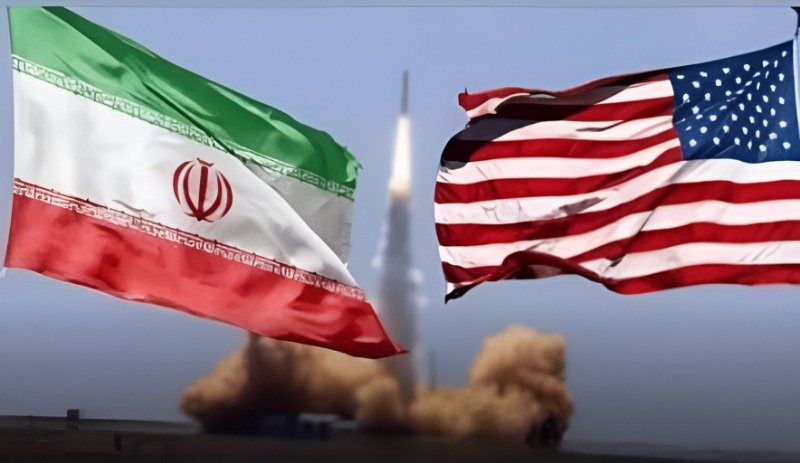
US Strikes On Iran Escalate Middle East Crisis As Oil Routes Face Fresh Security Threats
Military Escalation Raises Concerns Over Regional Stability The latest US Strikes on Iran have pushed the Middle East closer to a broader regional conflict, raising serious concerns for global energy markets, international shipping and investor confidence. Following Iran’s attempted ballistic missile attacks against American military installations in Jordan, the United States launched what it described as a “heavy wave” of retaliatory strikes targeting dozens of military facilities linked to Iran’s Islamic Revolutionary Guard Corps. The renewed military confrontation comes after several days of apparent diplomatic calm, highlighting how fragile regional negotiations have become. While both Washington and Tehran had signalled the possibility of reducing tensions, the latest exchange of attacks demonstrates how rapidly diplomatic efforts can collapse when military escalation replaces political dialogue. US Strikes Target Iranian Military Infrastructure According to US Central Command, American forces struck multiple military command centres, missile and drone facilities, coastal defence installations, surveillance sites and maritime capabilities operated by the Islamic Revolutionary Guard Corps. US officials stated the operation was launched in direct response to Iran’s attempted missile attacks against American personnel stationed in Jordan. The Pentagon also confirmed that all Iranian missiles aimed at US forces were intercepted before reaching their intended targets. Military officials described the operation as a calculated response designed to weaken Iran’s offensive capabilities without announcing any plans for broader military action. Iranian state media, however, presented a different account, claiming the strikes caused civilian casualties, including the reported deaths of a family on Qeshm Island. Reports also indicated that oil-producing regions such as Qeshm and Abadan were among the locations affected during the overnight attacks. Strait Of Hormuz Faces Renewed Security Risks The latest escalation has once again placed the Strait of Hormuz at the centre of global attention. The strategically important waterway carries a significant share of the world’s oil exports, making any disruption a direct threat to international energy supplies and shipping costs. Iran claimed its naval forces targeted several commercial oil tankers after accusing them of using what it described as unsafe routes. Although independent verification remains limited, any military activity around the Strait immediately increases insurance premiums, freight costs and uncertainty across global commodity markets. Energy analysts warn that prolonged instability could trigger renewed volatility in crude oil prices, placing additional inflationary pressure on economies already facing slower global growth. Regional Conflict Continues To Widen The conflict has expanded beyond direct US-Iran military exchanges. Earlier this week, joint US-Saudi military operations reportedly targeted Iranian-backed armed groups operating in Iraq following dozens of drone attacks attributed to Tehran. Iran-backed Popular Mobilisation Forces reported significant casualties, while Iraqi officials condemned the strikes as a violation of national sovereignty. Washington, however, maintained that the operations were coordinated with Iraqi authorities, highlighting conflicting narratives surrounding the conflict. Meanwhile, Jordan confirmed intercepting multiple Iranian missiles targeting its territory, while Egyptian authorities investigated what they described as a drone attack that caused a fire at one of the country’s ports, raising concerns that additional regional states could become increasingly involved. Diplomatic Efforts Clash With Military Action One of the most notable aspects of the current crisis is the contrast between diplomatic messaging and military developments. Only days earlier, President Donald Trump described ongoing contacts with Tehran as “very friendly negotiations,” although Iranian officials denied any talks were taking place. Reports also suggested Saudi Arabia had privately encouraged Washington to pursue de-escalation, reflecting growing concern among Gulf states that prolonged conflict could destabilise the region’s economy and energy infrastructure. The conflicting signals have created uncertainty for governments, businesses, investors and financial markets attempting to assess geopolitical risks. Global Economic Risks Continue To Mount Beyond the humanitarian consequences, the expanding conflict presents significant economic challenges. Higher shipping insurance costs, disruptions to oil transportation, increased defence spending and declining investor confidence could collectively slow regional economic growth. Businesses dependent on Middle Eastern energy exports are closely monitoring developments, while financial markets remain sensitive to any indication that the conflict could further threaten the Strait of Hormuz. Should military exchanges continue, supply chains stretching from Asia to Europe may face additional disruptions, reinforcing inflationary pressures worldwide. The latest US Strikes on Iran demonstrate that the conflict has entered another dangerous phase despite repeated public calls for diplomacy. Whether diplomatic channels regain momentum or military operations continue to expand may determine not only the future of regional security but also the stability of global energy markets and international trade.