
Goods Transporters Suspend Nationwide Strike for 40 Days After Government Assurances
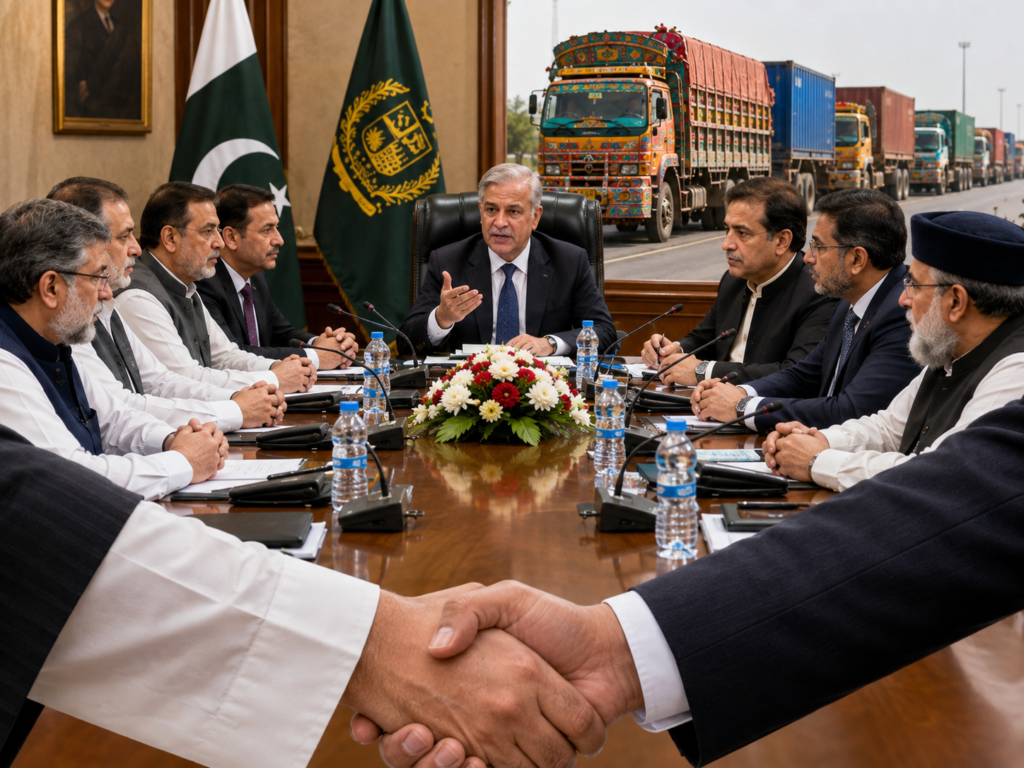
Pakistan’s goods transportation network is set to return to normal after transporters agreed to put their nationwide wheel-jam strike on hold for 40 days following negotiations with federal and provincial authorities. The decision came after nine days of disruption that affected the movement of imports, exports and essential supplies. Transporters had been pressing the government to address several issues, including axle-load regulations, fuel pricing, taxes and other operational concerns. Transporters Resume Operations After Government Talks The agreement was reached during a meeting at the Governor House in Karachi chaired by Sindh Governor Syed Mohammad Nihal Hashmi. Federal Communications Minister Abdul Aleem Khan, Sindh Labour Minister Saeed Ghani, Punjab Transport Minister Bilal Akbar, Karachi Mayor Murtaza Wahab and senior officials attended the negotiations. The transporters’ delegation was led by All Pakistan Goods Transport Ittehad President Malik Shahzad Awan. Following the discussions, the transporters agreed to suspend the strike and allow freight operations to resume. 40-Day Suspension Gives Government Time to Act The agreement does not represent a permanent settlement of all disputes. Transporters have given the government a 40-day window to make progress on their outstanding demands. Some matters have reportedly been addressed immediately, while issues requiring cabinet-level approval are expected to be considered within 15 to 20 days. Transporters have also indicated that they could reconsider the strike if the commitments made during negotiations are not implemented. Fuel Pricing Remains a Major Concern One of the industry’s central demands involves the government’s mechanism for determining petrol and diesel prices. Transporters have objected to frequent fuel price adjustments and have sought a more predictable system. The government has requested additional time to examine the issue, with discussions expected to continue between the relevant committees and industry representatives. For freight operators, fuel costs have a direct impact on transportation charges and ultimately influence the cost of moving goods across the country. Axle-Load Rules Also Under Discussion The axle-load regime remains another important issue for the transport industry. Transporters have sought clarity and implementation of weight limits in a way that does not undermine the economics of freight operations. Government representatives have given assurances regarding the enforcement of permissible weight limits, including concerns involving 10-wheel vehicles. The issue is particularly significant because changes in permissible cargo loads can affect the number of trips required to move goods and increase transportation costs. Toll Taxes and Parking Issues To Be Reviewed The negotiations also covered toll charges and parking facilities for heavy vehicles. A committee is expected to examine the transporters’ concerns regarding toll taxes, while the Sindh government has committed to addressing parking-related problems. The discussions are particularly relevant for Karachi, a major centre for Pakistan’s port, industrial and commercial activity. Better parking and freight-handling arrangements could also help reduce congestion and improve the efficiency of cargo movement. Nine-Day Strike Disrupted Supply Chains The suspension comes after a prolonged strike that disrupted Pakistan’s freight network for nine days. According to the transporters, the stoppage caused economic losses exceeding Rs50 billion while affecting the movement of imports, exports and essential commodities. Their demands included changes to the axle-load regime, customs rules, withholding tax arrangements and fuel pricing. The resumption of transportation should allow businesses to begin clearing accumulated cargo and restore disrupted supply chains. Government Faces Test of Delivering on Commitments The 40-day deferment provides temporary relief to businesses and consumers, but the underlying disagreements have not completely disappeared. The government’s ability to deliver on its assurances will determine whether the latest agreement develops into a lasting settlement. Failure to make meaningful progress could revive the threat of another nationwide transport disruption. For Pakistan’s economy, maintaining an uninterrupted freight network is particularly important because road transport connects ports, factories, markets and distribution centres across the country. Transport Sector Seeks Long-Term Solution The latest agreement offers both sides an opportunity to move beyond repeated cycles of strikes and negotiations. A durable solution would require clear rules on vehicle weights, predictable fuel costs, reasonable taxation and improved infrastructure. For transporters, these measures could provide greater certainty over operating expenses, while businesses could benefit from a more reliable logistics network. The 40-day period will therefore be closely watched to see whether the government’s assurances translate into concrete policy measures or merely provide a temporary pause in the dispute.