Ufone Telenor merger

Pakistan Mobile SIM Base Hits 210 Million as Ufone and Telenor Merger Set to Reshape Telecom Market
Business

Pakistan Mobile SIM Base Hits 210 Million as Ufone and Telenor Merger Set to Reshape Telecom Market

Pakistan’s active mobile SIM base has reached 210 million, highlighting the enormous scale of the country’s telecom market even as operators continue to struggle with network reliability, restructuring pressures and slow adoption of newer technologies. The latest development came during a meeting of the Senate Standing Committee on Cabinet Secretariat, where the Pakistan Telecommunication Authority Chairman briefed lawmakers on telecom competition rules, Ufone’s operational problems and the proposed merger between Ufone and Telenor. The merger could become one of the most significant developments in Pakistan’s telecom industry in recent years, as it is expected to create a new telecom company and potentially alter the competitive balance among the country’s major mobile operators. Ufone and Telenor Merger Could Reshape Pakistan Telecom Market The PTA chairman confirmed that the planned Ufone and Telenor merger will result in the creation of a new telecom company. The development comes as Pakistan’s mobile market has expanded to an active SIM base of around 210 million. For consumers, however, the bigger question is whether consolidation will improve service quality or reduce competition. A merger of two major operators could create opportunities for greater investment in infrastructure, network expansion and spectrum utilization. It could also allow the combined company to reduce duplication and improve operational efficiency. But there is a significant concern that a smaller number of major operators could weaken competitive pressure in the market. If competition declines, consumers could ultimately face fewer choices, slower innovation or less pressure on companies to improve service quality. Regulators will therefore need to scrutinize the transaction carefully rather than treating consolidation simply as a corporate restructuring exercise. Ufone Network Outages Raise Questions About Service Quality The Senate committee also questioned the PTA chairman about recurring service disruptions on Ufone’s network. The PTA chief acknowledged operational challenges at Ufone and said the problems were expected to be resolved in the coming days. He also informed lawmakers that PTCL and Ufone are being separated as part of an ongoing restructuring process. The repeated network disruptions are particularly concerning given Ufone’s position in a market serving millions of customers. Pakistan’s telecom sector has made major progress in expanding connectivity, but network reliability remains a critical issue. Consumers increasingly depend on mobile networks not only for voice calls but also for banking, digital payments, online businesses, education, remote work and government services. This means that prolonged or repeated outages are no longer merely an inconvenience. They can directly affect economic activity. The regulator should therefore demand greater transparency from operators regarding major outages, including their causes, duration and corrective measures. Pakistan SIM Issuance Could Move Online Through Pak ID The PTA is also working with the National Database and Registration Authority to introduce SIM issuance through the Pak ID digital platform. If implemented successfully, the initiative could significantly change how consumers obtain mobile connections in Pakistan. Citizens would potentially be able to complete the SIM issuance process remotely instead of visiting customer service centers. This could reduce administrative costs, save consumer time and make telecom services more accessible. However, the digital process will need strong safeguards against identity theft, unauthorized SIM issuance and fraud. Convenience cannot come at the expense of security. eSIM Adoption Becomes Another Telecom Test Senator Saleem Mandviwalla also urged the authorities to accelerate eSIM adoption in Pakistan, pointing out that many international markets have already moved toward the technology. The criticism is relevant because eSIM technology can make it easier for consumers to switch networks, activate connections and use multiple mobile services without requiring a physical SIM card. Pakistan’s slow transition toward eSIMs reflects a broader challenge facing the telecom industry: infrastructure and technology adoption are progressing, but not always at the pace demanded by consumers and businesses. The combination of the Ufone and Telenor merger, Ufone’s network problems, digital SIM issuance and eSIM adoption suggests that Pakistan’s telecom sector is entering a major transition phase. The real test will not simply be whether companies merge or new digital services are launched. It will be whether these changes deliver faster networks, stronger competition, better consumer protection and more reliable services for Pakistan’s 210 million active SIM connections.
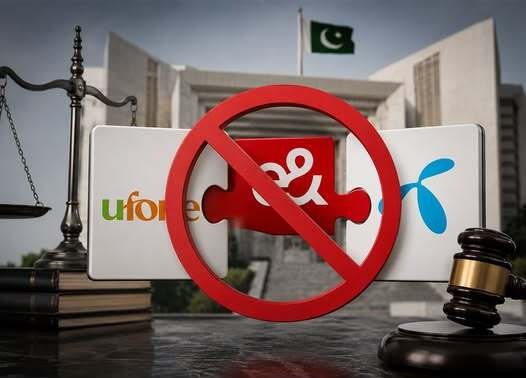
Ufone e& Rebranding Faces Government Scrutiny as Legal Questions Stall Telecom Merger Plan
Breaking News

Ufone e& Rebranding Faces Government Scrutiny as Legal Questions Stall Telecom Merger Plan

Pakistan’s telecom sector is witnessing fresh uncertainty as the proposed Ufone e& Rebranding initiative has reportedly encountered resistance from the federal government. What was expected to become the next major milestone following the merger of Ufone and Telenor Pakistan has instead evolved into a legal and governance controversy that could significantly delay one of the country’s largest telecommunications integrations. According to informed sources, the government has intervened after concerns emerged over whether the Ufone Board of Directors had the legal authority to approve replacing the long-established Ufone identity with the global “e&” brand before the merger process is legally completed. The development has also triggered wider debate over corporate governance standards, board accountability and the future identity of a strategically important national telecom operator. Why the Ufone e& Rebranding Is Facing Government Review The proposed Ufone e& Rebranding was approved by the Ufone board following the integration process initiated after Pakistan Telecommunication Company Limited (PTCL) acquired Telenor Pakistan. The merger is expected to create one of Pakistan’s largest mobile network operators with millions of subscribers nationwide. However, the approval reportedly raised concerns at the highest levels of government because the PTCL Board had previously deferred the same proposal. The contrasting decisions between the parent company and its subsidiary have prompted officials to question whether the subsidiary board possessed the authority to approve such a significant corporate identity change independently. Government officials are now considering seeking a formal legal opinion from the Law Division before allowing the branding exercise to proceed. Until that opinion is received, the entire rebranding initiative may remain suspended. Legal Authority Becomes the Centre of the Debate At the heart of the controversy lies a critical legal question. Officials are examining whether the board of a subsidiary company can legally approve the branding of a merged organisation before all regulatory, corporate and legal requirements governing the amalgamation have been fully completed. Legal experts believe the outcome could establish an important precedent for future mergers involving state-owned enterprises and regulated industries. If authorities determine that the board exceeded its powers, the branding exercise could require fresh approvals from higher corporate and regulatory forums. Governance Questions Put State-Owned Enterprise Boards Under Pressure The controversy has expanded beyond branding into a broader discussion about governance within Pakistan’s state-owned enterprises. Critics argue that board members responsible for overseeing strategic national assets must exercise greater caution before approving decisions with long-term commercial and national implications. The issue has attracted particular attention because the board includes government-appointed directors, including senior federal secretaries and a sitting senator. The debate has intensified public scrutiny over whether sufficient legal due diligence was conducted before approving the proposed corporate identity. The matter has also revived discussion regarding accountability mechanisms for government-nominated directors serving on public-sector company boards, particularly given reports that some directors receive compensation of up to USD 5,000 per board meeting. Removal of “Pakistan” from the Brand Raises Strategic Concerns One of the most sensitive aspects of the proposed Ufone e& Rebranding is the replacement of a well-established Pakistani telecom identity with an international corporate brand. Government circles have reportedly expressed concern that removing the word “Pakistan” from the identity of one of the country’s most significant telecommunications operators may carry symbolic as well as strategic implications. Brand identity plays a vital role in customer trust, national recognition and market positioning. Any decision affecting a telecom company serving millions of Pakistani consumers is therefore expected to undergo comprehensive legal and policy review. PTA Approval Came With Important Conditions The Pakistan Telecommunication Authority (PTA) had earlier approved the proposed brand name through a letter dated 16 June 2026. However, the regulator attached clear conditions to its approval. The authority directed the company to formally notify the regulator only after the legal completion of the merger and before launching any commercial branding or marketing campaign under the “e&” identity. In a subsequent communication dated 2 July, the PTA reiterated that notification must follow the lawful completion of the amalgamation process before any public rollout of the new brand. These conditions indicate that regulatory approval alone does not automatically permit the immediate commercial use of the new identity. What Happens Next? The future of the Ufone e& Rebranding now depends largely on the government’s legal review. If the Law Division determines that the board acted within its authority, the branding exercise could proceed after completing all remaining merger formalities. If not, the proposal may require reconsideration by PTCL, regulators and other relevant authorities. For Pakistan’s telecom industry, the outcome will extend beyond a simple name change. It will influence how major corporate restructurings, state-owned enterprise governance and regulatory approvals are handled in future strategic transactions. As one of the country’s most significant telecom mergers enters its final stages, the branding dispute has become a test case for legal compliance, corporate governance and public accountability. The proposed Ufone e& Rebranding has evolved from a marketing decision into a significant legal and governance issue with implications for Pakistan’s telecom sector. While the merger between Ufone and Telenor Pakistan promises to reshape industry competition, the government’s intervention highlights the importance of regulatory compliance, transparent decision-making and protecting strategic national interests before implementing transformative corporate changes.

Scroll to Top