UAE deposit Pakistan

Pakistan to Repay $4.8B by June
Pakistan

Pakistan to Repay $4.8B by June

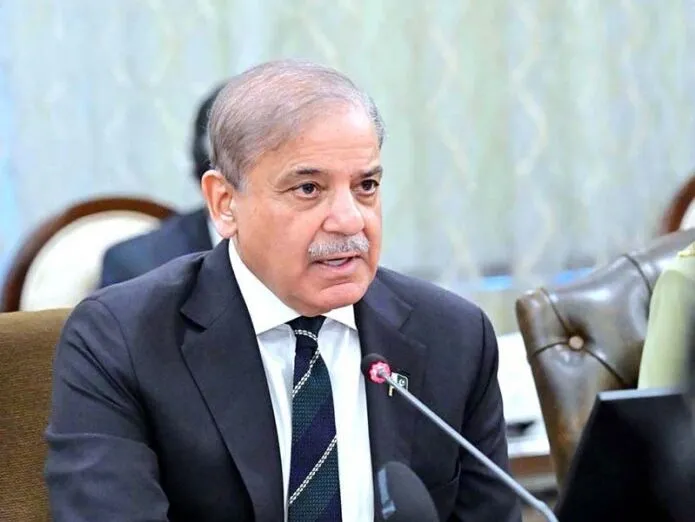
Pakistan has made arrangements to repay $4.8 billion in external obligations by June, including $3.5 billion payable to the United Arab Emirates (UAE) through three different facilities, official sources told. The repayment plan follows a federal government decision to return $2 billion to Abu Dhabi by the end of April. The funds had been placed with the State Bank of Pakistan (SBP) as a deposit, earning roughly 6% interest, officials said. Financial Support from Friendly Countries According to the sources, Islamabad has also secured assurances of more than $5 billion in financial support from two friendly countries. These funds are expected to help Pakistan manage its external financing requirements in the near term. Meanwhile, a $1.3 billion Eurobond maturing this week will also be repaid. The bond, issued for a 10-year period, adds to Pakistan’s immediate repayment pressures. Officials noted that the UAE had previously rolled over such deposits annually. However, in December 2025, the facility was extended only for short durations initially for one month and then for two months reflecting tightening financial conditions. UAE Demands Early Repayment The sources revealed that the UAE recently requested the immediate return of funds amid the evolving situation in the Middle East following the US-Israel war on Iran. Earlier, the UAE had agreed in principle to a short-term rollover of $2 billion after Deputy Prime Minister Ishaq Dar engaged with the UAE authorities. The rollover was extended until April 17, 2026. Previously, two tranches of $1 billion each, maturing on February 16 and February5 22, were rolled over for one month. Another $1 billion tranche is due to mature in July 2026, according to officials. The Abu Dhabi Fund for Development has placed a total of $3 billion with SBP in three tranches. Two tranches maturing in January were rolled over for a month, while the third will be addressed closer to its maturity, officials added. Foreign Office Clarifies Transaction On April 4, the Foreign Office (FO) rejected “misleading and unfounded” reports about the return of UAE deposits. The FO said the repayment is a routine financial transaction, conducted under bilateral commercial agreements. “The funds were placed with the central bank under mutually agreed terms. This demonstrates the UAE’s strong support for Pakistan’s economic stability and prosperity,” the FO said in a statement. The office emphasized that any attempt to portray the repayment as politically motivated is erroneous and misleading. “The government, through SBP, is returning the matured deposits to the UAE pursuant to agreed terms,” it added. Broader External Financing Strategy For the current fiscal year, Pakistan is seeking the rollover of around $12 billion in external deposits, including $9 billion from Saudi Arabia and China $5 billion and $4 billion respectively in addition to UAE deposits. Officials said these measures are part of Pakistan’s ongoing efforts to stabilize its external account and maintain liquidity in the face of global financial uncertainties. Analysts noted that timely repayment and rollover of deposits are crucial to maintaining investor confidence and sustaining Pakistan’s creditworthiness in international markets. They also highlighted the importance of maintaining strong relations with friendly countries to secure financial support. Economic Implications The repayment plan comes amid heightened geopolitical tensions in the Middle East, which have affected global markets and investor sentiment. The situation underscores Pakistan’s vulnerability to external shocks, including regional conflicts and fluctuations in global finance. Experts suggest that while the repayment does not pose immediate risk to Pakistan’s economy, delays or disruptions in the rollover of deposits could strain liquidity and affect the balance of payments. The government is therefore coordinating closely with international partners to ensure smooth execution of repayments and rollovers. Officials confirmed that Pakistan is monitoring the situation daily and will provide updates as needed. The government assured that all transactions are transparent and aligned with financial agreements.
IMF Pakistan Review 2026: A Defining Moment for Economic Stability
World

IMF Pakistan Review 2026: A Defining Moment for Economic Stability

IMF Pakistan Review 2026 has officially begun, marking a crucial phase in Pakistan’s economic journey as an International Monetary Fund (IMF) mission lands in Karachi to assess progress under the country’s multi-billion-dollar financial programmes. Led by Iva Petrova, the IMF delegation has initiated technical-level discussions with the State Bank of Pakistan (SBP). These talks are part of the third review of the $7 billion Extended Fund Facility (EFF) and the second review of the $1.1 billion Resilience and Sustainability Facility (RSF). Why IMF Pakistan Review 2026 Matters The IMF Pakistan Review 2026 is more than a routine checkpoint it’s a high-stakes evaluation that could unlock fresh inflows of over $1.2 billion. Successful completion would strengthen investor confidence and stabilize Pakistan’s fragile macroeconomic environment. The mission will transition from technical discussions in Karachi to policy-level negotiations with federal and provincial authorities, beginning with Finance Minister Muhammad Aurangzeb. Early signals from the government suggest optimism, particularly regarding tax collection performance by the Federal Board of Revenue (FBR). External Financing and UAE Deposit Confidence A key highlight of the IMF Pakistan Review 2026 is Pakistan’s reliance on external financial support. The country continues to depend on friendly nations for deposit rollovers, including China, Saudi Arabia, and the UAE. Deputy Prime Minister Ishaq Dar has reassured markets that the UAE’s $2 billion deposit currently on short-term rollover will be extended. This assurance is critical, as these deposits form a significant portion of Pakistan’s external financing framework under the IMF programme. IMF Pakistan Review 2026 and Fiscal Reforms A central pillar of the IMF Pakistan Review 2026 is fiscal discipline. Discussions will cover: • Revenue performance and tax reforms• Provincial finances, including agriculture income tax• Governance and accountability mechanisms• Structural reforms to reduce economic inefficiencies Although Pakistan has broadly met quantitative targets, it faces challenges in structural benchmarks particularly in governance and institutional performance. Authorities are hopeful that recent legal developments regarding the super tax will help bridge revenue gaps. Power Sector and Structural Challenges Energy sector reforms are expected to dominate the IMF Pakistan Review 2026 agenda. Despite keeping circular debt within target limits, inconsistent policymaking especially in industrial tariffs and residential charges remains a concern. The IMF is likely to push for: • Greater policy consistency• Improved governance in energy institutions• Long-term sustainability of tariff structures These reforms are essential to prevent recurring fiscal pressures and ensure economic resilience. Macroeconomic Indicators Under the Spotlight The review will also assess Pakistan’s macroeconomic health for the period ending December 2025. While most performance indicators are on track, some concerns remain: • Net international reserves are slightly below benchmarks• Revenue shortfalls persist despite corrective measures• Structural reform implementation needs acceleration However, the central bank’s domestic asset targets remain well within limits, indicating some level of monetary discipline. What Happens After IMF Pakistan Review 2026? If the IMF Pakistan Review 2026 concludes successfully, Pakistan will gain access to: • Approximately $1 billion under the EFF• Around $200 million under the RSF These inflows, expected by April, could provide much-needed breathing space for the economy and support foreign exchange reserves. Final Thoughts: A Turning Point or Temporary Relief? The IMF Pakistan Review 2026 represents a pivotal opportunity for Pakistan to reinforce economic stability and rebuild investor trust. While short-term indicators show progress, the real test lies in long-term structural reforms and governance improvements. The coming weeks will determine whether Pakistan can translate policy commitments into sustainable economic transformation or continue navigating a cycle of external support and internal challenges.

Scroll to Top