PIA privatization

PIA Privatization Enters a New Era as Arif-Habib Consortium Takes the Helm
Business

PIA Privatization Enters a New Era as Arif-Habib Consortium Takes the Helm

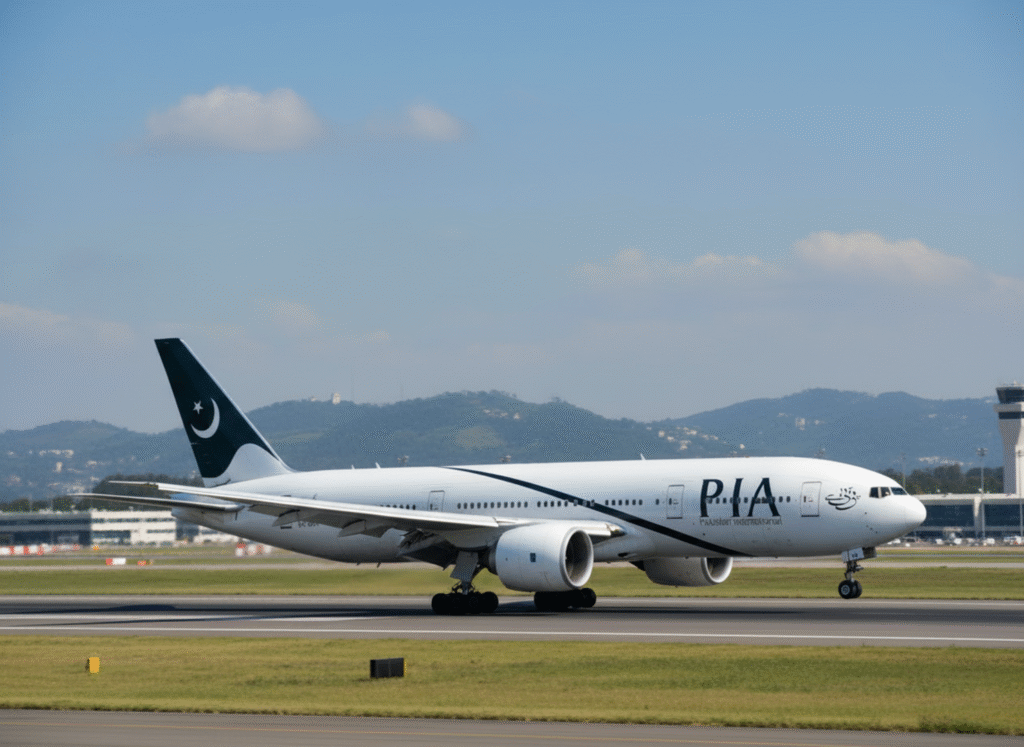
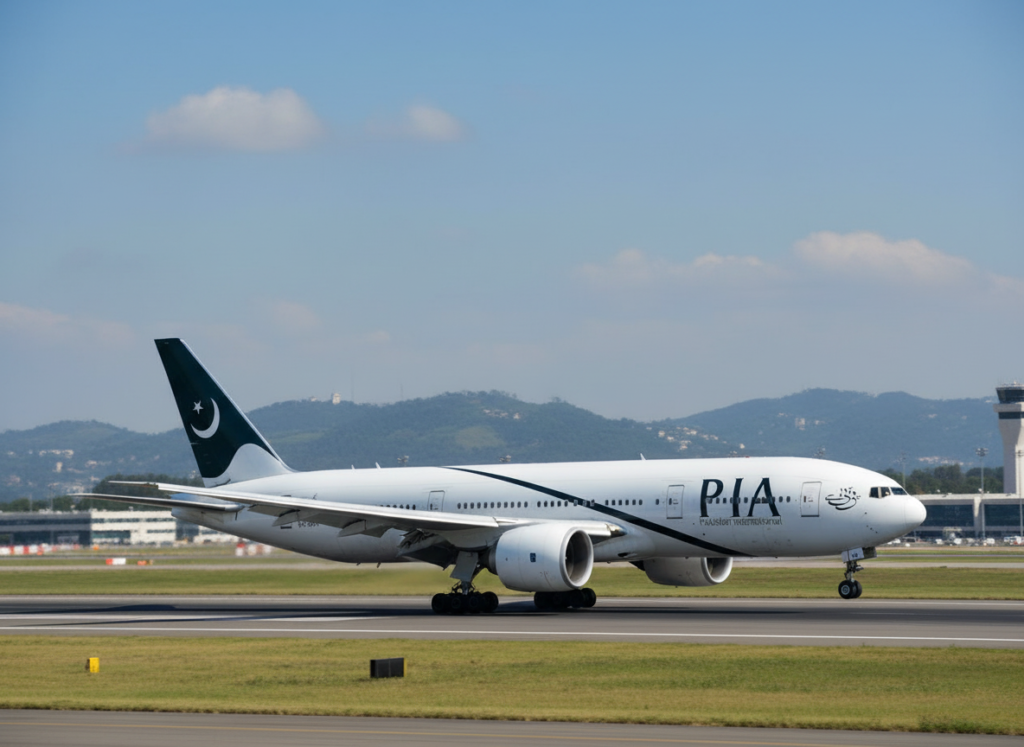
The long-anticipated PIA Privatization process has finally crossed a historic milestone. Pakistan International Airlines (PIA), the country’s national flag carrier, has officially been handed over to an Arif-Habib led consortium, marking one of the most consequential shifts in Pakistan’s aviation and public-sector reform landscape. Read More: https://theboardroompk.com/pia-launches-air-to-rail-partnership-seamless-travel-to-canada-and-uk-cities/ This handover is more than a change in ownership it represents a bold reset for an airline that once symbolized national pride but struggled for decades under mounting losses, inefficiencies, and governance challenges. For investors, policymakers, and travelers alike, PIA Privatization now moves from policy debate to real execution. Why PIA Privatization Matters for Pakistan’s Economy The significance of PIA Privatization extends far beyond aviation. As one of Pakistan’s most visible state-owned enterprises (SOEs), PIA’s chronic losses placed immense pressure on public finances. The transfer to private management reflects the government’s broader commitment to structural reforms, fiscal discipline, and private-sector-led growth. In recent years, PIA required repeated government bailouts, accumulated billions in debt, and faced operational disruptions that damaged its global standing. By bringing in a reputed financial and industrial group, policymakers are betting that professional management and commercial discipline can finally reverse the airline’s fortunes. Who Is the Arif-Habib Led Consortium? At the center of this landmark PIA Privatization is the Arif-Habib Group one of Pakistan’s most prominent conglomerates with deep expertise in financial services, investments, energy, and industrial management. The consortium’s involvement signals credibility and long-term intent. Market observers note that Arif-Habib’s track record of turning around complex businesses was a key factor in securing the deal. The group is expected to introduce modern governance structures, cost rationalization, and performance-driven decision-making areas where PIA historically struggled. What Changes Can We Expect After PIA Privatization? Under private management, PIA Privatization is expected to trigger a series of operational and strategic reforms. Instead of presenting these changes in a table, they can be understood through three key transformation pillars. First, operational efficiency is likely to improve through route rationalization, better fleet utilization, and stricter cost controls. Second, customer experience is expected to be a priority, with upgraded services, improved punctuality, and a renewed focus on international standards. Third, financial discipline will play a central role, as the consortium works to reduce losses, restructure liabilities, and restore investor confidence. Together, these changes could reposition PIA as a commercially viable airline rather than a fiscal burden. PIA Privatization and Investor Sentiment From a market perspective, PIA Privatization has already sparked renewed interest in Pakistan’s reform narrative. Analysts view the handover as a test case: if PIA can be stabilized and revived, it could accelerate privatization across other loss-making SOEs. The move also sends a strong signal to both local and foreign investors that Pakistan is willing to take politically difficult decisions to fix structural economic weaknesses. In a time of tight fiscal space, this credibility boost is critical. Challenges Ahead for PIA Privatization Despite optimism, PIA Privatization is not without risks. The airline operates in a highly competitive global aviation market, faces legacy labor issues, and must rebuild its international reputation. Fuel price volatility, regulatory compliance, and fleet modernization will also test the new management’s execution capabilities. However, experts argue that private ownership provides far greater flexibility to address these challenges than state control ever allowed. A Defining Moment for Pakistan International Airlines The handover of PIA to the Arif-Habib led consortium marks a defining chapter in Pakistan’s economic reform journey. PIA Privatization is no longer an abstract policy goal it is a living experiment in whether private-sector efficiency can rescue a national institution. If successful, this transition could redefine how Pakistan approaches state-owned enterprises for years to come. For now, all eyes are on how swiftly and decisively the new management can transform promises into performance.

PIA Privatization Signals New Era of Growth, Jobs, and Revival
Pakistan

PIA Privatization Signals New Era of Growth, Jobs, and Revival

PIA privatization has entered a decisive phase as Arif Habib, chairman of the investment firm leading the winning consortium, says the sale of Pakistan International Airlines Corporation Ltd (PIACL) will increase employment, expand operations, and restore the airline’s past glory. The Arif Habib Group led consortium secured a controlling stake in PIA for Rs135 billion, marking Pakistan’s first major privatization in nearly two decades. The deal is being viewed as a landmark reform move aimed at reviving a national institution long burdened by losses and inefficiencies. PIA Privatization and Employment Growth Prospects Addressing widespread employee concerns following the PIA privatization, Arif Habib stated that job cuts are not part of the plan. Instead, he emphasized that workforce expansion would naturally follow business growth. According to Habib, the current staff strength is reasonable, but the airline’s future expansion strategy will require additional skilled professionals, resulting in net job creation rather than layoffs. He explained that the real challenge lies not in numbers but in quality and performance, noting that most PIA employees are highly capable and professionally trained. PIA Privatization Aims to Restore Lost Global Prestige Highlighting the airline’s historic achievements, Habib reminded stakeholders that PIA was once ranked as the world’s second-best airline, powered by the same workforce that exists today. He further noted that PIA professionals played a pivotal role in establishing global carriers, including: • Emirates Airline• Singapore Airlines• Malta Airlines This legacy, he said, proves that Pakistani aviation professionals possess world-class skills, provided they are given the right environment, confidence, and institutional support. With the right platform and leadership, these same professionals can once again elevate PIA to international standards. Employee Protection Under PIA Privatization Deal Reinforcing employee safeguards, Adviser to the Prime Minister on Privatization Muhammad Ali confirmed that all PIA employees must be retained for at least 12 months after the transaction, with existing contracts remaining unchanged. This assurance has helped ease immediate workforce anxiety and aligns with the government’s broader strategy of ensuring social stability during structural reforms. Fauji Fertiliser Joins PIA Privatization Consortium Another key development in the PIA privatization process is the inclusion of Fauji Fertiliser Company in the Arif Habib–led consortium. Although Fauji Fertiliser initially exited the bidding race, it later joined the consortium as a shareholder, strengthening the ownership structure. Discussions are ongoing to finalize the partnership’s terms. Habib confirmed that Fauji Foundation Company is now part of PIA’s shareholding, adding institutional depth and long-term investment credibility to the deal. Strategic Backing and National Investment Confidence Habib also revealed that he met Chief of Defence Forces and Army Staff Field Marshal Asim Munir twice prior to the PIA privatization once in Karachi and once in Rawalpindi. During these meetings, attended by leading businessmen and industrialists, the Field Marshal emphasized the importance of local investment in strategic national assets, including PIA. This backing reflects growing confidence among policymakers and institutions that private-sector leadership can revive state-owned enterprises. Why PIA Privatization Matters for Pakistan’s Economy The PIA privatization represents more than a single transaction. It signals: • Renewed investor confidence• Commitment to economic reforms• Potential aviation sector revival• Improved fiscal discipline• Long-term employment generation If executed successfully, it could serve as a template for future privatizations in Pakistan. A Turning Point for PIA With fresh capital, experienced leadership, and institutional support, PIA privatization has the potential to transform the airline into a competitive regional player once again. As Arif Habib and his consortium move forward, expectations remain high that Pakistan’s national flag carrier can reclaim its lost stature this time on a commercially sustainable and globally competitive foundation.

PIA Privatization Reaches Final Bidding Stage as Three Contenders Remain
Pakistan

PIA Privatization Reaches Final Bidding Stage as Three Contenders Remain

PIA privatization has entered a decisive phase as the Privatisation Commission prepares to open bids for Pakistan International Airlines Corporation Limited (PIACL) on December 23, marking one of Pakistan’s most significant privatization initiatives in recent years. The process has narrowed to three qualified bidders following the exit of Fauji Fertiliser Company Limited, intensifying competition for control of the national flag carrier. The development is being closely watched by investors, policymakers, and the business community, as the outcome could reshape Pakistan’s aviation sector and contribute meaningfully to long-term economic growth. PIA Privatization Bidding Process and Transparency Measures According to the official programme issued by the Privatisation Commission, today sealed bids were submitted between 10:45am and 11:15am, while bid opening is scheduled for 3:30pm and will be broadcast live on television networks to ensure transparency. The Chairman of the Privatisation Commission and Adviser to the Prime Minister on Privatisation, Muhammad Ali, confirmed that Fauji Fertiliser Company voluntarily withdrew from the bidding process, leaving three strong contenders in the race. Remaining Bidders for PIA Privatization The shortlisted bidders include:• A consortium led by Lucky Cement Limited, along with Hub Power Holdings Limited, Kohat Cement Company Limited, and Metro Ventures (Private) Limited• A consortium comprising Arif Habib Corporation Limited, Fatima Fertiliser Company Limited, City Schools (Private) Limited, and Lake City Holdings (Private) Limited• Air Blue (Private) Limited Following bid submission, the Privatisation Commission Board will determine a reference price, which will then be approved by the Cabinet Committee on Privatisation (CCoP) before being announced at the time of bid opening. PIA Privatization Auction Mechanism Explained If bids exceed the reference price, an open auction will be conducted among the bidders. In the event bids fall below the benchmark, the highest bidder will receive priority. The federal cabinet is expected to approve the transaction within days, after which formal documentation will be signed. The Privatisation Commission will then have 90 days to complete procedural requirements, including the transfer of aircraft, properties, and liabilities. Transaction Structure of PIA Privatization Under the approved transaction framework:• 75% stake in PIA is being offered to private investors• 92.5% of the proceeds will go directly to PIA• 7.5% will be transferred to the national exchequer The government will retain 25% shareholding, which the successful bidder may acquire within 12 months at a 12% premium, or leave with the state. The final valuation of the remaining shares will be determined after completion of the initial transaction. Payment terms require the winning bidder to deposit two-thirds of the bid within 90 days, while the remaining amount must be paid within one year. Why PIA Privatization Matters for Pakistan’s Economy Mr. Ali emphasized that PIA privatization could significantly boost GDP growth, noting that Pakistan’s aviation sector contributes only 1.3% to GDP, compared to 18% in the UAE and 8.5% in Saudi Arabia. With proper investment and management, this contribution could increase substantially. Despite having a fleet of 34 aircraft, only 18 are currently operational, yet PIA holds air service agreements with 97 countries and landing rights in more than 170 destinations, underscoring its untapped potential. Financial Health, Employees, and Future Outlook PIA currently reports:• Net profit of Rs11 billion• Equity of Rs30 billion• Liabilities of Rs26 billion, to be paid by bidders over five years Employee protections remain a key feature of the deal. No employee can be laid off for one year, while pensions, perks, and medical benefits are fully safeguarded. The workforce has already been reduced from 11,500 employees in 2011 to 6,500 today, reflecting structural reforms. Private Sector Role in Reviving PIA According to the Privatisation Commission chairman, PIA is an asset that can either drain public resources or generate massive economic value if managed efficiently. With a population of 250 million, strong route access, and established landing slots, PIA requires capital investment, fleet expansion, and agile decision-making capabilities best delivered by the private sector. If executed successfully, PIA privatization could restore the airline to its former prominence, strengthen Pakistan’s aviation ecosystem, and unlock long-term economic benefits.

Scroll to Top