Pakistan IMF program

Saudi Arabia $3 Billion Deposit Pakistan: Major Support for External Financing
Pakistan

Saudi Arabia $3 Billion Deposit Pakistan: Major Support for External Financing

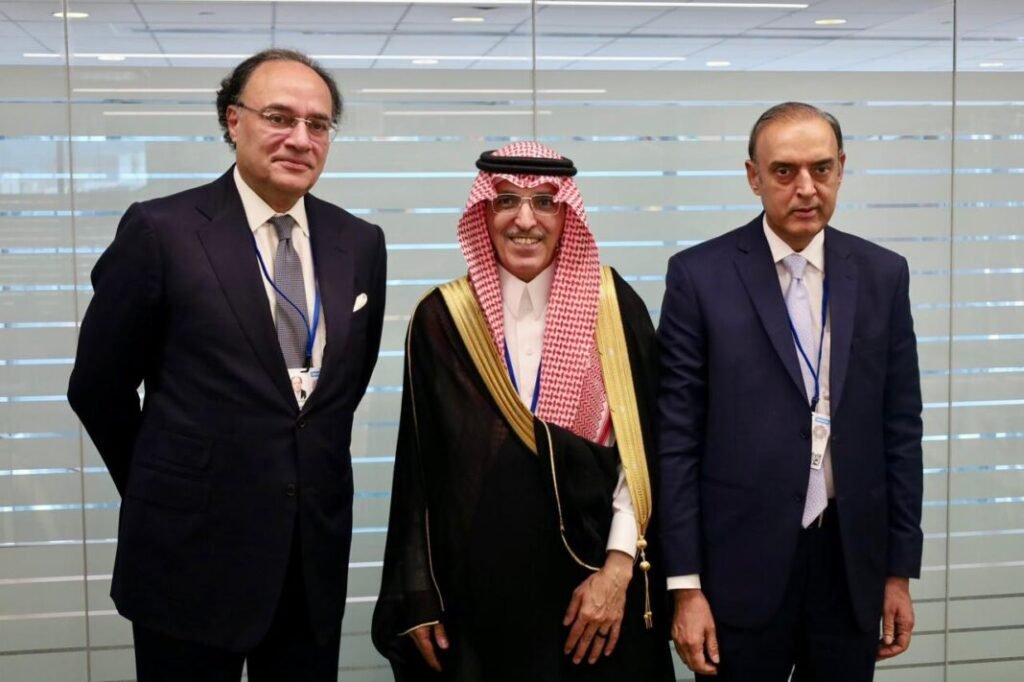
Saudi Arabia $3 Billion Deposit Pakistan is set to strengthen the country’s external financing position, with the Kingdom committing an additional $3 billion deposit expected to be disbursed within the coming week. This move comes at a crucial time when Pakistan is working to stabilize its foreign exchange reserves and maintain financial discipline under its ongoing economic reform program. Read More: https://theboardroompk.com/government-imposes-2-25-hour-daily-loadshedding-to-shield-consumers-from-price-surge/ Alongside the fresh inflow, the existing $5 billion Saudi deposit will also be extended for a longer term. Previously, this amount required annual rollover arrangements, but the revised terms reduce short-term repayment pressure and provide more stability to Pakistan’s financial outlook. This dual support package is being viewed as a strong signal of confidence in Pakistan’s economic management and reform direction. Saudi Arabia $3 Billion Deposit Pakistan to Strengthen Reserves The Saudi Arabia $3 Billion Deposit Pakistan initiative is expected to directly improve Pakistan’s foreign exchange reserves. The government aims to reach around $18 billion in reserves, equivalent to approximately 3.3 months of import cover, by the end of the fiscal year. Achieving this target is important to meet commitments under the International Monetary Fund program and maintain market stability. Finance officials highlighted that stronger reserves help manage currency volatility, support imports of essential goods, and enhance investor confidence. At a time when global financial conditions remain tight, bilateral support like this plays a key role in easing external financing pressures. High-Level Meetings Secure Saudi Support The agreement was finalized during high-level meetings held on the sidelines of the World Bank and IMF Spring Meetings in Washington, D.C. Pakistan’s finance leadership held detailed discussions with Saudi counterparts to finalize the additional deposit and extend the existing facility. Officials noted that discussions had also taken place earlier in Islamabad, but public confirmation was withheld until formal communication was completed. The finalized arrangement reflects continued strategic financial cooperation between Pakistan and Saudi Arabia. Saudi Arabia $3 Billion Deposit Pakistan Enhances Investor Confidence The Saudi Arabia $3 Billion Deposit Pakistan package is also expected to improve investor sentiment. The government recently repaid a $1.4 billion Eurobond, demonstrating its ability to meet external obligations on time. This repayment, combined with fresh financial support, reinforces Pakistan’s credibility in international markets. Authorities emphasized that maintaining adequate reserves and honoring debt commitments remain central to the country’s economic strategy. Stronger investor confidence can lead to improved access to global capital markets and potentially lower borrowing costs. Broader External Financing Strategy in Progress Beyond the Saudi support, Pakistan is pursuing a broader external financing strategy. This includes launching a Global Medium-Term Note program and planning an inaugural Panda Bond issuance. These initiatives aim to diversify funding sources and reduce reliance on short-term borrowing. By expanding financing channels, Pakistan seeks to build resilience against global economic shocks. Officials stressed that disciplined financial management and continued reforms remain essential to sustaining macroeconomic stability. Recognition from International Financial Institutions Pakistan’s recent economic management efforts have received appreciation from international financial institutions. Observers note improvements in fiscal discipline, structural reforms, and proactive debt management. Continued engagement with bilateral partners and multilateral lenders is expected to support long-term stability. The Saudi Arabia $3 Billion Deposit Pakistan decision is being viewed as a vote of confidence not only in Pakistan’s financial reforms but also in its broader economic direction. This support arrives at a critical time when the country is aiming to stabilize its economy and maintain growth momentum. Outlook: Stability and Reform Remain Key With the additional deposit, extended facility, and ongoing reforms, Pakistan is working toward strengthening macroeconomic stability. Authorities reaffirmed their commitment to meeting external obligations, maintaining adequate reserves, and continuing structural reforms. The Saudi Arabia $3 Billion Deposit Pakistan development is likely to play a crucial role in stabilizing financial markets and supporting economic recovery. As Pakistan advances its financing strategy, continued international cooperation will remain vital for sustainable growth.

Pakistan IMF Review: A Crucial Moment for the Country’s Economic Recovery
Pakistan

Pakistan IMF Review: A Crucial Moment for the Country’s Economic Recovery

Pakistan IMF Review discussions have reached a pivotal stage as negotiations between Pakistan and the International Monetary Fund extend beyond their initial schedule. The ongoing talks are part of the country’s economic stabilization program and could determine the next phase of financial support for the country. Read More: https://theboardroompk.com/farid-ahmad-tarar-ccp-chairman-veteran-public-finance-expert-takes-helm-at-competition-commission-of-pakistan/ As global uncertainties mount and geopolitical tensions intensify, the review has taken on added importance for policymakers, investors, and businesses closely watching Pakistan’s economic trajectory. Pakistan IMF Review Extends Beyond Mission Deadline An IMF delegation led by Iva Petrova held detailed discussions with Pakistani authorities in Karachi and Islamabad, alongside several virtual meetings, between February 25 and March 11. While the IMF confirmed that “significant progress” had been made, the review process will continue for a few more days before a final agreement is reached. The talks are part of Pakistan’s 37-month Extended Fund Facility (EFF) program, which acts as the foundation of the country’s macroeconomic stabilization strategy. Alongside this program runs the 28-month Resilience and Sustainability Facility (RSF), designed to strengthen climate resilience and support structural economic reforms. Together, these two frameworks are shaping Pakistan’s fiscal discipline, economic reforms, and climate-resilient development policies. Fiscal Discipline Remains the Core of the Pakistan IMF Review One of the central themes of the Pakistan IMF Review is maintaining fiscal consolidation to ensure sustainable government finances. Both sides are evaluating progress on: • Increasing tax revenues• Controlling government expenditures• Managing rising public debt Pakistan has largely remained aligned with program commitments through February 2026, according to the IMF’s end-of-mission statement. This indicates the country has broadly adhered to the fiscal, monetary, and structural reform targets agreed under the IMF arrangement. For policymakers, maintaining this momentum is essential not only to secure the next IMF funding tranche but also to reassure international investors about Pakistan’s economic stability. Monetary Policy and Inflation Control Another key issue discussed during the Pakistan IMF Review is the role of monetary policy in stabilizing inflation. The State Bank of Pakistan has maintained tight monetary conditions to anchor inflation expectations. The IMF emphasized that these restrictive monetary policies should remain in place until inflation shows sustained signs of returning to the central bank’s target range. For businesses and consumers, inflation control remains one of the most closely watched indicators of economic recovery. Energy Sector Reforms: A Persistent Challenge Pakistan’s power sector once again dominated discussions during the Pakistan IMF Review. For years, inefficiencies in the energy sector have contributed to the country’s growing circular debt, a financial burden that strains government finances and discourages investment. The IMF and Pakistani authorities discussed several reforms aimed at improving the sector’s financial viability, including: • Adjusting electricity tariffs• Strengthening governance within power utilities• Improving cost recovery mechanisms These reforms are seen as essential for restoring investor confidence and reducing the fiscal pressure caused by the energy sector. Climate Resilience Gains Attention Under RSF Beyond short-term stabilization, the Resilience and Sustainability Facility is emerging as a key pillar of Pakistan’s long-term economic strategy. Pakistan has already implemented several reforms under the program aimed at strengthening disaster preparedness, integrating climate risks into fiscal planning, and improving resilience against extreme weather events. Given Pakistan’s vulnerability to floods and climate shocks, these reforms are expected to play a vital role in shaping sustainable economic growth. Global Risks Loom Over the Pakistan IMF Review Despite progress in negotiations, the review has been overshadowed by growing geopolitical uncertainties. The escalating conflict in the Middle East has triggered concerns about rising oil prices and tightening global financial conditions. For Pakistan, an energy-importing economy, volatile fuel prices could significantly impact the country’s macroeconomic stability. Higher oil prices could lead to: • A widening current account deficit• Increased inflationary pressure• Greater fiscal strain through energy subsidies At the same time, tougher global financial conditions could make it more difficult for Pakistan to secure external financing at favorable terms. What Happens Next? The successful completion of the Pakistan IMF Review would unlock the next tranche of IMF funding and send a strong signal of confidence in Pakistan’s reform agenda. While the IMF has indicated that the program remains broadly on track, finalizing the review will depend on how global risks evolve and how they might affect Pakistan’s economic outlook. For businesses, investors, and policymakers alike, the coming days could prove decisive in shaping Pakistan’s economic narrative for the year ahead.

IMF Pakistan Review 2026: A Defining Moment for Economic Stability
World

IMF Pakistan Review 2026: A Defining Moment for Economic Stability

IMF Pakistan Review 2026 has officially begun, marking a crucial phase in Pakistan’s economic journey as an International Monetary Fund (IMF) mission lands in Karachi to assess progress under the country’s multi-billion-dollar financial programmes. Led by Iva Petrova, the IMF delegation has initiated technical-level discussions with the State Bank of Pakistan (SBP). These talks are part of the third review of the $7 billion Extended Fund Facility (EFF) and the second review of the $1.1 billion Resilience and Sustainability Facility (RSF). Why IMF Pakistan Review 2026 Matters The IMF Pakistan Review 2026 is more than a routine checkpoint it’s a high-stakes evaluation that could unlock fresh inflows of over $1.2 billion. Successful completion would strengthen investor confidence and stabilize Pakistan’s fragile macroeconomic environment. The mission will transition from technical discussions in Karachi to policy-level negotiations with federal and provincial authorities, beginning with Finance Minister Muhammad Aurangzeb. Early signals from the government suggest optimism, particularly regarding tax collection performance by the Federal Board of Revenue (FBR). External Financing and UAE Deposit Confidence A key highlight of the IMF Pakistan Review 2026 is Pakistan’s reliance on external financial support. The country continues to depend on friendly nations for deposit rollovers, including China, Saudi Arabia, and the UAE. Deputy Prime Minister Ishaq Dar has reassured markets that the UAE’s $2 billion deposit currently on short-term rollover will be extended. This assurance is critical, as these deposits form a significant portion of Pakistan’s external financing framework under the IMF programme. IMF Pakistan Review 2026 and Fiscal Reforms A central pillar of the IMF Pakistan Review 2026 is fiscal discipline. Discussions will cover: • Revenue performance and tax reforms• Provincial finances, including agriculture income tax• Governance and accountability mechanisms• Structural reforms to reduce economic inefficiencies Although Pakistan has broadly met quantitative targets, it faces challenges in structural benchmarks particularly in governance and institutional performance. Authorities are hopeful that recent legal developments regarding the super tax will help bridge revenue gaps. Power Sector and Structural Challenges Energy sector reforms are expected to dominate the IMF Pakistan Review 2026 agenda. Despite keeping circular debt within target limits, inconsistent policymaking especially in industrial tariffs and residential charges remains a concern. The IMF is likely to push for: • Greater policy consistency• Improved governance in energy institutions• Long-term sustainability of tariff structures These reforms are essential to prevent recurring fiscal pressures and ensure economic resilience. Macroeconomic Indicators Under the Spotlight The review will also assess Pakistan’s macroeconomic health for the period ending December 2025. While most performance indicators are on track, some concerns remain: • Net international reserves are slightly below benchmarks• Revenue shortfalls persist despite corrective measures• Structural reform implementation needs acceleration However, the central bank’s domestic asset targets remain well within limits, indicating some level of monetary discipline. What Happens After IMF Pakistan Review 2026? If the IMF Pakistan Review 2026 concludes successfully, Pakistan will gain access to: • Approximately $1 billion under the EFF• Around $200 million under the RSF These inflows, expected by April, could provide much-needed breathing space for the economy and support foreign exchange reserves. Final Thoughts: A Turning Point or Temporary Relief? The IMF Pakistan Review 2026 represents a pivotal opportunity for Pakistan to reinforce economic stability and rebuild investor trust. While short-term indicators show progress, the real test lies in long-term structural reforms and governance improvements. The coming weeks will determine whether Pakistan can translate policy commitments into sustainable economic transformation or continue navigating a cycle of external support and internal challenges.

Scroll to Top