global oil supply

Brent Oil Prices Surge 7% as US-Iran Tensions Threaten Global Supply
World

Brent Oil Prices Surge 7% as US-Iran Tensions Threaten Global Supply

Brent oil prices surged sharply on Thursday, rising as much as 7 percent amid escalating geopolitical tensions between the United States and Iran. The rally follows reports that Donald Trump is considering potential military action to break the deadlock in negotiations, raising fears of further disruptions to already strained Middle East oil supplies. Oil Markets Rally on War Fears In early trading, Brent oil prices for June delivery jumped by $6.81, or 5.8 percent, reaching $124.84 per barrel. This marked the ninth consecutive session of gains for the expiring contract. Meanwhile, the more actively traded July contract climbed to $113.78, gaining 3 percent after a strong rise in the previous session. At the same time, US benchmark West Texas Intermediate (WTI) also recorded gains. June futures rose by $2.76, or 2.6 percent, to $109.64 per barrel. The contract has now increased in eight of the last nine sessions, reflecting sustained bullish momentum across global oil markets. Geopolitical Tensions Drive Supply Concerns The sharp rise in Brent oil prices comes amid deepening conflict in the Middle East. According to reports, the United States is weighing military options to pressure Iran into negotiations over its nuclear programme. The conflict escalated after joint US-Israel air strikes began earlier this year, prompting Iran to retaliate by restricting shipping through the critical Strait of Hormuz. This narrow passage is one of the world’s most important energy chokepoints. A disruption here can significantly impact global oil flows. Analysts warn that prolonged closure or restricted access could tighten supply further, pushing prices even higher. Energy Markets Face Historic Disruption The ongoing conflict has already triggered what experts describe as one of the largest energy disruptions in modern history. Thousands have died, and regional infrastructure has suffered severe damage. Despite a temporary ceasefire, tensions remain high, with the US maintaining pressure through sanctions and a blockade on Iranian ports. Market analysts believe that the prospects for a near-term resolution remain slim. Continued uncertainty surrounding the reopening of the Strait of Hormuz is keeping traders on edge, driving speculative buying in oil markets. OPEC+ and UAE Exit Add to Market Uncertainty Beyond geopolitical risks, structural shifts within OPEC+ are also influencing Brent oil prices. The recent decision by the United Arab Emirates to exit the alliance, effective May 1, has raised concerns about the group’s ability to manage global oil supply. OPEC+ is expected to discuss a modest production increase of around 188,000 barrels per day in its upcoming meeting. However, analysts believe this adjustment will have limited impact given the scale of supply disruptions caused by the conflict. Demand Destruction Emerges as Key Risk With supply tightening and prices rising rapidly, analysts are now focusing on demand destruction as a possible balancing mechanism. Experts estimate that high prices could reduce global oil demand by approximately 1.6 million barrels per day as consumers cut back on fuel usage. However, this reduction may not be sufficient to offset the current supply shortfall. As a result, Brent oil prices could remain elevated in the near term, especially if geopolitical tensions continue to escalate. Both Brent and WTI benchmarks are now on track for their fourth consecutive monthly gains. Since the start of the year, Brent crude has more than doubled, reaching its highest level since March 2022. WTI has also surged by over 90 percent during the same period.
US Naval Blockade on Iran Set to Tighten Global Oil Supply
Breaking News, World

US Naval Blockade on Iran Set to Tighten Global Oil Supply

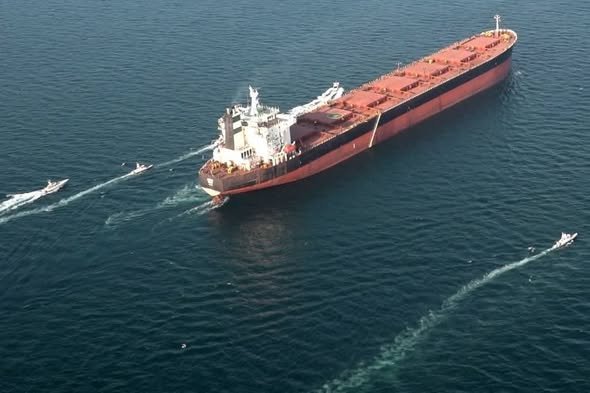
The US military has announced a naval blockade of Iranian ports starting Monday at 10am ET (7pm PKT), preventing roughly two million barrels of Iranian oil per day from reaching international markets. This move comes after weekend peace talks in Islamabad between US and Iranian negotiators ended without any agreement. Read More: https://theboardroompk.com/pakistan-deploys-fighter-jets-to-saudi-arabia-under-defence-pact/ US President Donald Trump stated that the Navy would begin blockading ships trying to enter or leave the Strait of Hormuz. The US Central Command clarified that the blockade targets only vessels going to or from Iranian ports and will not affect freedom of navigation for ships heading to non-Iranian ports in the region. Impact on Global Oil Markets Iran exported about 1.84 million barrels per day in March and 1.71 million so far in April. Blocking these flows is expected to tighten global oil supply significantly. Analysts note that more than 180 million barrels of Iranian oil are already loaded on ships, adding pressure to an already strained market. Before the recent conflict, roughly 20 percent of global oil and natural gas exports passed through the Strait of Hormuz, with most cargoes destined for Asia. China remains the top buyer of Iranian crude, while India is preparing to receive its first Iranian shipment in seven years under a recent US sanctions waiver. Risks to Shipping and Regional Stability Shipping traffic through the Strait of Hormuz has been severely limited since the war began on February 28. Despite a two-week ceasefire last week, many tankers continue to avoid the area. Recent incidents include a tanker turning back near the Gulf of Oman and only a few supertankers successfully exiting the Gulf over the weekend. Iran’s Revolutionary Guards have warned that any military vessels approaching the strait would be seen as a ceasefire violation and met with a harsh response. Retired Admiral Gary Roughead cautioned that Iran could target ships or attack infrastructure in Gulf states hosting US forces. The blockade adds fresh uncertainty to energy markets already watching developments closely in the Persian Gulf and Gulf of Oman.

Oil Tankers Reroute at Last Minute as US Moves to Block Iran Sea Routes
World

Oil Tankers Reroute at Last Minute as US Moves to Block Iran Sea Routes

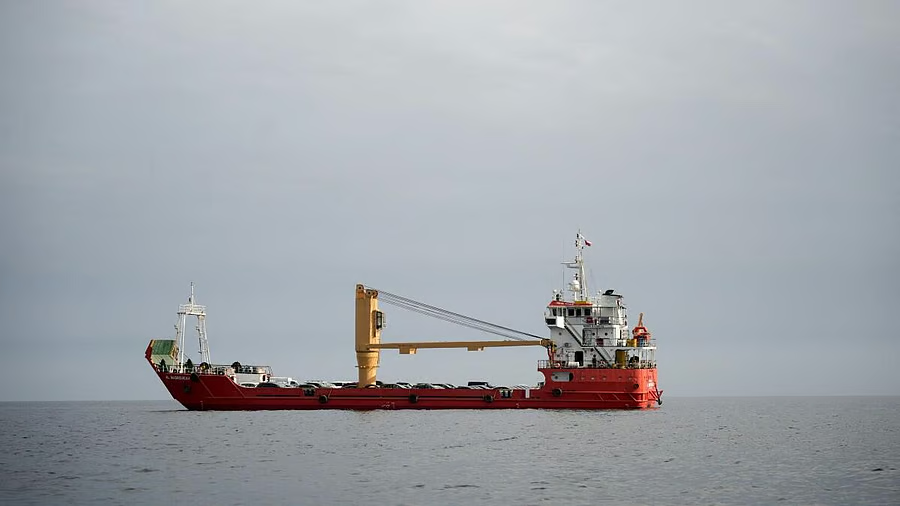
The Strait of Hormuz crisis intensified on Monday as oil tankers began steering clear of one of the world’s most critical maritime routes. Shipping data confirmed a sharp shift in tanker movement ahead of a planned US naval blockade targeting Iranian oil exports. Read More: https://theboardroompk.com/pso-announces-appointment-of-jawwad-ahmed-cheema-as-ceo/ The Strait of Hormuz serves as a vital artery for global energy supplies. Any disruption in this narrow passage immediately impacts oil markets and shipping patterns worldwide. Following the announcement, tanker operators moved quickly to avoid the region. This reaction highlights growing fears of escalation after diplomatic efforts between Washington and Tehran collapsed over the weekend. US Blockade Announcement Raises Stakes US President Donald Trump confirmed that the US Navy would begin blockading maritime traffic linked to Iranian ports. His statement came after extended negotiations failed to produce a ceasefire agreement. The decision threatens to derail a fragile two-week truce. It also raises concerns about direct confrontation in one of the most sensitive geopolitical zones. The United States Central Command stated that enforcement would begin at 10 a.m. ET (1400 GMT). US forces will monitor and restrict vessels entering or leaving Iranian ports. Officials clarified that the blockade would apply to ships of all nations engaging with Iranian ports across the Arabian Gulf and Gulf of Oman. However, vessels transiting the Strait to non-Iranian destinations will not face interference. Iran Issues Strong Warning Amid Escalation Iran responded swiftly through the Islamic Revolutionary Guard Corps. Officials warned that any foreign military presence near the Strait would violate the ceasefire agreement. They stated that Iran would respond “harshly and decisively” to any such move. This warning has added another layer of uncertainty to an already volatile situation. The risk of miscalculation remains high. Even a minor confrontation could escalate into a broader conflict, further disrupting global oil flows. Pakistan-Flagged Tankers Continue Strategic Movements Despite rising tensions, some vessels continue operations in the region. Shipping data from LSEG and Kpler revealed that two Pakistan-flagged tankers entered the Gulf on Sunday. The Aframax tanker Shalamar is heading toward the United Arab Emirates to load Das crude. Meanwhile, the Panamax-sized Khairpur is en route to Kuwait to load refined petroleum products. The movement of these vessels indicates that not all operators have halted activity. However, the broader trend shows increasing caution among shipping companies. Pakistan National Shipping Corporation, which manages Shalamar, has not yet issued an official statement regarding the evolving situation. Global Tanker Routes Shift Amid Rising Risks The crisis has forced several vessels to reconsider their routes. The Liberia-flagged VLCC Mombasa B successfully transited the Strait and is now ballasting in the Gulf. In contrast, the Malta-flagged VLCC Agios Fanourios I aborted its journey. The vessel attempted to enter the Gulf to load Iraqi Basra crude for Vietnam but later turned back. It is now anchored near the Gulf of Oman and plans to redirect toward Iraq. This shift reflects the growing uncertainty and operational challenges facing global shipping companies. Managers of both vessels have not responded to media queries, further highlighting the cautious approach adopted by industry players. Supertankers Continue Limited Transit Despite Crisis Despite the heightened tensions, three fully loaded supertankers successfully passed through the Strait on Saturday. These vessels marked the first major outbound shipments since the ceasefire agreement last week. Their movement suggests that some operators still view the route as viable, at least temporarily. However, the number of such transits remains limited. Shipping companies continue to assess risks in real time. Many prefer to delay voyages or reroute shipments rather than face potential conflict zones. Global Energy Markets Face Growing Uncertainty The Strait of Hormuz crisis has once again exposed the vulnerability of global energy supply chains. Even the threat of disruption has forced immediate changes in tanker routes and logistics. Oil markets remain highly sensitive to developments in the region. Any escalation could push prices higher and strain global supply. At the same time, the situation places additional pressure on diplomatic channels. Without a breakthrough, tensions may continue to rise in the coming days. For now, tanker operators, energy companies, and governments are closely monitoring every development. The decisions made in the next 48 hours could shape the direction of global oil markets for weeks to come.

Scroll to Top