
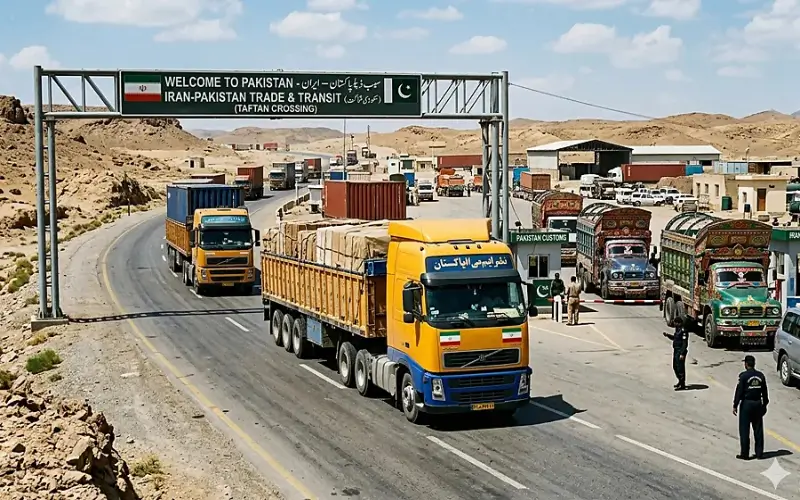
Pakistan-Iran Transit Trade Order 2026 Issued to Boost Regional Connectivity
The federal government has issued a major policy order to streamline Pakistan-Iran transit trade and improve cross-border connectivity. The move aims to facilitate smoother movement of goods through Pakistan into Iran. Officials say the decision will reduce delays and strengthen bilateral trade ties. According to SRO 691(I)/2026, issued on April 25, 2026, the government introduced the “Transit of Goods through Territory of Pakistan Order 2026.” Authorities framed this order under the bilateral agreement on international road transport signed between Pakistan and Iran in 2008. New Order to Simplify Trade Routes The new policy sets clear rules for transporting goods across Pakistan’s territory. It focuses on reducing bureaucratic hurdles. It also ensures better coordination between customs, border authorities, and transport operators. Officials confirmed that the order will allow foreign cargo destined for Iran to pass through Pakistan under defined procedures. This step will improve efficiency at border crossings. It will also reduce waiting times for transport vehicles. Moreover, authorities expect the new framework to attract more regional trade traffic. By simplifying processes, Pakistan aims to position itself as a key transit hub connecting South Asia, Central Asia, and the Middle East. Strengthening Pakistan-Iran Economic Relations The development signals a renewed push to strengthen economic ties between Pakistan and Iran. Both countries have long shared trade and energy interests. However, logistical and regulatory challenges often slowed progress. Now, with the implementation of the 2026 transit order, both sides aim to unlock new trade potential. Officials believe improved transit systems will encourage exporters and importers to use land routes more frequently. In addition, the policy aligns with broader regional connectivity goals. It complements Pakistan’s efforts to enhance trade corridors and expand its role in regional supply chains. Key Features of the Transit Order The “Transit of Goods through Territory of Pakistan Order 2026” introduces several important measures. First, it defines the legal framework for goods passing through Pakistan without entering the domestic market. Second, it outlines documentation requirements for transport operators. This ensures transparency and reduces the risk of misuse. Authorities will monitor shipments through digital tracking systems to enhance security. Third, the order specifies designated routes for transit traffic. This will help manage logistics efficiently. It will also minimize congestion at key entry and exit points. Furthermore, customs officials will supervise all transit consignments. They will ensure compliance with national laws and international agreements. Focus on Border Efficiency and Security The government has emphasized both efficiency and security in the new policy. While it aims to speed up trade, it also introduces strict monitoring mechanisms. Authorities will use modern tracking systems to follow cargo movement. This step will prevent illegal trade activities. It will also build confidence among international partners. At the same time, border infrastructure will receive attention. Improved facilities will help handle increased trade volumes. Officials expect smoother operations at major crossings connecting Pakistan and Iran. Economic Impact and Trade Opportunities Experts believe the new transit policy could generate significant economic benefits. Increased trade traffic will boost revenue through transit fees and services. It will also create opportunities for the logistics and transport sectors. Additionally, local businesses may benefit from improved connectivity. Warehousing, freight services, and border markets could see increased activity. The move may also strengthen Pakistan’s position in regional trade networks. By offering efficient transit routes, the country can attract cargo flows from neighboring regions. Alignment with Regional Connectivity Vision The transit order reflects Pakistan’s broader strategy to enhance regional integration. The government has been focusing on improving road networks and trade corridors in recent years. This initiative supports that vision. It connects Pakistan more effectively with Iran and beyond. It also complements other regional projects aimed at boosting trade flows. Officials say the policy will help build long-term economic partnerships. It will also promote stability through increased economic cooperation. Implementation and Future Outlook Authorities have begun implementing the new transit framework immediately after its issuance. Relevant departments are coordinating to ensure smooth execution. Transport operators and traders have welcomed the move. They expect reduced costs and faster delivery times. However, they also stress the need for consistent enforcement and infrastructure upgrades.