
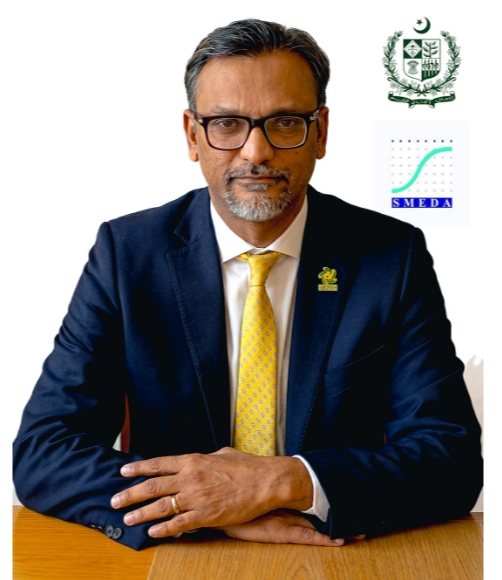
The Small and Medium Enterprise Development Authority (SMEDA) has called for special incentives and regulatory reforms for small and medium enterprises (SMEs), saying the sector holds the key to Pakistan’s economic growth, exports, and job creation.
SMEDA Director Mashhood Ali Khan said SMEs are unable to realize their full potential because of frequent audits, complex regulations, and high production costs.
SMEs Face Regulatory Challenges
According to Mashhood Ali Khan, businesses with annual turnover of up to Rs500 million already pay income tax and sales tax.
He said such enterprises should be exempt from repeated audits conducted by different government departments.
He noted that small businesses operate with limited staff. Owners often have to manage production, procurement, sales, and administration simultaneously. Frequent audits divert their attention from expanding their businesses.
He urged the government to create a trust-based environment and provide incentives to registered businesses.
According to him, these measures would encourage undocumented enterprises to become part of the formal economy.
Focus Should Be on Untaxed Sectors
Mashhood Ali Khan stressed that the government should broaden the tax base instead of increasing the burden on existing taxpayers.
He said several sectors are still not contributing effectively to tax revenues. Bringing such sectors into the tax net would generate additional resources without discouraging compliant businesses.
Lower Electricity Tariffs Essential
The SMEDA director described lower electricity prices as essential for industrial growth.
He said high energy costs are making it difficult for Pakistani industries to remain competitive in international markets.
According to him, the government must review electricity tariffs if it wants to promote exports and industrial development.
He added that affordable energy would help businesses reduce production costs and improve competitiveness.
Proposal for Collateral-Free Loans
Mashhood Ali Khan also proposed introducing collateral-free financing schemes for SMEs.
He said businesses that have consistently paid taxes over several years should receive easy loans based on their tax records.
Such financing, he said, would allow companies to increase production capacity and expand operations.
He added that business growth would ultimately lead to higher government revenues.
Long-Term Financing Needed
The SMEDA official emphasized the need to restore long-term financing facilities at single-digit interest rates.
He said industries require financing for at least 10 years to invest in modern machinery, technology, and production capacity.
According to him, loans with two- or three-year tenures do not support sustainable industrial growth.
He said access to affordable and long-term financing is crucial for strengthening Pakistan’s manufacturing sector.
SMEs Generate Jobs and Exports
Mashhood Ali Khan highlighted the importance of the SME sector in the national economy.
He said SMEs currently contribute around $2.8 billion in exports.
He added that nearly 80 percent of employment opportunities in Pakistan are linked to the sector.
According to him, SMEs have the potential to play a major role in economic recovery and sustainable growth.
Sector Can Drive Economic Revival
The SMEDA director said the government should provide regulatory ease, affordable energy, and better financial facilities to unlock the sector’s potential.
He said supportive policies would help small and medium enterprises expand, increase exports, and create more jobs.
According to him, a stronger SME sector could become one of the main drivers of Pakistan’s long-term economic development.