
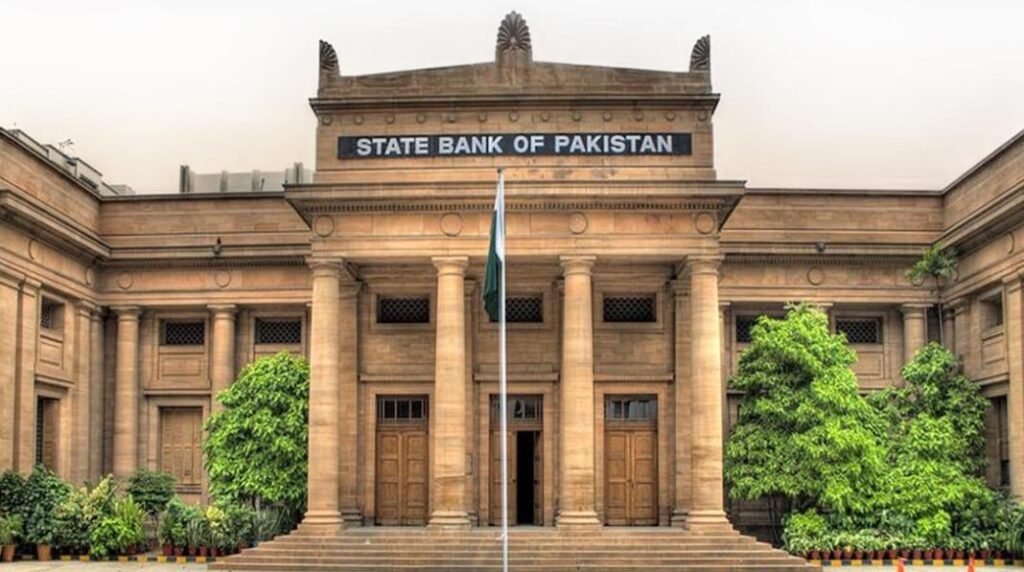
The State Bank of Pakistan has overhauled its housing finance framework, introducing revised SBP housing finance regulations that could significantly change how banks and development finance institutions provide home loans.
The new rules take immediate effect and replace several regulatory instructions issued between 2019 and 2021. The move comes as Pakistan continues to struggle with a major housing shortage, high construction costs and limited access to affordable formal financing.
Under the revised framework, banks and DFIs can finance the purchase of houses and apartments, construction on an owned plot, purchase of a plot followed by construction, home extensions, expansion and renovation. Financing is also permitted for renewable energy solutions installed in residential properties.
The broader scope is a positive development. However, the real test will be whether banks actually become more willing to lend to ordinary households rather than simply having a more modern regulatory framework on paper.
30 Year Housing Finance and 90 Percent LTV Limit
One of the most significant changes under the SBP housing finance regulations is the maximum financing tenor of 30 years. Renewable energy financing for housing units can have a maximum tenor of 10 years.
The maximum loan to value ratio has been set at 90 percent. In practical terms, eligible borrowers may be able to obtain financing covering up to 90 percent of the property value, subject to the banks assessment and other applicable conditions.
This could reduce the upfront financial burden for homebuyers. Yet affordability remains a serious concern. A higher financing ratio does not automatically make housing affordable when property prices, construction costs and household incomes remain under pressure.
Monthly Debt Payments Capped at 65 Percent of Income
The revised rules state that total monthly amortization payments for the proposed housing loan and all other outstanding consumer financing obligations cannot exceed 65 percent of the borrowers net disposable income.
This requirement is intended to prevent excessive household borrowing and reduce credit risk for banks.
However, the 65 percent threshold deserves scrutiny. For lower and middle income families, allocating such a large share of disposable income toward debt repayment could leave limited room for food, education, healthcare, utilities and other essential expenses.
The regulation may therefore protect financial institutions more effectively than it protects financially stretched households unless banks apply prudent affordability assessments.
New Rules Target Informal Income Borrowers
A major feature of the revised framework is its recognition of informal income. Banks and DFIs have been directed to use informal income estimation models circulated by the Pakistan Banks Association when assessing borrowers whose earnings are not supported by conventional salary documentation.
This could be particularly important in Pakistan, where a large section of economic activity operates outside formal payroll structures.
The success of this measure will depend heavily on how accurately banks assess informal earnings. If lenders remain excessively conservative, millions of potential borrowers could continue to remain outside the formal housing finance market despite the regulatory change.
Property Valuation and Insurance Requirements Tightened
For housing finance of up to Rs5 million, banks and DFIs may extend loans by placing a lien on the property. This can include properties supported by a Green Property Certificate issued by the Punjab Land Records Authority or an equivalent certificate from another provincial authority.
For financing exceeding Rs10 million, property valuation by a Pakistan Banks Association panel valuator is mandatory.
Banks and DFIs must also obtain comprehensive insurance or takaful coverage for financed housing units. Standardized financing documents issued by the Pakistan Banks Association are required, while digital signatures must be authenticated through one time passwords or other two factor authentication methods.
These measures should improve documentation and reduce fraud risks, although additional compliance requirements could also increase transaction costs and processing times.
Stricter Classification for Troubled Housing Loans
The revised SBP housing finance regulations introduce a four tier asset classification framework consisting of OAEM, Substandard, Doubtful and Loss.
Loans become subject to different classifications after overdue periods of 90 days, 180 days, one year and two years respectively. Provisioning will be determined using IFRS 9 Expected Credit Loss requirements or Forced Sale Value based calculations, whichever results in the higher provision.
The Forced Sale Value benefit will expire five years after classification.
The framework also limits rescheduling or restructuring of housing finance to once during any two year period. Any extension of tenure is capped at five years and remains subject to the overall 30 year maximum.
Simplified Applications Could Help Unlock Housing Finance
Banks and DFIs are also required to introduce simplified and standardized loan application forms for formal salaried individuals, formal businesses and informal income borrowers.
These forms must be available in both physical and digital formats and in Urdu and English.
This is arguably one of the most practical elements of the new framework. Complicated documentation has long discouraged potential borrowers from entering the formal housing finance system.
The bigger question is implementation. Pakistan has repeatedly introduced financial inclusion reforms, but the gap between regulation and actual bank behavior remains significant.
What the New SBP Housing Finance Regulations Really Mean
The revised framework represents a substantial regulatory reset for housing finance. Longer repayment periods, a 90 percent LTV ceiling, recognition of informal income and financing for renewable energy could widen access to formal housing credit.
But regulations alone will not solve Pakistan’s housing crisis.
Banks must become more responsive to genuine borrowers, property records must become increasingly digitized and transparent, and lending assessments must balance risk management with realistic household affordability.
The SBP housing finance regulations create an opportunity to expand mortgage finance, but their success will ultimately be measured not by the number of rules issued, but by whether more Pakistani families can actually secure affordable financing to buy, build or improve their homes.