
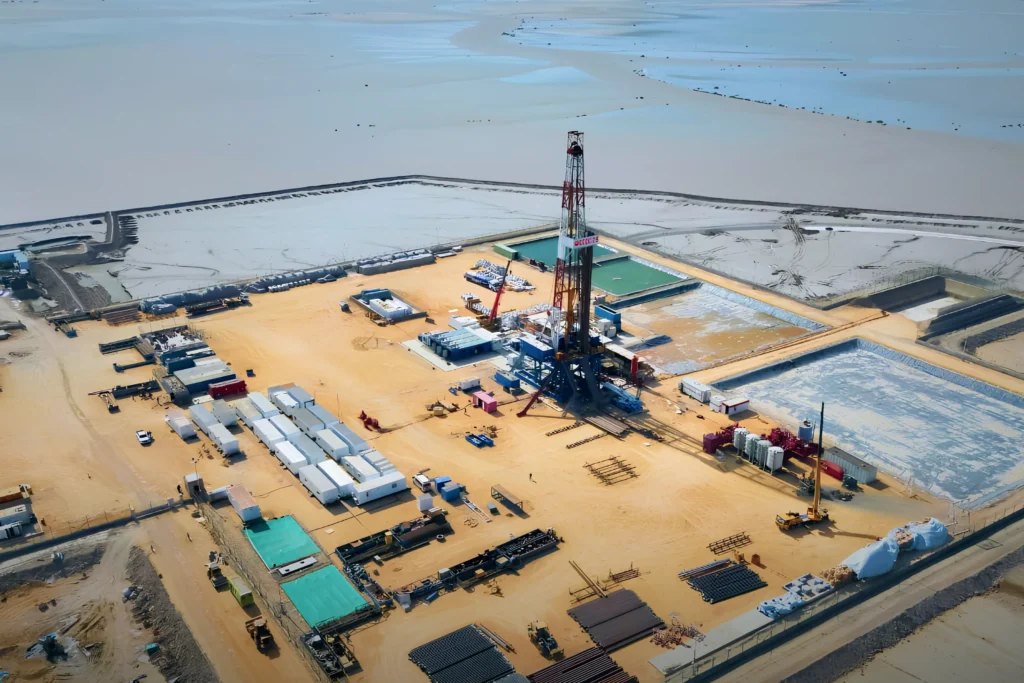
Pakistan Petroleum Limited has reported a potentially significant breakthrough in Pakistan’s hydrocarbon exploration landscape after its operated Sairani Block in Sujawal district, Sindh, delivered a gas discovery from the Dolphin X 1 exploratory well.
The PPL Dolphin X 1 Discovery is particularly important because it represents the first reported discovery from the Jurassic era Chiltan Formation in the Lower Indus Basin. More than simply adding another gas well to Pakistan’s exploration portfolio, the discovery could establish a new hydrocarbon play with implications for both onshore exploration and the country’s shallow offshore prospects.
The well was drilled to a measured depth of 3,850 metres to test the hydrocarbon potential of the Chiltan Formation. Drilling began on April 17, 2026. During testing, the formation produced gas at a rate of 0.942 million standard cubic feet per day.
Why the PPL Dolphin X 1 Discovery Matters
The production rate itself is not large enough to transform Pakistan’s gas balance overnight. That distinction is important because describing every exploration success as a major energy breakthrough can create unrealistic expectations.
The bigger significance of the PPL Dolphin X 1 Discovery lies beneath the initial production figure. PPL says the result confirms the existence of an active petroleum system in an area that has historically been considered difficult to explore because of its challenging geological and geographical conditions.
The discovery therefore has an exploration value that could extend beyond the Dolphin X 1 well. If further appraisal work confirms commercially recoverable reserves and establishes continuity of the reservoir, the discovery could encourage additional drilling across nearby areas.
From Difficult Terrain to Shallow Offshore Potential
The Sairani Block is located in an area where exploration has faced considerable technical and geographical challenges. The latest result could change how companies assess the broader exploration potential of adjoining marshland areas and potentially the shallow offshore zone.
This is where the discovery becomes strategically interesting for Pakistan. The country continues to face pressure to increase domestic energy production, reduce dependence on imported fuels and strengthen energy security. New exploration plays can contribute to that objective, but only if discoveries ultimately move from geological success to commercially viable production.
That transition should remain the key test for the PPL Dolphin X 1 Discovery.
PPL Holds 75 Percent Stake in Sairani Block
PPL is the operator of the Sairani Block with a 75 percent working interest, while Government Holdings Private Limited holds the remaining 25 percent interest.
PPL has also acknowledged the support provided by the Pakistan Navy during the Dolphin X 1 project. Such institutional cooperation can be particularly important when exploration activity takes place in geographically challenging areas.
Discovery Is Promising but Commercial Viability Is the Real Question
The announcement deserves attention, but it should also be viewed critically. A gas discovery does not automatically mean a large commercial reserve or immediate relief for Pakistan’s energy shortages.
The reported flow rate of 0.942 million standard cubic feet per day is an encouraging geological result, but further appraisal is essential to determine reservoir size, pressure behaviour, recoverable volumes and the economics of future development.
The real story will therefore unfold through subsequent appraisal wells and development decisions. If additional drilling confirms the new play, the PPL Dolphin X 1 Discovery could become much more consequential than its initial production figure suggests.
For Pakistan, the opportunity is clear. The challenge is turning an exploration milestone into sustained domestic gas production.
A New Chapter for Pakistan’s Hydrocarbon Exploration
The PPL Dolphin X 1 Discovery has opened an important new exploration frontier in Sindh by demonstrating hydrocarbon potential in the Chiltan Formation of the Lower Indus Basin.
Its immediate production contribution may be modest, but its geological significance could be considerably larger. The discovery gives Pakistan’s energy sector another reason to examine underexplored formations and shallow offshore prospects.
For PPL and its partners, the next phase will be critical. Successful appraisal and commercial development could turn today’s geological discovery into tomorrow’s domestic energy asset.