
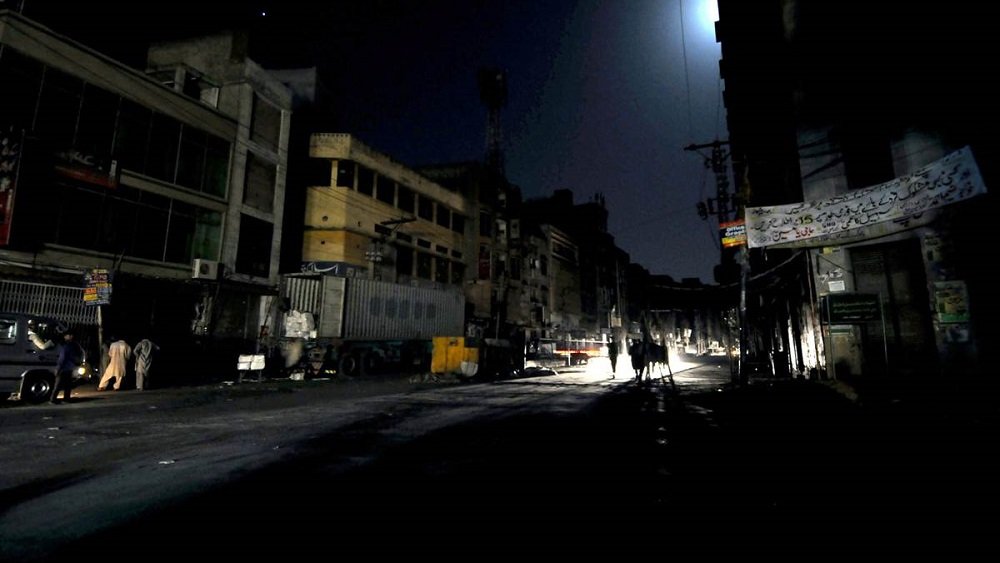
Power loadshedding in Pakistan has increased as the government moves to manage electricity shortfalls without placing additional financial pressure on consumers. Officials confirmed that outages of up to three hours are being implemented, mainly during nighttime peak demand.
Authorities say the decision reflects a generation gap of around 2,000 to 2,500 megawatts. This shortfall has emerged due to reduced hydropower output and limited generation from RLNG-based power plants. The situation highlights the ongoing challenges within Pakistan’s energy sector as supply struggles to meet demand.
Government opts for controlled outages
Officials stated that there is no shortage in installed generation capacity. However, the issue lies in fuel availability and cost management. Therefore, the government has opted for controlled power loadshedding in Pakistan to balance supply and demand.
A high-level committee led by Muhammad Aurangzeb is closely monitoring the situation. The committee has reviewed the energy outlook and endorsed limited load management to prevent further financial strain.
Sources within the committee revealed that average outages currently stand at around 2.25 hours. These outages mainly occur at night. The strategy aims to reduce reliance on expensive furnace oil and control the Fuel Charges Adjustment (FCA) passed on to consumers.
Decline in hydropower generation intensifies crisis
Hydropower generation has dropped significantly due to reduced water releases from reservoirs. This decline has become a key factor behind power loadshedding in Pakistan.
Data from Water and Power Development Authority shows that water inflows remain lower than expected. At Tarbela Dam, inflows stood at 20,200 cusecs, while outflows were recorded at 8,000 cusecs. Similarly, Mangla Dam reported inflows of 29,100 cusecs and outflows of 8,000 cusecs.
Water levels remain above minimum operating thresholds. However, provinces have not submitted sufficient water demands, also known as indents. This situation has restricted water releases for power generation.
Experts say ongoing rains and the harvesting season have influenced water usage decisions. Farmers have prioritized crop protection, which has indirectly reduced water availability for hydropower.
Reservoir levels remain stable but underutilised
At Tarbela, the current water level stands at 1,465.62 feet. This is above the minimum operating level of 1,402 feet but below the maximum conservation level of 1,550 feet. Live storage is recorded at 1.526 million acre-feet.
Mangla Dam shows a similar trend. Its water level stands at 1,156.90 feet, above the minimum level of 1,050 feet. However, it remains below the maximum capacity of 1,242 feet. Live storage at Mangla is currently 1.989 million acre-feet.
Despite adequate storage, limited water releases have constrained hydropower generation. This imbalance has contributed directly to power loadshedding in Pakistan.
RLNG shortage worsens power generation gap
The shortage of RLNG supply has further deepened the crisis. RLNG-based power plants play a crucial role in meeting demand, especially during peak hours. However, limited gas availability has reduced their output.
Officials revealed that the power sector requires around 300 to 350 MMCFD of RLNG. However, supply from Sui Northern Gas Pipelines Limited remains significantly lower.
On March 14, allocation stood at about 130 MMCFD. This supply was limited to just one power plant. Later in March, gas availability dropped further to around 85 MMCFD. Currently, it hovers near 80 MMCFD, far below demand.
This gap has forced authorities to rely on alternative fuels. However, these alternatives come at a much higher cost.
Furnace oil prices surge sharply
The cost of furnace oil has doubled in recent months. Prices have surged from around Rs200,000 per ton in February 2026 to nearly Rs400,000 per ton. This sharp increase has made power generation significantly more expensive.
Officials aim to avoid excessive use of furnace oil. Therefore, controlled outages have become a preferred option. This approach helps limit the financial impact on consumers while maintaining system stability.
However, analysts warn that prolonged reliance on load management could affect economic activity. Businesses and households already face challenges due to inconsistent power supply.
Impact on consumers and fuel charges
Consumers are expected to face higher electricity costs in the coming months. Sources indicate a positive Fuel Charges Adjustment of more than Rs2 per unit for March 2026.
This increase reflects higher generation costs due to expensive fuel and reduced hydropower output. As a result, power loadshedding in Pakistan not only affects supply but also adds financial pressure on consumers.
Experts believe that managing both supply and cost will remain a delicate balance for policymakers. Any further disruption in fuel supply or water availability could worsen the situation.
Key power plants affected by RLNG shortage
Pakistan relies on several major RLNG-based power plants to bridge electricity demand. These plants were established between 2015 and 2018 to address chronic shortages.
The Bhikki Power Plant has a capacity of 1,180 megawatts. The Haveli Bahadur Shah Power Plant produces 1,230 megawatts. Meanwhile, the Balloki Power Plant contributes 1,223 megawatts.
Currently, these plants are operating below capacity due to limited gas supply. This underutilisation has significantly contributed to the overall generation shortfall.
Outlook for the energy sector
The current situation highlights structural challenges in Pakistan’s energy sector. While installed capacity remains sufficient, fuel constraints and resource management issues continue to disrupt supply.
Officials hope that improved water inflows and better gas allocation will ease the crisis in the coming weeks. However, uncertainties remain, particularly regarding fuel prices and seasonal demand fluctuations.
In the meantime, controlled power loadshedding in Pakistan is likely to continue as a short-term solution. Policymakers must balance affordability, reliability, and sustainability to stabilize the system.
Conclusion
Power loadshedding in Pakistan reflects deeper issues within the energy supply chain. Reduced hydropower generation, limited RLNG availability, and rising fuel costs have combined to create a challenging situation.
While the government aims to protect consumers from excessive costs, the strategy comes with trade-offs. As the country navigates these challenges, long-term reforms in energy planning and resource management will be essential.