
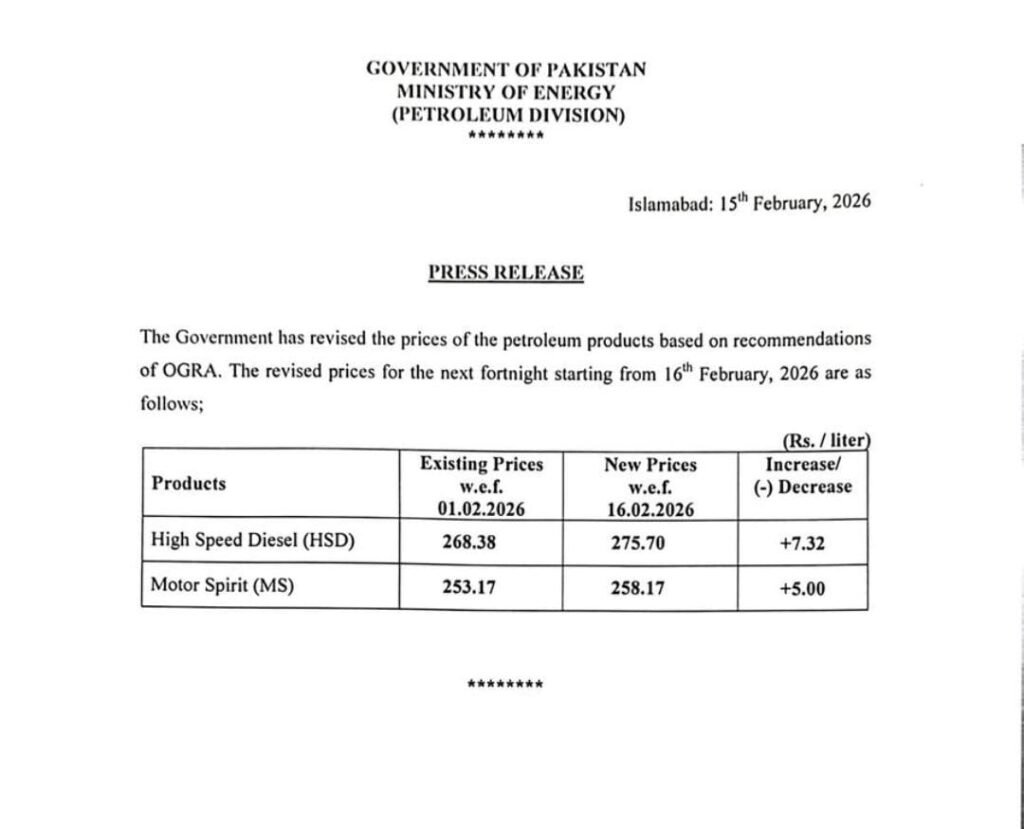
Petroleum Product Prices in Pakistan have once again taken an upward turn, signaling fresh economic ripples across the country. Effective February 16, 2026, the federal government has revised fuel rates for the upcoming fortnight, increasing both petrol and high-speed diesel (HSD) prices.The move comes after recommendations by the Oil and Gas Regulatory Authority (OGRA) and reflects fluctuations in international oil markets during the previous two weeks. While such revisions are routine, the latest hike is expected to have far-reaching consequences for businesses and households alike.
What Has Changed in Petroleum Product Prices in Pakistan?
Under the new pricing structure:• High-Speed Diesel (HSD) has increased by Rs7.32 per litre, bringing the ex-depot price to Rs275.70 per litre.• Petrol (Motor Spirit) has risen by Rs5 per litre, with the new price set at Rs258.17 per litre.In simple terms, transporters, farmers, logistics operators, and daily commuters will all feel the impact of these revised petroleum product prices in Pakistan.
Why Diesel Prices Matter More Than You Think
When discussing petroleum product prices in Pakistan, diesel often carries more economic weight than petrol. High-speed diesel is the backbone of the country’s:• Transportation network• Agricultural machinery operations• Industrial supply chainsAn increase of Rs7.32 per litre may seem modest at first glance. However, for transport fleets and cargo operators consuming thousands of litres daily, this translates into significantly higher operating costs.Historically, higher diesel prices lead to increased freight charges. Freight hikes then push up the prices of essential goods from vegetables and flour to construction materials. In effect, diesel price adjustments ripple through every layer of the economy.
Urban Commuters Feel the Pinch
The rise in petrol prices, now at Rs258.17 per litre, is likely to strain urban households. Motorcyclists, ride-hailing drivers, and small car owners form a large segment of daily petrol consumers.For many middle-income families, fuel expenses represent a major portion of monthly budgets. The latest revision slightly reverses the relief witnessed in recent fortnights and may reduce disposable income, affecting retail and service sectors.
Global Oil Trends Behind Petroleum Product Prices in Pakistan?
The upward revision aligns with international oil market trends. Over the past fortnight, global crude oil prices have shown volatility due to supply constraints and geopolitical developments.As a net oil-importing country, Pakistan remains highly sensitive to global price swings. Any increase in international crude prices directly impacts local petroleum product prices in Pakistan after regulatory adjustments.
Economic Implications: Inflationary Pressures Ahead?
With diesel impacting transport and agriculture, economists warn that inflationary pressures could intensify in the coming weeks.Key areas likely to experience upward pressure include:• Food prices• Public transport fares• Logistics and courier services• Construction and manufacturing inputsBusinesses may attempt to pass on increased fuel costs to consumers, potentially affecting purchasing power and market demand.
What Should Businesses and Consumers Expect?
While fuel price revisions occur every fortnight, sustained increases can reshape business planning and household budgeting strategies.Companies dependent on fuel-intensive operations may:• Reevaluate pricing strategies• Optimize logistics routes• Adjust supply chain contractsConsumers, on the other hand, may seek fuel-efficient alternatives or reduce discretionary travel to manage costs.
The Bigger Picture
The latest adjustment in petroleum product prices in Pakistan underscores the country’s vulnerability to external energy shocks. Until structural reforms or alternative energy diversification gain stronger momentum, such fortnightly revisions will continue to influence economic stability.For now, businesses and households alike must brace for the broader effects of rising fuel costs because when petroleum prices move, the entire economy shifts with them.