
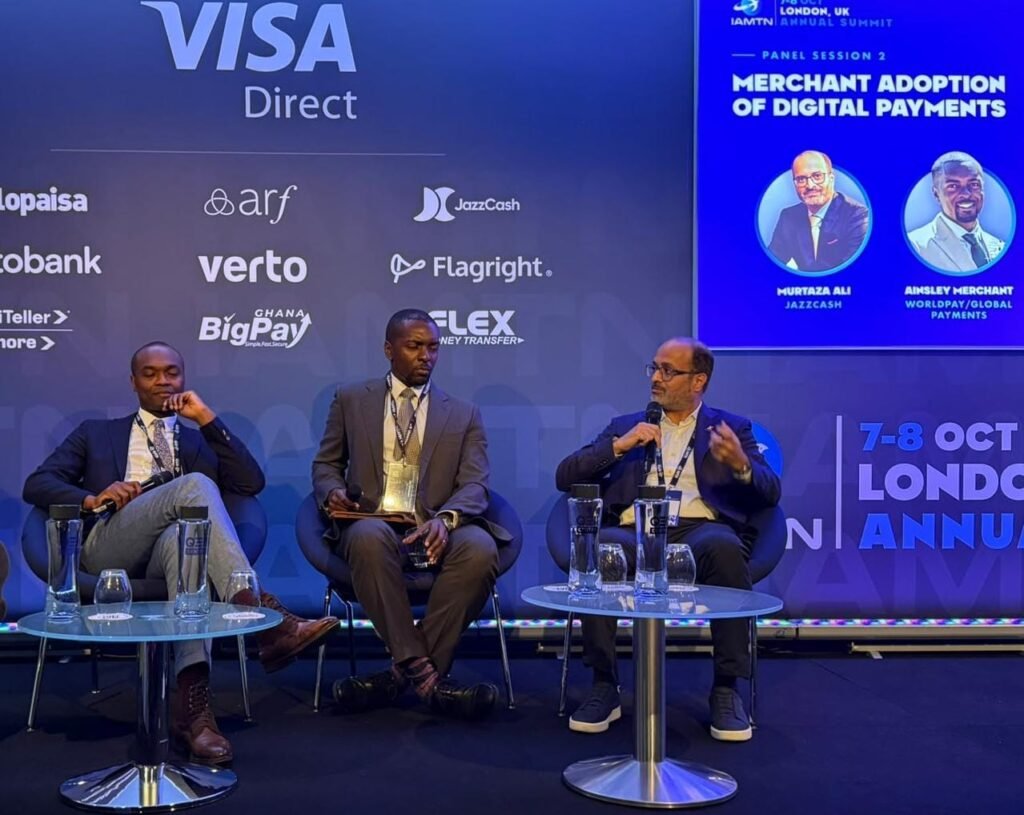
Pakistan’s transition from cash-based transactions to digital payments is gaining momentum, with interoperable QR payments expanding access for small merchants and microentrepreneurs. Industry leaders say the growth of low-cost digital payment options could help bring more businesses into the formal economy while creating opportunities for financial inclusion and data-driven lending.
Speaking at the International Association of Money Transfer Networks (IAMTN) Annual Summit 2026, JazzCash Chief Executive Officer Murtaza Ali highlighted the rapid growth of Raast QR-enabled merchants on the company’s network, alongside emerging opportunities in merchant financing and AI-driven financial services.
JazzCash Raast QR Merchants Reach 1.9 Million
Murtaza Ali said the number of interoperable Raast QR-enabled merchants on the JazzCash network had reached 1.9 million, compared with fewer than one million at the beginning of 2026. The company is targeting two million merchants by the end of the year.
He made the remarks during a panel discussion titled “Merchant Adoption of Digital Payments”, which also featured Ainsley Merchant of Worldpay and Georges Ferre of IYU. Roberto Linares of Remitly moderated the session.
The expansion comes as Pakistan advances the Prime Minister’s Cashless Economy Initiative, supported by the State Bank of Pakistan’s Raast instant payment infrastructure.
The initiative aims to encourage digital transactions and reduce dependence on cash, particularly among businesses that have historically operated outside formal payment networks.
Interoperable QR Payments Lower Barriers for Small Businesses
Small businesses account for a significant part of Pakistan’s retail economy, but many have traditionally lacked access to card-based payment systems and other formal digital acceptance channels.
QR payments offer an alternative by allowing merchants to accept digital transactions without investing in conventional point-of-sale terminals. This can make digital payment acceptance more accessible to corner shops, salons, home-based businesses and other microentrepreneurs.
Ali said cost and settlement timing remain important considerations for merchants operating on thin margins.
“Small, thin-margin merchants weigh any upfront cost carefully, and trust comes down to when settlement lands,” he said during the discussion.
By reducing the need for specialised hardware, QR-based acceptance can help smaller businesses participate in digital commerce while giving customers additional ways to pay.
Raast Interoperability Supports Wider Digital Payment Adoption
The growth of merchant QR acceptance has also been supported by Raast, which enables transactions across participating banks and payment providers through a shared infrastructure.
Ali said digital payments would be more scalable if merchants did not need separate integrations for individual banks and digital wallets.
Interoperability can simplify the payment experience for businesses and customers, reducing the fragmentation that could otherwise discourage adoption.
As more merchants become accessible through common payment infrastructure, digital transactions have the potential to expand beyond larger retailers into neighbourhood businesses and smaller commercial networks.
Digital Transaction Records Could Improve Merchant Financing
Industry leaders identified the use of transaction data as a potential next stage in Pakistan’s merchant digitisation drive.
Ali said the focus should move beyond enabling payments towards using the resulting digital sales history to develop merchant lending and working-capital products.
For small businesses, a consistent record of digital transactions could help demonstrate business activity and potentially support access to formal credit. This may be particularly relevant for merchants with limited conventional financial documentation.
Digital records can also improve the visibility of commercial activity, supporting broader efforts to document economic transactions and expand financial inclusion.
However, the practical benefits will depend on how financial institutions assess transaction histories, manage lending risks and protect merchants’ information.
AI Could Transform the Delivery of Financial Services
The summit discussion also explored how digital financial services could evolve beyond payments into savings, investments and more personalised customer interactions.
Ali said financial applications could increasingly use artificial intelligence to enable conversational interactions, allowing customers to access services without navigating multiple screens and menus.
Such systems could eventually provide assistance across payments, savings, investments and credit through more personalised digital experiences.
He cautioned, however, that stronger security measures would be essential as AI becomes more deeply integrated into financial services.
“The more AI we bring in, the more robust our security has to be,” he said, adding that customer data would need to remain sovereign.
The comments highlight the importance of balancing innovation with data protection, cybersecurity and customer trust as digital finance develops.
JazzCash’s 64 Million Registered Customers Support Digital Growth
JazzCash currently has 64 million registered customers and remains a key participant in Pakistan’s broader shift towards digital payments.
The growth in its Raast QR-enabled merchant network illustrates the expanding role of interoperable payment infrastructure in bringing smaller businesses into digital commerce.
The next phase of adoption will depend not only on increasing merchant numbers but also on ensuring reliable settlements, maintaining customer confidence, strengthening security and developing useful financial services around digital transaction histories.