
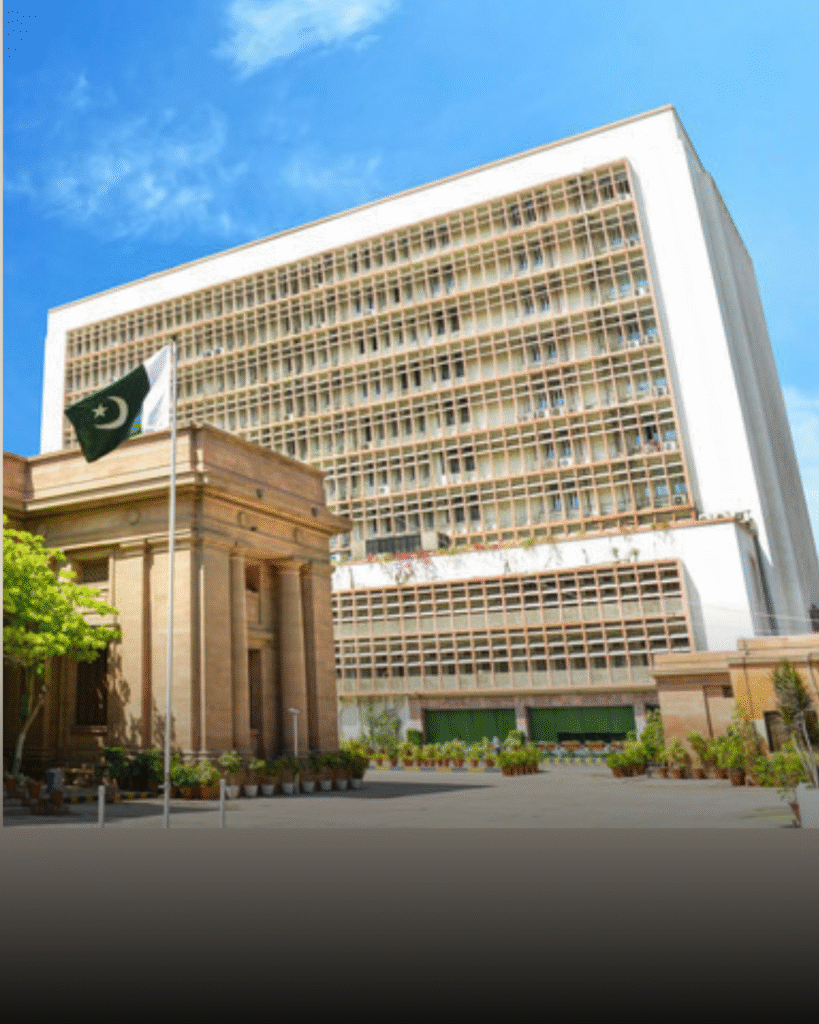
The State Bank of Pakistan (SBP) has announced a 50 basis points (bps) cut in the policy rate, effective December 16, 2025, marking the first change in interest rates after a prolonged pause of seven months. The decision was taken during the Monetary Policy Committee (MPC) meeting held on December 15, 2025, as outlined in the latest Monetary Policy Statement.
The policy rate had remained unchanged at 11 percent since May 2025, when the central bank last reduced it from 12 percent to 11 percent. With the latest decision, the SBP aims to strike a balance between maintaining price stability and supporting sustainable economic growth.
Read More: https://theboardroompk.com/sbp-expected-to-maintain-11-policy-rate-amid-inflation-caution/
Why the State Bank of Pakistan Cut the Policy Rate
According to the MPC, inflation during July–November FY26 averaged within the SBP’s medium-term target range of 5–7 percent, providing room for cautious monetary easing. While core inflation remains relatively sticky, the overall inflation outlook is broadly unchanged due to:
• Benign global commodity prices
• Anchored inflation expectations
• A prudent monetary policy stance
The MPC noted that economic activity is gaining traction, supported by strong improvement in high-frequency indicators, including a better-than-expected recovery in large-scale manufacturing (LSM) during the first quarter of FY26.
Despite these positive indicators, the Committee highlighted that the global economic environment remains challenging, particularly for exports, which could pose risks to Pakistan’s macroeconomic outlook. Against this backdrop, the MPC concluded that there was sufficient space to modestly reduce the policy rate while safeguarding price stability.
Economic Developments Since the Last MPC Meeting
The Monetary Policy Committee reviewed several key domestic and external developments that influenced its decision:
Labor Market Trends
The Labor Force Survey 2024–25 indicates an increase in the unemployment rate compared to 2020–21, despite faster employment growth. This reflects structural challenges in the labor market and underscores the need for sustained economic expansion to generate jobs.
Foreign Exchange Reserves and IMF Support
Despite ongoing external debt repayments, SBP’s foreign exchange reserves increased to over $15.8 billion, supported by a $1.2 billion inflow from the IMF following the successful completion of EFF and RSF reviews. The reserves level has already surpassed the December 2025 target of $15.5 billion.
Business and Consumer Confidence
Latest SBP-IBA surveys show an improvement in consumer confidence, while business confidence, though still positive, has moderated slightly amid global uncertainties.
Fiscal Performance
Pakistan recorded overall and primary fiscal surpluses in Q1-FY26, largely due to a sizeable profit transfer from the SBP. However, slower tax collection growth raises concerns about meeting full-year fiscal targets.
Real Sector Performance: Industrial and Agricultural Outlook
Industrial Growth Gains Momentum
The real sector continues to demonstrate robust momentum. Large-scale manufacturing (LSM) posted 4.1 percent year-on-year growth in Q1-FY26, with most industrial sectors showing increased output. Additional indicators such as:
• Automobile sales
• Fertilizer and cement demand
• Imports of machinery and intermediate goods
all point to a positive outlook for industrial activity.
Agriculture Sector Outlook
Incoming data on major crops, particularly wheat, suggests favorable production prospects. Improved input conditions and government-backed incentive schemes indicate that wheat output may exceed targets, providing support to food security and rural incomes.
Collectively, these developments are expected to support the services sector, with real GDP growth for FY26 projected in the upper half of the 3.25–4.25 percent range.
External Sector: Current Account and Trade Challenges
The current account deficit stood at $0.7 billion during July–October FY26, aligning with MPC expectations. While imports grew alongside economic recovery and workers’ remittances remained resilient, exports faced pressure due to a sharp decline in food exports, particularly rice.
Looking ahead:
• Global trade dynamics and tariff-related developments may constrain exports
• Lower global oil prices could help contain import growth
Overall, the current account deficit is projected to remain within 0–1 percent of GDP in FY26, while SBP’s foreign exchange reserves are expected to rise to $17.8 billion by June 2026, assuming planned inflows materialize.
Fiscal Sector: Progress and Structural Challenges
Although fiscal balances showed improvement in Q1-FY26, FBR tax collection growth slowed to 10.2 percent year-on-year during July–November FY26, requiring significant acceleration to meet budget targets.
Lower-than-budgeted interest payments may help contain the fiscal deficit, but achieving the targeted primary surplus remains challenging. The MPC reiterated the importance of:
• Broadening the tax base
• Privatizing loss-making state-owned enterprises (SOEs)
• Implementing long-overdue structural reforms
to strengthen fiscal buffers and create space for public investment.
Money, Credit, and Inflation Trends
Credit Expansion
Broad money (M2) growth accelerated to 14.9 percent by late November, driven largely by increased government borrowing. Private sector credit expanded by Rs187 billion during July–November, with strong demand from textiles, wholesale and retail trade, and chemicals.
Consumer financing, particularly auto loans, remained robust due to easing financial conditions and improved sentiment.
Inflation Outlook
Headline inflation has remained within the target range for three consecutive months, with food, energy, and core inflation converging as expected. However, the MPC cautioned that inflation may temporarily rise above the target toward the end of FY26 due to base effects before stabilizing again in FY27.
Key inflation risks include:
• Volatile global commodity prices
• Energy price adjustments
• Fiscal slippages
• Uncertainty around wheat and food prices
What the Policy Rate Cut Means for Businesses
The 50 bps policy rate cut signals a cautiously supportive monetary stance, aimed at encouraging investment and credit expansion while preserving macroeconomic stability. However, many business stakeholders believe that further reductions may be necessary to fully unlock industrial growth, enhance export competitiveness, and support SMEs.
With the policy rate having remained unchanged for seven months prior to this move, the decision represents a critical turning point in Pakistan’s monetary policy cycle.