
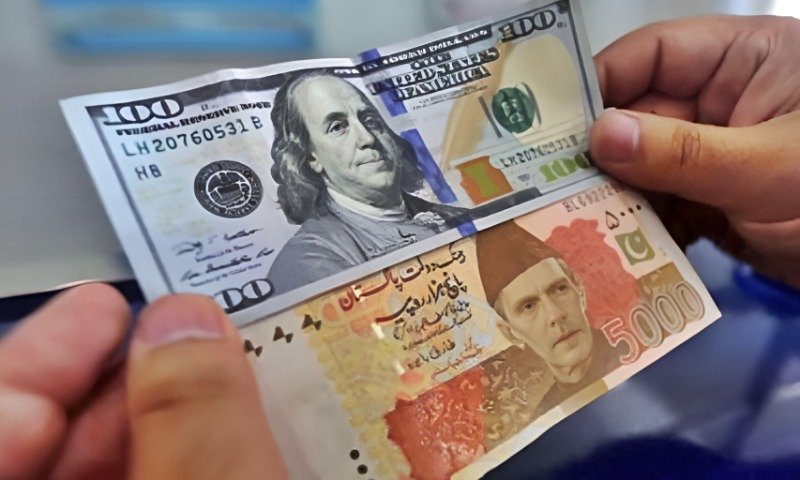
Rupee Strengthens Despite Global Economic Uncertainty
Pakistan’s rupee has appreciated by around Rs2 against the US dollar since the war began, defying expectations of currency depreciation amid rising energy costs, geopolitical uncertainty and higher global yields.
The currency’s performance reflects the authorities’ strategy of maintaining external stability through foreign exchange purchases, tight monetary policy and restrained domestic demand rather than allowing a sharp adjustment in the exchange rate.
However, sustaining the rupee’s gains will depend on Pakistan’s ability to manage external financing requirements, maintain foreign exchange inflows and contain the impact of higher international energy prices.
Foreign Exchange Purchases Support Currency Stability
Pakistan made net foreign exchange purchases of $8.1 billion during fiscal year 2026, absorbing dollar supply in the interbank market that could otherwise have pushed the rupee higher.
Despite these purchases, foreign exchange reserves increased by only around $4 billion during the year. Approximately $11 billion was used for external debt servicing and repayments, limiting the accumulation of reserves.
The figures highlight the pressure that debt obligations continue to place on Pakistan’s external position, even as foreign exchange purchases help manage currency movements.
Maintaining an adequate reserve buffer remains important for meeting import payments, servicing external debt and protecting the economy against volatility in international financial markets.
External Debt Repayments Decline as Maturities Improve
Pakistan’s external debt payments falling due within 12 months declined from more than $30 billion in June 2025 to around $24 billion by July 2026.
The reduction followed repayments, rollovers and refinancing arrangements, easing near-term external payment pressures.
Higher reserves, improved debt maturities and upgraded credit ratings have also strengthened Pakistan’s external position. These developments provide some support for currency stability by improving the country’s capacity to manage its financing requirements.
However, the improvement does not eliminate external risks. Rising global energy prices and higher international yields could increase financing costs and put renewed pressure on the balance of payments.
Stronger Rupee Raises Questions About Export Competitiveness
The rupee’s stability has renewed debate about the competitiveness of Pakistani exporters, particularly as the real effective exchange rate (REER) has crossed 107.
The REER measures a currency’s value against the currencies of trading partners, adjusted for relative price levels. A higher reading can indicate that domestic goods have become more expensive relative to foreign competitors, although the implications depend on productivity, production costs and other economic factors.
Authorities have acknowledged that Pakistan’s weak export performance reflects deeper structural problems and cannot be resolved through currency depreciation alone.
A weaker rupee could make Pakistani goods more competitive in foreign markets, but it would also increase the domestic cost of imported energy, raw materials and other goods. This could fuel inflation and raise operating expenses for businesses that depend on imported inputs.
The policy challenge is therefore to improve export competitiveness without undermining price stability or increasing pressure on the external account.
Remittances and Middle East Developments Remain Key Risks
Remittances have remained resilient, providing an important source of foreign exchange and supporting Pakistan’s external account.
However, slower labour migration to the Middle East could weaken future inflows if fewer workers travel abroad or employment opportunities become more constrained.
Developments in the region are also important because Pakistan remains exposed to international energy prices. A sustained increase in oil and other energy costs could raise the import bill, increase domestic inflationary pressures and make it more difficult to maintain currency stability.
These risks mean that remittances, export receipts and energy prices will remain important indicators of the rupee’s outlook.
Monetary Policy Remains Focused on External Stability
Authorities remain prepared to raise interest rates if a recovery in import demand threatens external stability.
Tighter monetary policy can help restrain domestic demand and limit pressure on foreign exchange, although it may also increase borrowing costs for businesses and households.
Inflation is projected to ease towards 7% by June 2027. The outlook will depend partly on international energy prices, domestic demand conditions and the effectiveness of monetary and fiscal policies.
Balancing inflation control with economic growth will remain a central challenge as policymakers seek to preserve the improvements in Pakistan’s external position.
Sustainability of Rupee Gains Depends on External Inflows
The rupee’s appreciation of around Rs2 against the dollar since the war began offers some relief amid heightened global uncertainty. Foreign exchange purchases, improved debt maturities and resilient remittances have contributed to a more stable external environment.
Nevertheless, currency stability alone does not guarantee stronger export performance or long-term economic resilience.
Sustaining the gains will depend on higher export earnings, continued remittance inflows, manageable energy costs and Pakistan’s ability to meet external financing requirements without excessive pressure on reserves.
The longer-term challenge is to translate short-term currency stability into stronger productivity, export competitiveness and a more resilient external account.