
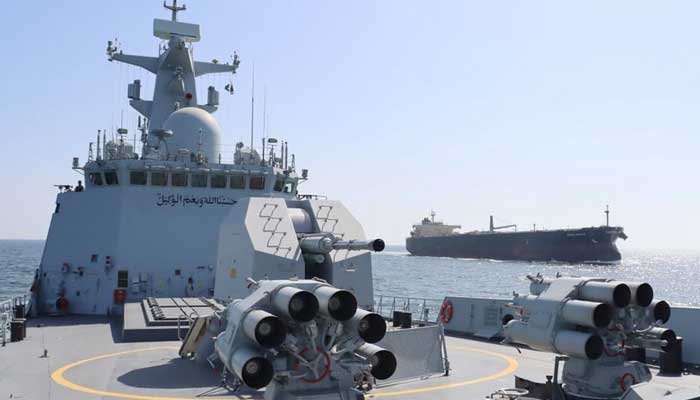
The Pakistan Navy has initiated a proactive maritime security operation named Muhafiz-ul-Bahr (Protector of the Seas) to shield vital shipping lanes and energy imports amid escalating Middle East tensions, particularly the ongoing U.S.-Israeli conflict with Iran.
Read More: https://theboardroompk.com/us-troop-wounded-in-iran-war-surge-to-150-pentagon-confirms-140/
Announced on March 9, 2026, the move underscores Pakistan’s heavy reliance on sea routes for trade and fuel supplies.
Operation Details and Objectives The operation focuses on escorting merchant vessels to ensure safe transit through high-risk areas, including routes near the Strait of Hormuz—a critical chokepoint for global oil flowing to South Asia.
Navy ships are actively providing protection, with recent examples including escorts for vessels like MV Shalamar (near Fujairah Port in the Gulf of Oman) and MV Sargodha (arriving in Karachi).
The Inter-Services Public Relations (ISPR) described it as a response to “multidimensional threats” to national shipping and maritime trade. A handout video released by the military shows a Pakistani sailor armed on a warship accompanying a merchant ship at an unidentified location.
Strategic Context and Economic Stakes With approximately 90% of Pakistan’s trade conducted by sea and the country heavily dependent on imported energy (mostly oil and gas from the Gulf), any disruption poses severe risks.
The Iran conflict has already driven global oil prices higher, prompting Pakistan to implement fuel austerity measures, hike pump prices by about 20%, and arrange extra petroleum cargoes to maintain comfortable stock levels.
The navy emphasized readiness to address emerging challenges, aiming to keep sea lines of communication secure and uninterrupted for both national and regional maritime traffic.
This initiative highlights Pakistan’s efforts to safeguard its economic lifeline in a volatile region, where threats to the Strait of Hormuz could ripple into supply shortages and further inflation pressures at home.