
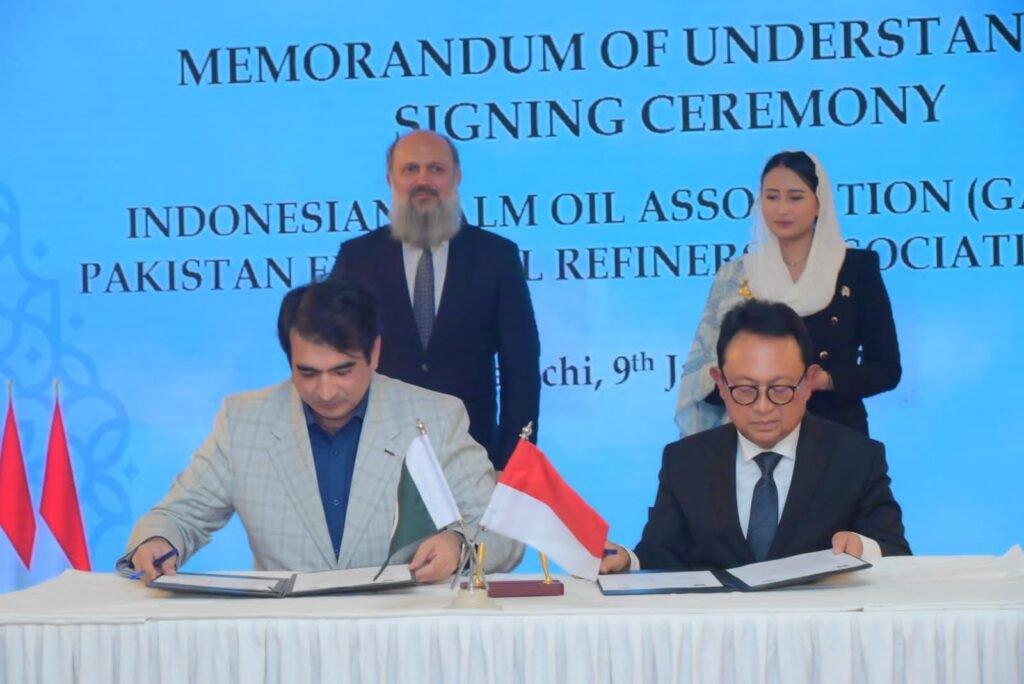
The Pakistan–Indonesia Cooperation Agreement for Ghee Industry has emerged as a landmark development for Pakistan’s vanaspati and cooking oil sector, paving the way for a more stable palm oil supply, enhanced trade collaboration, and long-term industry sustainability. The agreement reflects growing economic cooperation between the two countries and highlights the role of private-sector partnerships in strengthening bilateral trade.
The milestone agreement was formalized through a Memorandum of Understanding (MoU) between the Pakistan Vanaspati Manufacturers Association (PVMA) and the Indonesian Palm Oil Association (GAPKI), reinforcing Indonesia’s position as Pakistan’s largest and most reliable palm oil supplier.
Pakistan–Indonesia Cooperation Agreement for Ghee Industry: Strengthening Palm Oil Trade
Speaking at the signing ceremony in Karachi, PVMA Chairman Sheikh Umer Rehan described the Pakistan–Indonesia Cooperation Agreement for Ghee Industry as a “timely and positive development” for Pakistan’s edible oil ecosystem. He emphasized that Indonesia remains a critical trading partner for Pakistan in palm oil, which constitutes a significant share of the country’s edible oil imports.
Under the agreement, both associations will work closely to ensure uninterrupted palm oil supply, improved commercial terms, and long-term market stability. This cooperation is expected to benefit not only manufacturers but also consumers by supporting price stability and ensuring consistent availability of essential food commodities.
How the Pakistan–Indonesia Cooperation Agreement Supports Industry Stability
The Pakistan–Indonesia Cooperation Agreement for Ghee Industry focuses on multiple strategic areas that are crucial for sustainable growth. Instead of listing figures in tables, the agreement outlines its impact across key dimensions:
First, the MoU prioritizes supply chain stability, ensuring that Pakistani manufacturers receive palm oil without disruptions, especially during periods of global price volatility.
Second, it emphasizes information sharing and joint initiatives, allowing both countries’ private sectors to collaborate on market intelligence, sustainability standards, and future investment opportunities.
Third, the agreement seeks to improve trade terms and efficiency, helping reduce operational uncertainties for Pakistan’s ghee and cooking oil producers while strengthening Indonesia’s export footprint.
Together, these elements create a framework that supports long-term planning, industry confidence, and mutual economic benefit.
Government Backing for Pakistan–Indonesia Cooperation Agreement for Ghee Industry
Sheikh Umer Rehan also acknowledged the Government of Pakistan’s proactive role in trade diplomacy, noting that official support was instrumental in facilitating the agreement. The presence of Federal Minister for Commerce Jam Kamal Khan at the signing ceremony underscored the government’s commitment to industrial growth, trade diversification, and export-oriented policies.
From Indonesia’s side, the participation of Deputy Minister of Trade Mrs. Dyah Roro Esti highlighted the strategic importance Jakarta places on its economic relationship with Pakistan, particularly in the palm oil sector.
Long-Term Economic Impact of Pakistan–Indonesia Cooperation Agreement
According to PVMA leadership, the Pakistan–Indonesia Cooperation Agreement for Ghee Industry is expected to generate positive spillover effects beyond the edible oil sector. Increased bilateral trade volumes, stronger private-sector engagement, and enhanced supply chain resilience are likely to contribute to overall economic stability.
The agreement also lays the foundation for future collaboration in related sectors, joint strategies, and sustainable trade practices, supporting Pakistan’s food security goals and Indonesia’s export-driven growth strategy.
A Foundation for Sustainable Trade Growth
The Pakistan–Indonesia Cooperation Agreement for Ghee Industry represents more than a trade MoU it is a strategic partnership aimed at long-term sustainability, economic resilience, and consumer protection. By aligning private-sector collaboration with government-backed trade diplomacy, the agreement sets a strong precedent for future bilateral initiatives between Pakistan and Indonesia.
As global commodity markets remain volatile, such structured cooperation will play a critical role in safeguarding local industries, stabilizing prices, and strengthening regional trade ties.