
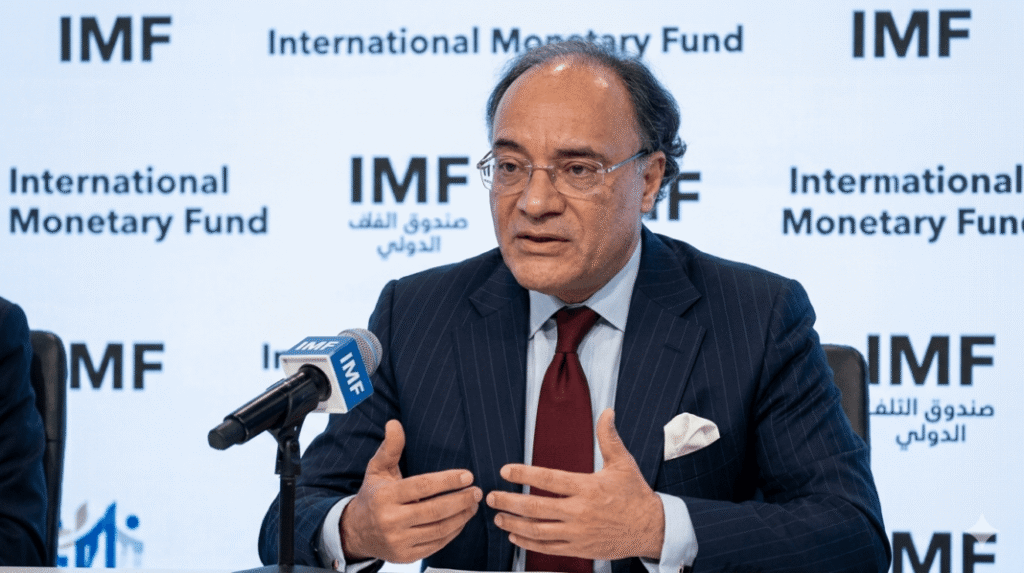
Pakistan intensified its global economic engagement as Muhammad Aurangzeb held a series of high-level meetings during the 2026 Spring Meetings of the International Monetary Fund and the World Bank. The finance minister used the platform to highlight Pakistan’s reform progress, strengthen partnerships, and explore new avenues for trade, investment, and financial stability.
These engagements come at a crucial time as Pakistan navigates economic recovery while addressing global uncertainties, including the ongoing Middle East conflict and its spillover effects on emerging markets.
Strengthening Trade Ties with the United States
Muhammad Aurangzeb began his engagements with a key meeting with Jamieson Greer. The discussion focused on enhancing bilateral trade and investment between Pakistan and the United States.
Both sides explored opportunities to improve market access and accelerate ongoing trade negotiations. Officials expressed satisfaction with steady progress and reaffirmed their shared commitment to achieving mutually beneficial outcomes.
The meeting signals a renewed push by Pakistan to expand its trade footprint and attract foreign investment. It also highlights the government’s broader strategy to strengthen economic ties with major global economies.
World Bank Engagement Focuses on Economic Stability
In a separate meeting, Aurangzeb met with Anna Bjerde to discuss Pakistan’s reform and development agenda. He appreciated the World Bank’s longstanding support in key sectors, including infrastructure, social protection, and governance reforms.
The discussion also addressed the economic implications of the ongoing Middle East conflict. Both sides examined its direct and indirect effects on Pakistan’s economy, particularly on energy prices, remittances, and external balances.
They emphasized the urgent need to strengthen social protection systems to shield vulnerable populations from economic shocks. This includes expanding safety nets and ensuring targeted support for low-income groups.
Progress Under Country Partnership Framework Reviewed
During the meeting with the World Bank, both sides reviewed progress under the Country Partnership Framework (CPF). Officials acknowledged key achievements in development projects but stressed the need for sustained efforts to maintain momentum.
Aurangzeb highlighted the importance of a coordinated strategy between federal and provincial governments. He pointed out that Pakistan faces significant demographic challenges that require long-term planning.
To address this, he requested the World Bank’s support in developing a comprehensive national master plan. This plan aims to align economic growth with population dynamics and ensure sustainable development.
IMF Program and Financial Commitments Reaffirmed
In another key engagement, the finance minister met with Jonathan Greenstein. During the meeting, Aurangzeb highlighted Pakistan’s successful Staff-Level Agreement with the IMF.
He reaffirmed the government’s strong commitment to implementing economic reforms under the IMF program. These reforms focus on fiscal discipline, structural adjustments, and improving governance.
Aurangzeb also noted that Pakistan had successfully repaid its eurobond obligation of $1.3 billion on time. This repayment reflects the country’s commitment to meeting its external financial obligations and maintaining credibility in international markets.
The discussion further covered the broader economic impact of the Middle East conflict. Both sides exchanged views on strengthening foreign exchange reserves and ensuring macroeconomic stability amid global uncertainties.
Boosting Private Sector Investment with IFC
The finance minister also held talks with Makhtar Diop of the International Finance Corporation. The meeting focused on expanding private sector investment and enhancing productivity in Pakistan.
Aurangzeb emphasized the need to create more jobs by supporting businesses and improving access to financing. He appreciated IFC’s role in mobilizing local currency financing and facilitating trade finance.
However, he also called for greater collaboration in developing Pakistan’s capital markets. He urged IFC to bring global best practices to help strengthen financial systems and attract long-term investment.
The minister further highlighted the importance of working closely with the Prime Minister’s Task Force on Agriculture. He stressed that agriculture remains a key driver of Pakistan’s economy and requires sustained investment and innovation.
Strengthening Bilateral Cooperation with Saudi Arabia
In another significant meeting, Aurangzeb met with Sultan bin Abdulrahman Al-Marshad, CEO of the Saudi Fund for Development. The finance minister expressed gratitude for Saudi Arabia’s continued support for Pakistan’s development initiatives.
The discussion also covered the global energy landscape, particularly in light of the Middle East conflict. Aurangzeb highlighted the importance of energy security and expressed hope for a peaceful resolution to ongoing tensions.
Both sides reaffirmed the strength of bilateral relations and their commitment to expanding cooperation in development projects.
Pakistan Showcases Reform Momentum
Throughout these engagements, Muhammad Aurangzeb consistently highlighted Pakistan’s reform progress. He emphasized the government’s focus on digital transformation, fiscal discipline, and structural reforms aimed at stabilizing the economy.
The meetings also served as an opportunity to build confidence among international partners. By demonstrating progress and commitment, Pakistan aims to attract investment and secure long-term economic growth.