
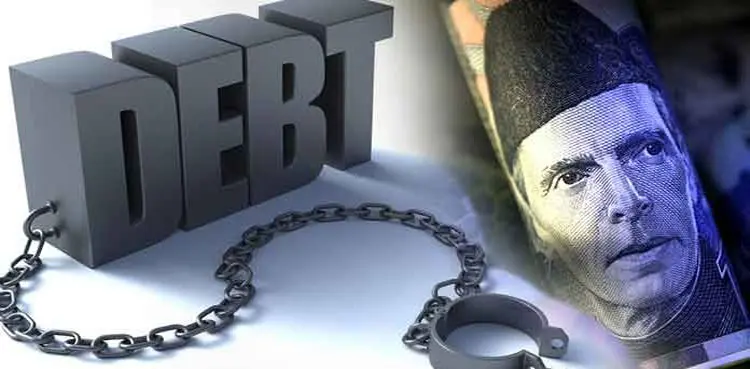
Pakistan government debt has reached a new milestone, reflecting the growing fiscal pressures on the country’s economy. According to the latest data released by the State Bank of Pakistan, the total debt of Pakistan’s central government surged to Rs79.32 trillion in January 2026, marking a 9.98% increase compared to Rs72.12 trillion in January 2025.
The rise in Pakistan government debt highlights the government’s continued reliance on both domestic and external borrowing to finance its fiscal deficit. As economic challenges persist, the debt trajectory has become a key point of concern for policymakers, investors, and financial analysts.
On a month-to-month basis, the debt burden also edged higher. Compared to Rs78.53 trillion recorded in December 2025, the central government debt increased 1.01% in January 2026, indicating a steady accumulation of liabilities.
Domestic Borrowing Drives Pakistan Government Debt Growth
A closer look at the data reveals that domestic borrowing remains the dominant contributor to Pakistan government debt. Out of the total Rs79.32 trillion debt stock, Rs55.98 trillion was raised from domestic sources.
This domestic debt is divided into three main categories:
• Long-term domestic debt: Rs47.12 trillion
• Short-term domestic debt: Rs8.78 trillion
• Naya Pakistan Certificates: Rs72 billion
Overall, domestic debt increased by 11.41% year-on-year and 1.11% month-on-month, reflecting the government’s growing dependence on local financial markets to meet funding requirements.
Long-Term Borrowing Expands Rapidly
Long-term debt has been the fastest-growing segment of Pakistan government debt. By January 2026, it rose 12.66% year-on-year to Rs47.12 trillion, compared with Rs41.83 trillion recorded during the same period last year.
This category also witnessed a 1.21% increase compared to December 2025, signaling sustained borrowing through long-duration instruments.
Among these instruments, Pakistan Investment Bonds (PIBs) dominate the landscape. PIBs accounted for Rs35.27 trillion, representing the largest portion of long-term domestic borrowing.
The growth in PIBs shows:
• 11.01% increase year-on-year
• 0.98% rise month-on-month
These bonds remain a preferred instrument for the government to secure financing from institutional investors such as banks and financial institutions.
Short-Term Borrowing Remains Significant
While long-term instruments dominate, short-term borrowing also plays a crucial role in Pakistan government debt management.
Short-term domestic debt stood at Rs8.78 trillion in January 2026, representing a 5.17% increase year-on-year.
The bulk of this short-term borrowing comes from Market Treasury Bills (MTBs), which amounted to Rs8.66 trillion during the review period.
MTBs recorded:
• 4.83% growth year-on-year
• 0.55% increase month-on-month
These short-term instruments allow the government to meet immediate financing needs, though heavy reliance on them can increase refinancing risks over time.
Overseas Pakistanis Contribute Through Naya Pakistan Certificates
Another component of Pakistan government debt comes from Naya Pakistan Certificates, an investment scheme designed to attract funds from overseas Pakistanis.
Borrowing through these certificates reached Rs72 billion in January 2026, representing a 7.46% increase compared to the same period last year.
Interestingly, the government’s borrowing through this channel rose significantly in a single month. In December 2025, the amount stood at Rs62 billion, meaning January saw a 16.13% month-on-month jump.
This indicates renewed interest among overseas investors in government-backed savings instruments.
External Debt Still a Major Component
Beyond domestic borrowing, external loans remain a key part of Pakistan government debt.
By January 2026:
• Long-term external loans: Nearly Rs23 trillion
• Short-term external loans: Rs345 billion
External financing typically comes from multilateral institutions, bilateral partners, and international capital markets. While such borrowing provides foreign exchange support, it also exposes the country to currency risks and global financial conditions.
What Rising Pakistan Government Debt Means
The continued rise in Pakistan government debt reflects broader economic challenges, including persistent fiscal deficits and increasing financing needs.
While domestic borrowing offers flexibility and reduces dependence on foreign lenders, the growing debt stock raises concerns about:
• Future debt servicing costs
• Fiscal sustainability
• Pressure on public finances
For policymakers, managing the balance between growth, fiscal discipline, and debt sustainability will remain one of the most critical economic challenges in the coming years.