
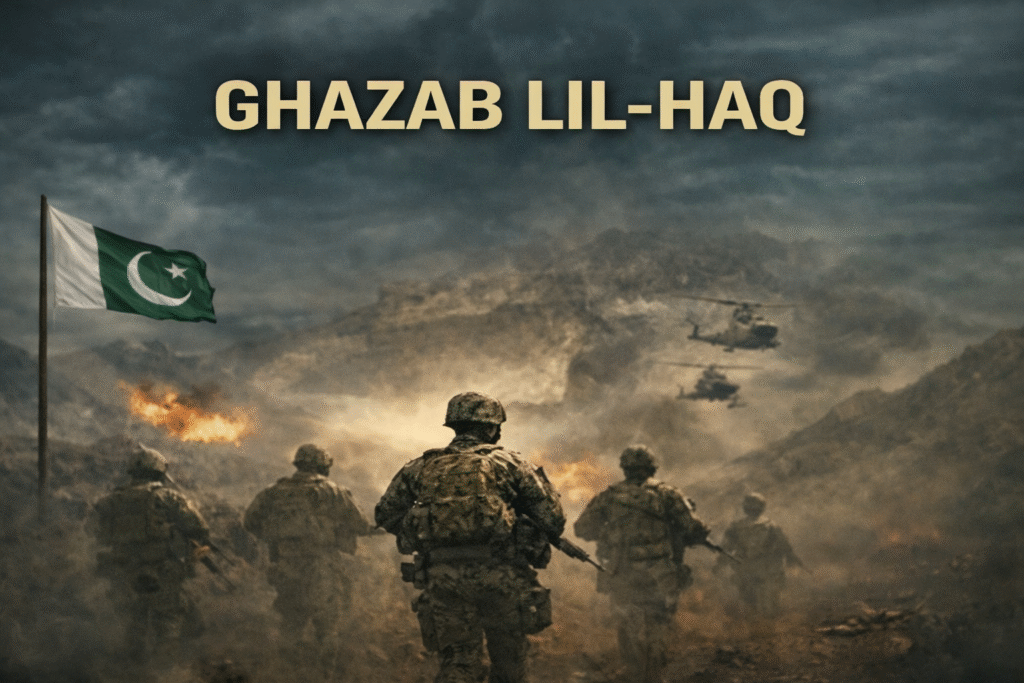
Operation Ghazab Lil Haq has rapidly emerged as one of the most significant counter-terror operations in recent months, with the Pakistan Army escalating both air and ground strikes along the western border.
Security sources report that the latest phase of Operation Ghazab Lil Haq involved a precision airstrike targeting key militant infrastructure belonging to the Afghan Taliban in southern Afghanistan. The strike reportedly destroyed the Brigade Headquarters of the 205 Corps located in Kandahar, a strategic hub long associated with Taliban command activities.
Alongside the headquarters, multiple ammunition depots were also targeted, resulting in significant material losses for militant formations operating near the Pakistan-Afghanistan border.
Analysts say the operation reflects Islamabad’s increasingly assertive stance against cross-border militancy and infiltration attempts.
Strategic Airstrikes Under Operation Ghazab Lil Haq
Security officials say the recent air campaign was carefully planned to neutralize militant command structures and disrupt logistical networks.
The operation reportedly targeted:
• Command centers coordinating militant activity
• Weapons and ammunition depots
• Tactical communication posts
The destruction of these facilities is expected to severely disrupt operational coordination among militant groups operating near the frontier.
Sources further indicated that militant groups suffered heavy casualties and significant logistical damage, though exact numbers have not yet been officially confirmed.
Ground Operations Expand Across Key Border Regions
In addition to airstrikes, Operation Ghazab Lil Haq also included extensive ground engagements along sensitive border sectors.
According to security sources, Pakistani forces targeted 41 militant posts overnight using both light and heavy weapon systems.
These operations were concentrated in areas adjacent to the following Pakistani districts:
• Chaman
• Zhob
• Qila Saifullah
• Nushki
Military officials believe these locations have been used as staging grounds for cross-border infiltration and militant movement.
By targeting these positions simultaneously, the operation aimed to dismantle militant support networks operating along the rugged border terrain.
Intelligence-Driven Strike in Arandu Sector
A separate intelligence-based operation was conducted in the mountainous Arandu sector, where security agencies had reportedly detected the presence of an armed militant formation.
Acting on verified intelligence, Pakistani forces launched a coordinated assault on the militant positions.
Security sources say the operation forced militants to abandon their weapons and flee from their posts, leaving behind equipment and logistical supplies.
The militant command center in the area was also completely destroyed, marking another tactical success for the operation.
Why Operation Ghazab Lil Haq Matters for Regional Stability
Security experts believe Operation Ghazab Lil Haq represents a broader shift in Pakistan’s counter-terrorism posture. Rather than responding to isolated incidents, the strategy appears focused on systematically dismantling militant infrastructure and preventing regrouping across the border.
Key objectives reportedly include:
• Neutralizing militant command structures
• Disrupting weapons supply chains
• Preventing cross-border infiltration
• Restoring stability in frontier regions
Officials maintain that the operation will continue until all strategic objectives are achieved.
While the situation remains fluid, the scale and intensity of the recent operations suggest that Pakistan’s security forces are prepared for a sustained campaign against militant threats along the western frontier.
The Road Ahead
As Operation Ghazab Lil Haq progresses, security analysts will closely monitor how these developments reshape the security landscape in the region.
For Pakistan, the stakes are high: ensuring border security, protecting civilian populations, and maintaining regional stability remain top priorities.
Whether these operations lead to a long-term shift in militant capabilities will depend on the durability of military pressure and evolving regional dynamics in the months ahead.