
Pakistan EV Charging Infrastructure is entering a defining moment. As electric vehicles (EVs) gain traction across cities like Islamabad and Karachi, the country is shifting from early adoption to accelerated expansion. But beneath the surface of this EV surge lies a critical question: can infrastructure keep pace with ambition?
The answer is beginning to take shape powered by innovation, policy support, and technology leaders like Livoltek.
Pakistan EV Charging Infrastructure and Policy Momentum
Pakistan’s transition to electric mobility is anchored in the National Electric Vehicle Policy (NEVP), which sets an ambitious target: 30% of all new vehicle sales to be electric by 2030. That translates into over 2 million EVs on the road within just a few years.
To support this vision, the government plans to deploy 3,000 EV charging stations nationwide. Major highways such as the M1 Motorway, M5 Motorway, and N5 National Highway are expected to feature fast chargers every 15–30 kilometers. Urban centers will adopt dense charging grids to ensure accessibility.
While challenges like grid integration and import costs persist, incentives such as reduced duties and regulatory onboarding are opening doors for global players.
How Livoltek Is Transforming Pakistan EV Charging Infrastructure
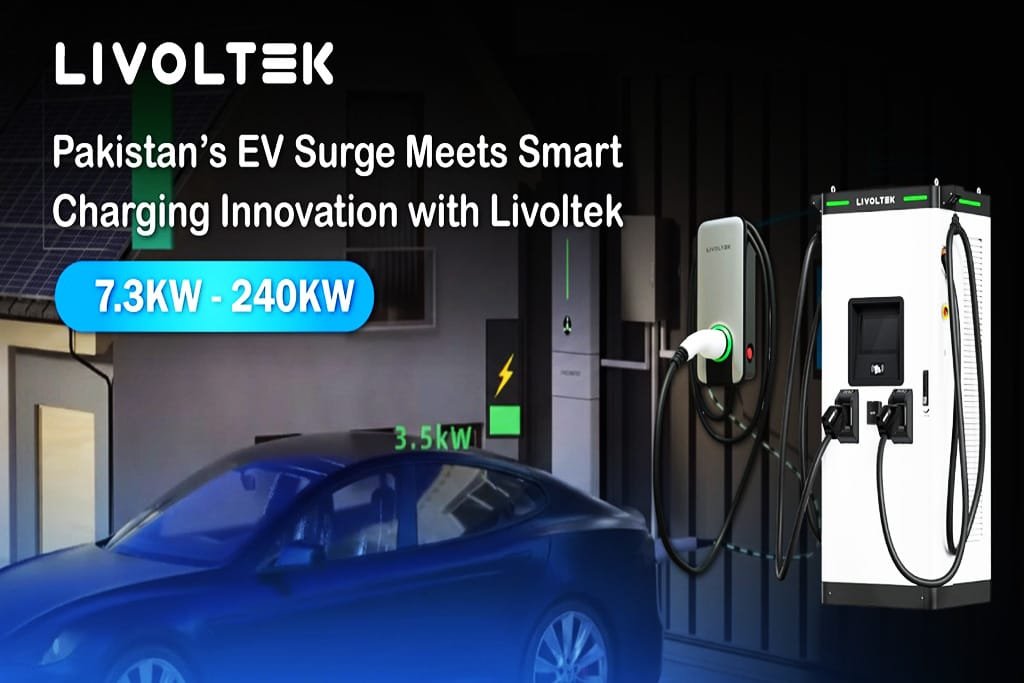
Livoltek is not just entering the market it is shaping it. Its diverse product ecosystem addresses the full spectrum of EV charging needs, from residential users to large-scale infrastructure investors.
At the residential level, compact AC chargers provide efficient and secure home charging. These systems are designed for everyday convenience, offering app-based access and smart scheduling.
In commercial spaces, businesses benefit from scalable solutions that optimize energy use and reduce operational costs. For high-demand environments like highways and public hubs, Livoltek’s DC fast chargers deliver rapid charging minimizing wait times and maximizing throughput.
This layered approach ensures that Pakistan EV Charging Infrastructure evolves holistically rather than in isolated pockets.
Smart Technology at the Core of Pakistan EV Charging Infrastructure
What truly differentiates Livoltek is its intelligent digital ecosystem. Through integrated software platforms, users can monitor consumption, schedule charging sessions, and take advantage of off-peak tariffs.
This isn’t just convenience it’s grid intelligence.
Multiple connectivity options, including Wi-Fi and 4G, enable seamless system integration, while over-the-air updates ensure continuous optimization. Smart charging modes allow dynamic load balancing and even full solar integration, aligning EV adoption with renewable energy goals.
In a country facing energy management challenges, such smart systems could redefine how electricity is consumed and distributed.
Built for Pakistan’s Diverse Conditions
Pakistan’s geography is as varied as its climate from coastal humidity to mountainous extremes. Livoltek’s chargers are engineered to operate reliably across these conditions, ensuring consistent performance whether installed in urban centers or remote highway corridors.
Safety and compliance are equally critical. With international certifications and built-in protection systems, these chargers offer long-term reliability an essential factor for investors and public-private partnerships.
Global Experience Meets Local Opportunity
Livoltek’s footprint spans over 30 countries, including deployments in Europe and Asia. These real-world implementations provide valuable insights into scaling EV infrastructure efficiently.
For Pakistan, this global experience translates into reduced risk and faster deployment cycles two factors crucial for meeting the country’s 2030 targets.
The Road Ahead for Pakistan EV Charging Infrastructure
The future of Pakistan EV Charging Infrastructure is not just about numbers it’s about integration, intelligence, and sustainability.
As EV adoption accelerates, the demand for reliable charging networks will intensify. Companies like Livoltek are stepping in not merely as suppliers but as ecosystem enablers bridging the gap between policy ambition and real-world execution.
Pakistan’s electric mobility journey has begun. The infrastructure built today will determine how fast and how far the country can go.