
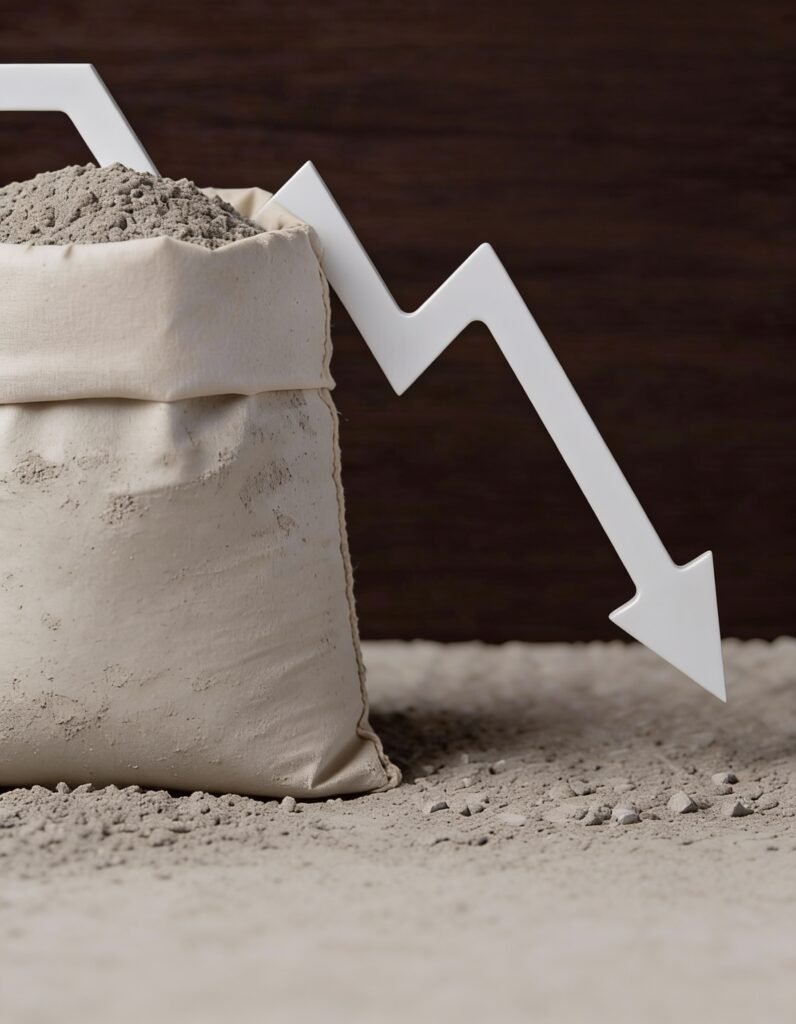
Karachi: Topline Securities has projected a 7% year-on-year (YoY) decline in the profitability of Pakistan’s listed cement sector for the third quarter of fiscal year 2026 (3QFY26), with aggregate profits expected to reach approximately Rs21.1 billion.
The downturn is primarily attributed to the absence of dividend income from Lucky Electric Power Company Limited (LEPCL), despite relatively stable operational performance in several key players.
According to the brokerage house’s preview report released on April 7, 2026, the sector’s gross margins are likely to hold steady for many companies, supported by a healthy increase in cement dispatches. Total dispatches during the quarter are estimated to have risen 9% YoY to 12.48 million tons.
This growth was driven by a robust 35% YoY surge in exports and a modest 4% YoY uptick in local dispatches. However, these volume gains were partially offset by elevated coal prices and lingering geopolitical tensions affecting input costs and supply chains.
The sharp drop in “other income” remains the dominant drag on bottom-line figures. In previous quarters, dividend inflows—particularly from Lucky Electric—had significantly boosted consolidated earnings for major players like Lucky Cement.
Their absence in 3QFY26 is expected to weigh heavily on sector-wide profitability, even as core cement operations show resilience.
Company-specific estimates reveal a mixed picture. Lucky Cement is forecasted to post a strong 29% YoY rise in consolidated earnings per share (EPS) to Rs15.80, benefiting from diversified operations and operational efficiencies.
Fauji Cement is anticipated to deliver an impressive 98% YoY jump in profitability, reflecting improved margins and higher volumes. In contrast, Kohat Cement may see a 7% YoY decline in earnings due to margin pressures from higher fuel costs and reduced other income.
The broader industry context shows continued recovery in demand. Domestic construction activity and infrastructure projects have supported local sales, while export markets—particularly in the region—have provided an additional boost. Analysts note that stable retention prices and controlled finance costs (thanks to earlier monetary easing) have helped cushion some of the impact from rising coal and energy expenses.
Looking ahead, the sector’s long-term outlook remains cautiously optimistic. With Pakistan’s economy showing signs of stabilization, analysts expect higher domestic dispatches in the coming quarters if construction activity rebounds post-Eid and government infrastructure spending accelerates.
Declining international coal prices could further support margins. However, risks persist from volatile global energy markets, potential currency fluctuations, and any slowdown in export demand due to regional geopolitics. The cement sector, which accounts for a significant portion of the Pakistan Stock Exchange’s industrial index, continues to trade at attractive valuations relative to its production capacity and historical growth.
Many stocks remain in “deep value” territory, with enterprise value per ton metrics drawing investor interest despite near-term earnings volatility.
Overall, while 3QFY26 may reflect a temporary dip due to one-off factors like missing dividend income, the underlying demand drivers and operational improvements position the sector for a potential rebound in subsequent quarters. Investors are closely watching upcoming corporate announcements for confirmation of these trends and any guidance on full-year FY26 performance.