
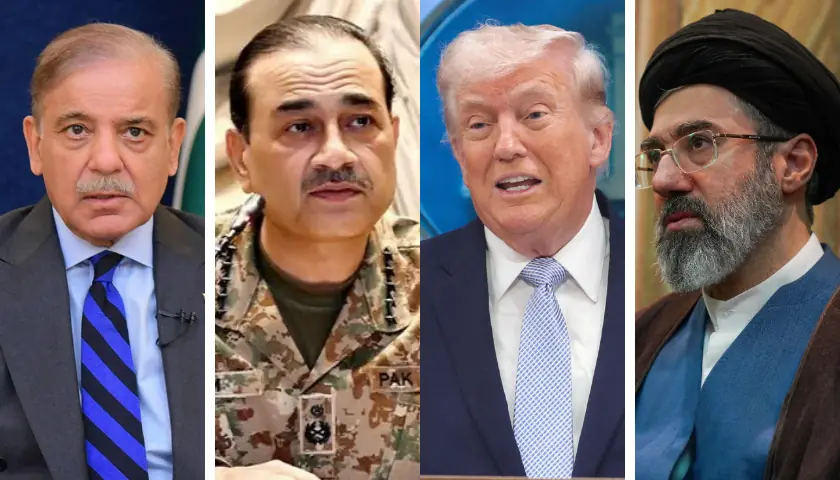
In a major diplomatic breakthrough, Pakistan has successfully facilitated an immediate ceasefire between the United States and Iran, easing tensions that had raised fears of a wider regional conflict. The development positions Islamabad at the center of global diplomacy, with high-stakes peace talks now scheduled to take place in the capital.
Prime Minister Announces Historic Ceasefire
Prime Minister Shehbaz Sharif confirmed the ceasefire through a statement on social media platform X. He described the agreement as immediate and comprehensive.
He stated that both nations, along with their respective allies, had agreed to halt hostilities without delay. The ceasefire extends beyond bilateral tensions. It includes affected regions such as Lebanon and other conflict-hit areas.
The prime minister emphasized that this step reflects a collective commitment to stability. He also highlighted Pakistan’s role in opening diplomatic channels at a critical moment.
“With utmost humility, I share that Iran and the United States have agreed to an immediate ceasefire,” he said, calling it a turning point for regional peace.
Islamabad to Host High-Level Peace Talks
Building on the ceasefire, Shehbaz Sharif invited delegations from both countries to Islamabad for formal negotiations. He announced that the “Islamabad Talks” will take place on April 10, 2026.
The talks aim to produce a long-term agreement that addresses all outstanding disputes between Washington and Tehran. Officials expect discussions to cover security concerns, regional influence, and economic issues.
Diplomatic sources suggest that Pakistan will act as a neutral facilitator during the talks. The move strengthens Islamabad’s global image as a mediator in complex geopolitical conflicts.
Analysts believe the success of these talks could reshape power dynamics in the Middle East and beyond.
Trump Confirms Temporary Halt in Military Action
Earlier, Donald Trump announced a temporary suspension of military action against Iran. He shared the update on his platform, Truth Social.
Trump confirmed a two-week pause in planned strikes. He described the move as conditional and linked to diplomatic progress.
According to his statement, the decision followed direct discussions with Prime Minister Shehbaz Sharif and Pakistan’s military leadership, including Asim Munir.
He indicated that the pause serves as a confidence-building measure. It allows both sides to explore peaceful solutions instead of escalating conflict.
Strait of Hormuz Agreement Eases Global Concerns
A key component of the ceasefire involves the reopening of the Strait of Hormuz. Iran has agreed to ensure safe and uninterrupted passage through this critical route.
The Strait of Hormuz plays a vital role in global energy supply. Any disruption can trigger oil price shocks and economic instability worldwide.
Pakistan had proposed a two-week diplomatic window. During this period, both sides would prioritize dialogue over confrontation. The reopening of the strait is seen as a major confidence-building step.
Global markets have reacted cautiously. However, experts say the agreement could stabilize oil prices if it holds.
Pakistan Emerges as Key Diplomatic Mediator
This development marks a significant milestone in Pakistan’s foreign policy. Islamabad has positioned itself as a credible mediator between two long-standing adversaries.
Officials credit Pakistan’s balanced approach and strategic engagement for the breakthrough. The country maintained open communication channels with both Washington and Tehran during rising tensions.
The prime minister praised the leadership of both nations for showing restraint. He noted that their willingness to engage reflects a shared desire for peace.
“Their constructive engagement shows commitment to stability,” he said.
Regional Stability Hinges on Successful Talks
Despite the positive development, challenges remain. Experts warn that deep-rooted issues between the United States and Iran cannot be resolved overnight.
The upcoming Islamabad Talks will play a critical role in determining the future of this ceasefire. Any failure could risk renewed tensions.
However, the current momentum offers hope. The ceasefire has already reduced immediate fears of military escalation across the region.
Diplomatic observers believe that Pakistan’s role could expand further if talks succeed. It may open doors for broader regional cooperation and conflict resolution.