
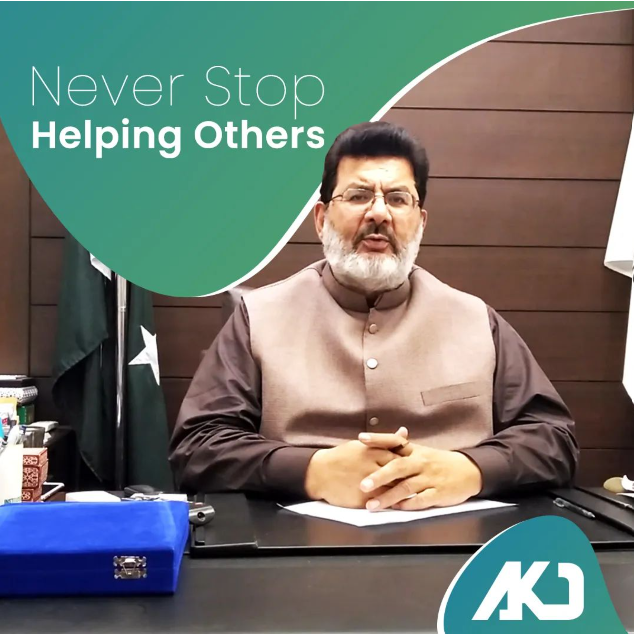
Renowned economist and Chairman of AKD Group Aqeel Karim Dhedhi has stated that recent geopolitical developments, particularly the Iran-Israel conflict, have contributed to a significant shift in global perception, with the international community increasingly recognizing Pakistan as the safest nuclear power in the world.
Speaking during an informal interaction ahead of the unveiling of the new residential development The Arcadians in Defence Phase VIII, he said that the evolving situation in the Middle East and other Muslim countries has highlighted the importance of investing in stable nuclear states, adding that Pakistan is now being viewed as a secure and attractive destination for long-term global investment.
Dhedhi further noted that Pakistan’s international standing has improved considerably over recent months, asserting that regional economic progress remains closely linked to improved diplomatic relations, including between Pakistan and India, which he believes are essential for sustainable regional development.
Rising Foreign Investment Interest in Karachi and Gwadar
He revealed that substantial investment inflows are expected in Karachi and Gwadar in the near future, as capital that previously moved out of Pakistan is gradually returning to the country. According to him, investors from the Middle East and Gulf region are increasingly showing strong interest in Pakistan’s economic opportunities, particularly in infrastructure, real estate, and port-related development.
He emphasized that Pakistan’s port cities remain central to its economic future and stressed that industrialization in these regions is a critical factor for unlocking long-term growth. He also referred to insights from Chinese experts who believe that the lack of industrial development in port cities continues to remain one of the major structural barriers to Pakistan’s economic expansion.
Concerns Over Structural Economic Challenges
Discussing broader economic issues, Dhedhi stated that Pakistan’s economy is currently going through a critical phase and requires policy consistency driven by national interest. He identified currency devaluation, the widening trade deficit, and long-term power purchase agreements with Independent Power Producers (IPPs) as key structural challenges that continue to impact economic stability.
He further pointed out that capacity charge payments remain a major burden on the economy and questioned the efficiency of the power sector by highlighting the paradox of persistent load shedding despite surplus electricity generation capacity.
Explaining the situation, he said that Pakistan has an installed electricity generation capacity of around 50,000 megawatts, while peak summer demand reaches approximately 25,000 megawatts, leaving a substantial surplus. However, he noted that reliance on imported oil and coal for power generation increases production costs, resulting in higher tariffs and inefficiencies in distribution.
He expressed confidence that if electricity demand increases to between 35,000 and 40,000 megawatts, tariff pressures could ease significantly, leading to a more balanced and efficient energy market.
Outlook on Exports, SMEs, and Fiscal Reform
Dhedhi expressed optimism about Pakistan’s economic trajectory, stating that exports are expected to grow rapidly in the coming years. He emphasized the importance of expanding venture capital funding and improving access to financing for small and medium-sized enterprises (SMEs), which he described as essential for job creation and broader economic activity.
He also advocated for reducing the administrative powers of the Federal Board of Revenue (FBR), arguing that a more streamlined structure could enhance tax compliance and reduce corruption. Referring to past fiscal performance, he stated that during 2007 and 2008, revenue targets were successfully achieved when the FBR operated with comparatively fewer powers, and suggested that a similar approach could be tested to improve outcomes.
The Arcadians Project to Redefine Luxury Living in Karachi
Speaking about the real estate sector, Dhedhi announced that The Arcadians is a 43-acre master-planned residential development that aims to introduce a modern integrated lifestyle concept in Karachi. He described the project as a “Defence within Defence,” combining residential, commercial, and business facilities within a single community framework.
He explained that the development will ultimately consist of 33 towers featuring apartments, offices, and commercial spaces, while the initial launch phase will include three blocks. He added that the project has already received strong market interest, particularly from overseas Pakistanis, even before its official launch.
Dhedhi further revealed that international roadshows are planned during Rabi-ul-Awwal to promote the project globally, with additional phases expected to be completed in the coming stages of development.
He concluded that The Arcadians represents one of the largest and most significant real estate developments currently underway in Pakistan, reflecting growing investor confidence in the country’s property sector.