
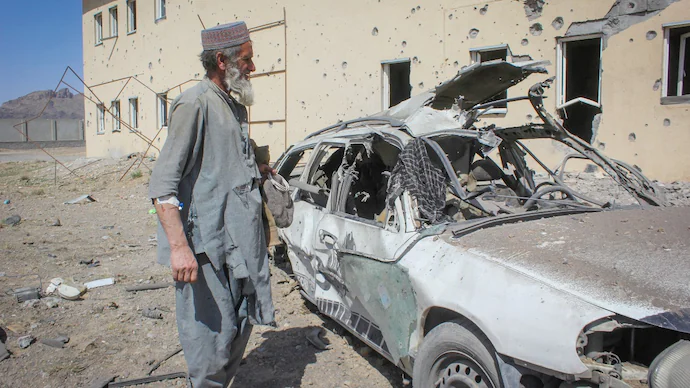
The escalating border conflict between Pakistan and Afghanistan has claimed at least 42 civilian lives in Afghanistan, according to preliminary figures from the United Nations Assistance Mission in Afghanistan (UNAMA).
The casualties, including women and children, stem from indirect fire during cross-border clashes and airstrikes between February 26 and March 2, 2026, with 104 others wounded.
Clashes intensified on March 3 as troops exchanged fire at multiple points along the 2,600-km Durand Line, marking the sixth day of sustained violence.
UNAMA Calls for Immediate Ceasefire UNAMA documented 146 total civilian casualties (42 killed, 104 injured) in the period, warning that the fighting severely worsens Afghanistan’s humanitarian crisis—already strained by recent earthquakes that killed over 1,400 people.
Indirect fire has hit residential areas in provinces like Paktya, Paktika, Nangarhar, Kunar, and Khost, while airstrikes affected Paktika and Nangarhar.
The agency urged both sides to halt hostilities immediately, noting restricted humanitarian access has displaced around 16,400 households and hampered aid delivery in border regions.
Military Actions and Claims Pakistan conducted air strikes on Afghan targets, including Bagram air base north of Kabul—officially acknowledged for the first time—citing intelligence that facilities housed ammunition and equipment used by militants and Taliban troops.
Pakistan claims precise targeting of terrorists and supporters, with threats to continue operations and potentially target Taliban leadership unless Afghanistan addresses militant safe havens.
Afghan Taliban forces reported repelling attacks, capturing a Pakistani military post in Kandahar, and inflicting losses. Both sides claim heavy enemy casualties, though independent verification remains limited amid ongoing exchanges at over two dozen locations.
Regional Tensions and Broader Context The violence follows long-standing accusations from Pakistan that Afghan soil harbors groups like the Tehreek-e-Taliban Pakistan (TTP) launching attacks inside its territory—claims denied by the Taliban. The conflict risks further destabilizing the region, overlapping with separate Middle East tensions.
UNAMA emphasized the preliminary nature of figures due to access challenges, while humanitarian groups highlight growing displacement and aid disruptions.