
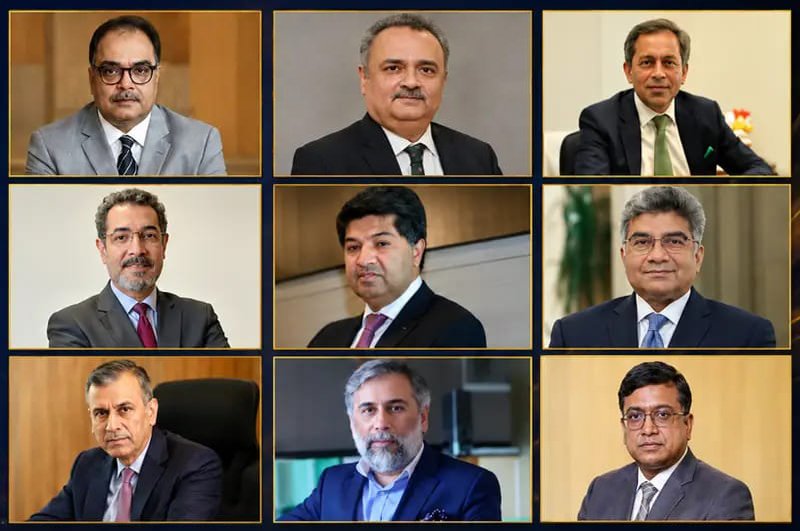
The race for the next National Bank of Pakistan President has moved into its decisive phase after nine candidates appeared before a selection panel chaired by the Federal Minister for Finance. The government is expected to make a decision later this week, with the final appointment subject to Federal Cabinet approval.
The nine candidates interviewed for the NBP President position are Hassan Raza, Muhammad Abdullah, Shehram Raza, Mudassar Khan, Zafar Masud, Imran Sarwar, Ali Muhammad Mahoon, Farrukh Iqbal and incumbent President Rehmat Ali Hasni.
The selection has attracted unusual attention because the NBP President is not merely the head of another commercial bank. The position places its holder at the helm of one of Pakistan’s most important state-owned financial institutions, making the government’s choice significant for the banking sector and the wider economy.
Who Are the Nine Candidates for NBP President?
The candidate pool includes several experienced banking professionals, with Zafar Masud emerging as one of the most closely watched names because of his senior banking experience and leadership background.
The other candidates are Hassan Raza, Muhammad Abdullah, Shehram Raza, Mudassar Khan, Imran Sarwar, Ali Muhammad Mahoon, Farrukh Iqbal and Rehmat Ali Hasni. The inclusion of Hasni makes the contest particularly interesting because he is already serving as NBP president.
The government will now consider the interview panel’s recommendations before sending the appointment through the required approval process.
Rehmat Ali Hasni’s Extension Raises Questions
One of the most striking aspects of the NBP President selection process is the position of Rehmat Ali Hasni. His three-year term expired on August 6, but the government granted him a two-week extension to maintain continuity while the appointment process is completed.
At the same time, Hasni reportedly appeared before the selection panel as one of the nine candidates competing for the position he currently occupies.
This arrangement is unusual enough to deserve public scrutiny. While continuity at a major state-owned bank is understandable, allowing an incumbent to seek a fresh appointment while simultaneously receiving an extension creates questions about how transparent and competitive the selection process will ultimately be.
The government should therefore clearly explain the selection criteria, the qualifications being assessed and how the final recommendation will be determined. A position of this financial and institutional importance should inspire confidence rather than speculation.
Why the NBP President Appointment Matters
The incoming NBP President will inherit an institution with an extensive domestic and international banking footprint and a major role in Pakistan’s financial system. The appointment therefore goes beyond an executive reshuffle and could influence the bank’s future strategy, governance, lending priorities and relationship with the government.
The next president will also face the challenge of maintaining financial performance while balancing NBP’s commercial objectives with its responsibilities as a state-owned institution.
Zafar Masud Adds Weight to the Contest
Zafar Masud’s presence gives the NBP President race an especially competitive dimension. His banking background makes him a prominent contender in a field that already includes several senior professionals.
However, experience alone should not determine the outcome. The government must demonstrate that the final selection is based on professional competence, governance standards, institutional independence and the ability to manage a systemically important bank.
The Decision Could Come Within Days
With interviews completed, attention now shifts to the Federal Cabinet. The government is expected to review the panel’s recommendations before making the final appointment.
For Pakistan’s banking industry, the question is no longer who will be interviewed but who will ultimately receive the mandate to lead NBP.
Nine candidates have entered the race. One will emerge as the next NBP President, while the government’s handling of the final decision will determine whether this high-profile appointment is viewed as a professional banking decision or another closely watched public-sector selection.