
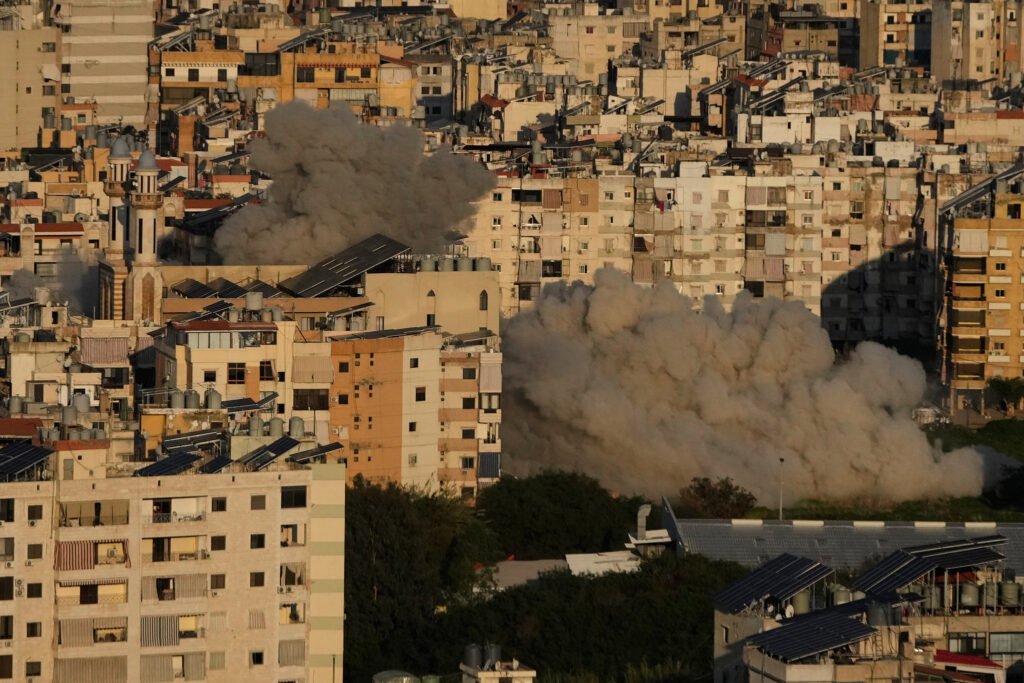
The international media reports say the U.S.-Israeli war against Iran is escalating, now in its 12th day, featuring intense air strikes exchanged across the Middle East.
Key developments include renewed bombardments targeting Israel, Lebanon, and Gulf areas, amid Iran’s threats to block oil through the Strait of Hormuz and severe domestic crackdowns on potential dissent.
Escalating Air War Disrupts Region and Global Energy
The U.S. and Israel continued heavy air strikes on Iranian targets on Wednesday. Iran responded with missile barrages toward Israel, forcing millions into shelters as sirens blared. Explosions from Israeli defences intercepting rockets echoed overnight. No immediate reports confirmed missiles hitting ground targets in Israel.
Israeli forces struck Beirut hard, hitting an apartment building in central areas and southern suburbs linked to Hezbollah. Smoke rose over damaged residential zones in Lebanon’s capital. Scores died in these Lebanese strikes since the conflict widened. Iran’s attacks on Israel have killed at least 11 people so far.
The war began on February 28 with strikes that killed Iran’s former Supreme Leader Ali Khamenei. His son, Mojtaba Khamenei, now leads as the new hardliner supreme leader. U.S. Central Command reported destroying 16 Iranian mine-laying vessels near the Strait of Hormuz earlier. A cargo ship caught fire after an unknown projectile hit it in the strait.Crew evacuated safely and sought help.
Another container vessel off the UAE coast sustained damage from a suspected attack. Iran’s Revolutionary Guard vowed to halt Gulf oil shipments unless attacks stop.
This blocks one-fifth of global fossil energy flow.
Crude prices surged initially but later tumbled as markets bet on U.S. President Trump ending the war soon. Stock markets rebounded on that optimism. The International Energy Agency considered releasing massive oil reserves to stabilize prices. Over 1,300 Iranian civilians have died since strikes began, per Iran’s U.N. ambassador.
Nearly 8,000 homes, 1,600 commercial centers, and many medical and energy facilities lie destroyed.
Seven U.S. soldiers were killed, with about 140 wounded.
Iran Tightens Grip Amid Fears of Internal Unrest
Tehran’s government arrested dozens, including a foreign national, on spying charges for “enemies.” This followed U.S. President Trump’s call for Iranians to rise up and overthrow the regime. Iran’s police chief Ahmadreza Radan warned harshly.
He said anyone protesting at the “enemy’s request” would face confrontation as an enemy. “All our security forces have their fingers on the trigger,” Radan declared.
Little sign of protests has emerged during the war.
Many Iranians desire change, and some celebrated Khamenei’s death early on. Large rallies supported the new leader Mojtaba Khamenei in recent days.
A funeral procession for slain high-level military commanders was set for Wednesday in Tehran. Iran’s armed forces spokesman urged regional allies to share U.S.-Israeli “hiding places” for precise strikes.
He claimed civilians serve as “human shields” in targeted areas. Iran warned of targeting U.S. and Israeli economic and banking interests regionally. This came after an alleged attack on an Iranian bank.The conflict shows no quick end, with air strikes persisting intensely.