
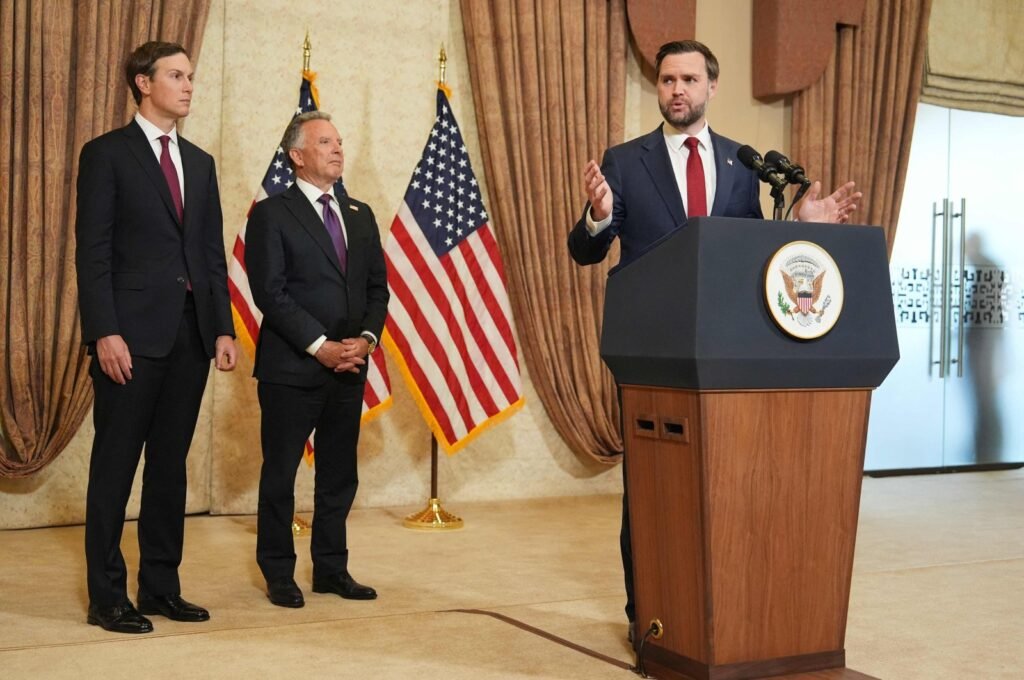
ISLAMABAD – A high-level delegation of U.S. negotiators is scheduled to arrive in the Pakistani capital this Saturday to revive stalled peace talks, even as Tehran maintains a firm stance against direct engagement.
The mission, led by Special Envoy Steve Witkoff and Jared Kushner, aims to resolve a nine-week conflict that has disrupted global energy supplies and claimed thousands of lives.
Mediation Through Interlocutors
Despite the White House’s optimism that the “Iranians want to talk in person,” Iranian Foreign Ministry spokesperson Esmaeil Baqaei clarified on social media that no direct meeting is on the agenda. Instead, Tehran intends to use Pakistani officials as intermediaries to convey their concerns.
Foreign Minister Abbas Araqchi, who arrived in Islamabad on Friday, has been coordinating with Pakistani leadership, emphasizing that “neighbors are our priority” while dismissing direct contact with the American team.
Economic Stakes and the Nuclear Demand
The backdrop of these talks is a crippling economic impasse. Iran has largely closed the Strait of Hormuz, a vital artery for 20% of global oil, in response to a U.S. blockade on its exports. U.S. Defense Secretary Pete Hegseth recently stated that Iran still has an “open window” to secure a deal, provided they abandon their nuclear ambitions in a verifiable manner.
With Brent crude prices soaring by 16% this week, the international community is watching Islamabad closely for any sign of a breakthrough that could stabilize the market.