
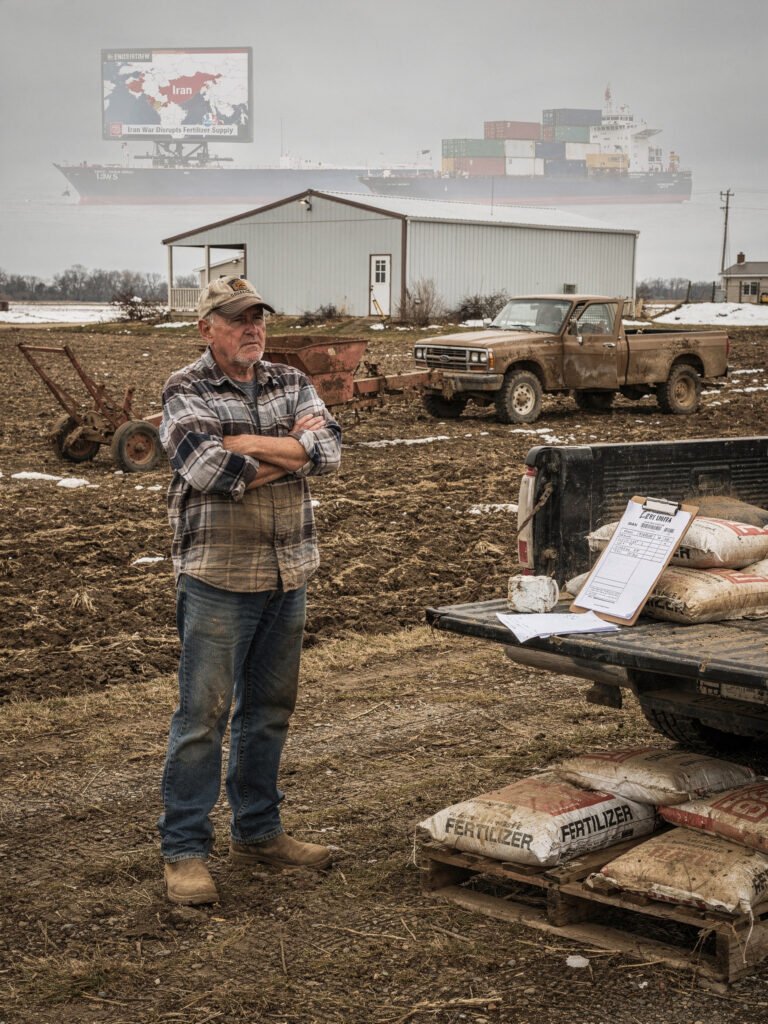
The ongoing war involving Iran has severely disrupted global fertilizer supplies, leaving US farmers facing shortages and sharp price increases just as the spring planting season approaches.
The conflict has effectively closed the Strait of Hormuz, through which over 30% of the world’s nitrogen fertilizer exports and key components like sulfur pass. This has paralyzed shipments from major Gulf producers, hitting the US hard since it relies on imports for a significant portion of its needs, particularly urea.
Supply Shortages Hit Critical Timing According to The Fertilizer Institute, the US is about 25% short of usual urea supplies for spring planting, with dealers potentially 25-35% short overall.
The just-in-time nature of the US fertilizer distribution system offers little buffer, as most countries lack strategic reserves. Fertilizer shipments from the Gulf take weeks to reach US ports like New Orleans, followed by further transport via barges, trucks, or trains—delays that could render supplies unusable for timely application before crops emerge.
Price Spikes Threaten Farmer Viability Prices for available fertilizer have surged more than a third—up to 32% or higher—since the war began. Urea, a key nitrogen fertilizer essential for corn and other crops, has seen dramatic jumps; in some cases, farmers face costs thousands of dollars higher per load compared to pre-war levels.
Canadian farmers report similar shocks, with one Saskatchewan producer noting an extra C$44,000 for the same volume purchased earlier. Analysts warn that vessels are being rerouted to higher-paying markets, worsening scarcity for US buyers.
Calls for Government Action and Broader Risks US Agriculture Secretary Brooke Rollins indicated the administration is exploring avenues like increased Venezuelan imports to ease pressures, though experts note Venezuela’s production challenges limit quick fixes.
Senator Josh Hawley has pushed for investigations into potential price-gouging by major companies. The American Farm Bureau Federation warns that shortages could disrupt the US food supply, leading to reduced yields, lower farmer profits amid already slim margins, and potential rises in grocery prices.
Farmers who pre-purchased supplies are somewhat insulated, but late buyers face empty retail centers or unaffordable premiums, raising concerns over planting decisions and crop shifts.
This crisis underscores the vulnerability of agriculture to geopolitical events, with spring planting at risk of lower productivity and economic strain for rural communities.