
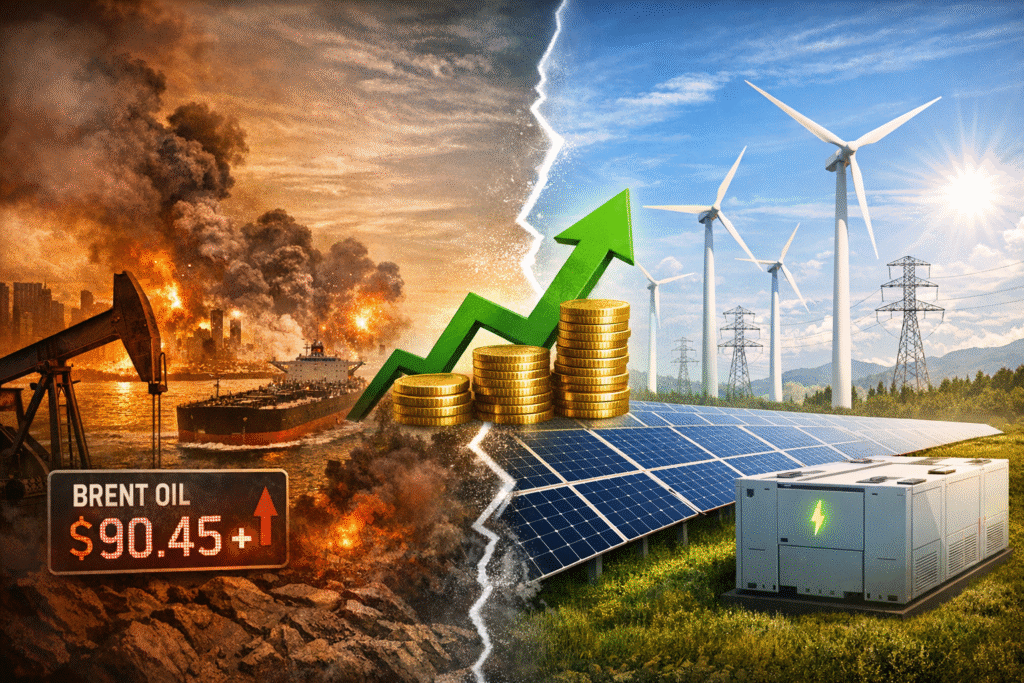
The Global Energy Investment Shift is rapidly transforming how investors allocate capital worldwide. A structurally inflationary environment, rising geopolitical tensions, and energy security concerns are forcing a rethink of the traditional 60/40 balanced portfolio. Analysts now argue that conventional diversification strategies are no longer sufficient to protect capital, especially during supply shocks and disruptions in global trade.
Read More: https://theboardroompk.com/pso-names-abdus-sami-interim-ceo-as-syed-taha-joins-k-electric/
Instead, experts recommend adopting a “heads I win, tails I don’t lose” approach centered on energy assets. This strategy emphasizes sectors that benefit from both economic expansion and supply constraints, particularly oil refining, coal, and commodities.
Why the Global Energy Investment Shift Is Happening
Three major assumptions that once supported global markets are weakening. First, U.S. Treasuries are no longer viewed as completely liquid during crises. Second, control of global sea lanes is becoming less predictable due to modern warfare technologies. Third, the geopolitical stability provided by traditional superpower leadership is increasingly uncertain.
With the Strait of Hormuz disruption fears and declining natural gas inventories in key Asian markets, energy security has become more critical than financial reserves. This reality is pushing governments to prioritize power generation reliability over environmental commitments.
Oil Refiners Lead the Global Energy Investment Shift
Oil refiners are emerging as one of the most resilient investment options. Refining margins, often referred to as crack spreads, are expected to remain elevated due to damage to refining infrastructure in major producing regions. Even if geopolitical tensions ease, rebuilding capacity could take time, keeping supply tight and profitability high.
This dynamic makes refiners attractive because their earnings can remain strong regardless of short-term oil price fluctuations.
Coal Returns Despite Environmental Concerns
The Global Energy Investment Shift also includes a surprising return to coal. Governments facing shrinking natural gas reserves are prioritizing stable electricity supply over emissions targets. For policymakers, avoiding widespread power shortages is politically and economically critical.
This trend is particularly relevant for developing economies, including Pakistan, where consistent power generation is essential for industrial growth and economic stability. Coal and related transportation infrastructure such as rail networks could therefore see increased investment.
Safe-Haven Oil Producers Gain Attention
Investors are increasingly focusing on oil producers in politically stable regions. Countries such as Canada, Brazil, and Colombia offer lower regulatory risk compared to markets where windfall taxes or export controls may be introduced.
This approach reduces the risk of government intervention while maintaining exposure to strong energy demand.
Chinese Green Technology and Commodities Benefit
Interestingly, the Global Energy Investment Shift does not exclude renewable energy. Rising electricity demand, especially from data centers, is forcing policymakers to reconsider trade barriers on solar panels and battery technology.
As energy shortages intensify, tariffs on imported green technology could be reduced to accelerate power generation capacity. This would benefit solar manufacturers, battery producers, and rare earth supply chains.
Key Investment Themes Explained
Instead of a traditional table, the recommended investment actions can be summarized clearly. Refiners are considered strong buys due to sustained refining margins. Coal and rail infrastructure are gaining support as governments prioritize reliable electricity. Safe-haven oil producers in stable regions are attractive to reduce political risk. Chinese solar and battery companies could benefit from easing trade restrictions. Rare earth supply chains are expected to gain importance as countries secure critical materials. Meanwhile, developed market government bonds are losing their diversification appeal, while some emerging market bonds are viewed as potential hedges.
What the Global Energy Investment Shift Means for Pakistan
For Pakistan, this shift carries important implications. Higher global energy investment could influence fuel import costs and energy policy decisions. It may also accelerate interest in local coal projects, renewable energy partnerships, and regional trade cooperation.
Businesses dependent on electricity, such as manufacturing and IT services, should closely monitor these developments. Energy availability and pricing will directly impact competitiveness in export markets.
Capital Reallocation Underway
Energy currently represents a small portion of major global equity indices compared to historical levels. As investors adjust portfolios, a significant capital reallocation toward energy and commodities is expected. This could drive higher valuations in these sectors and reshape global investment trends for years to come.
The Global Energy Investment Shift signals a move from symbolic climate commitments toward pragmatic energy security policies. For investors and policymakers alike, understanding this transformation is essential to navigating the evolving economic landscape.