
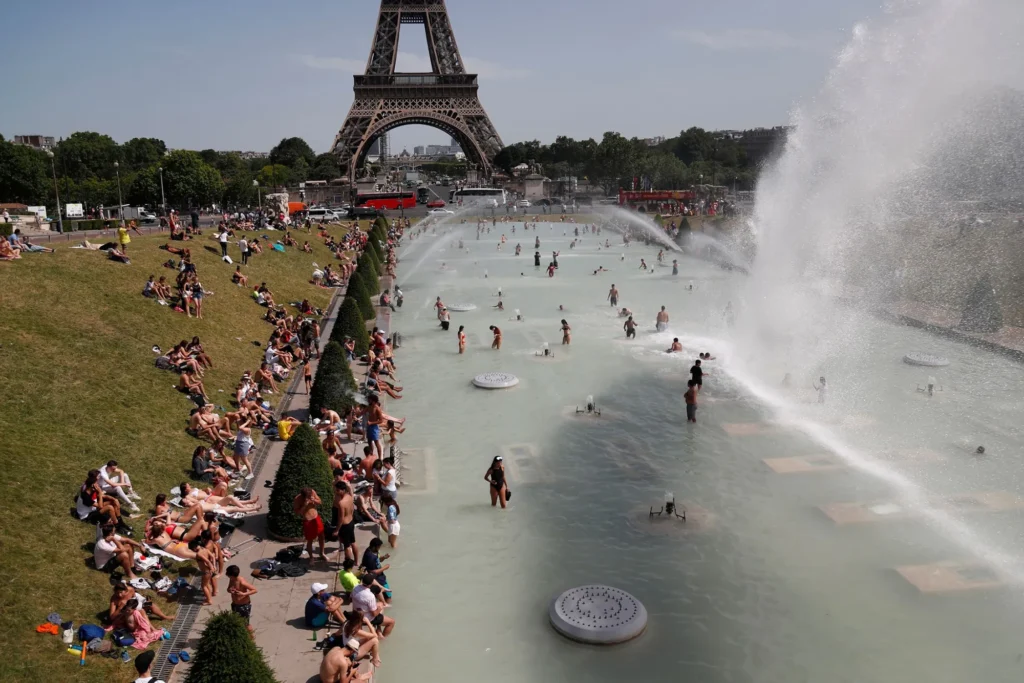
France has recorded around 1,000 excess deaths during the record-breaking heatwave that swept across Europe. Health authorities have warned that the true figure is expected to rise as more data from care homes and private residences becomes available.
Mounting Health Crisis in France
Most of the victims were elderly people. Many lived in residential care facilities or private homes without adequate cooling.
Health Minister Stephanie Rist said the effects of the extreme heat could linger for up to 10 days. She stressed that the episode is not finished.
French health officials are still compiling complete figures. Additional deaths are anticipated in the coming days and weeks.
Hospitals and emergency services faced intense pressure during the peak. They dealt with a sharp rise in heat-related illnesses among vulnerable groups.
The heatwave began on June 20 and pushed temperatures to 40 degrees Celsius in several areas. Night-time heat offered little recovery time for those at risk.
Public health teams are now urging neighbours and families to check on older residents. Access to water, shade and medical help remains critical.
Climate Change Intensifies the Threat
Scientists have stated that this heatwave would have been virtually impossible without human-caused climate change. Extreme night-time temperatures are now 100 times more likely than two decades ago.
WHO Director-General Tedros Adhanom Ghebreyesus noted that 150 million people across Europe endured extreme heat. He warned that homes, workplaces and schools remain ill-equipped for such conditions.
Events once described as once-in-a-generation are now occurring nearly every year. This shift is placing growing strain on public health systems.
France’s northeast still remains under heat advisories. The rest of the country has seen partial relief after storms brought cooler air.
The full scale of the health impact is still emerging. Long-term improvements in care facilities and urban cooling are now seen as urgent priorities.