
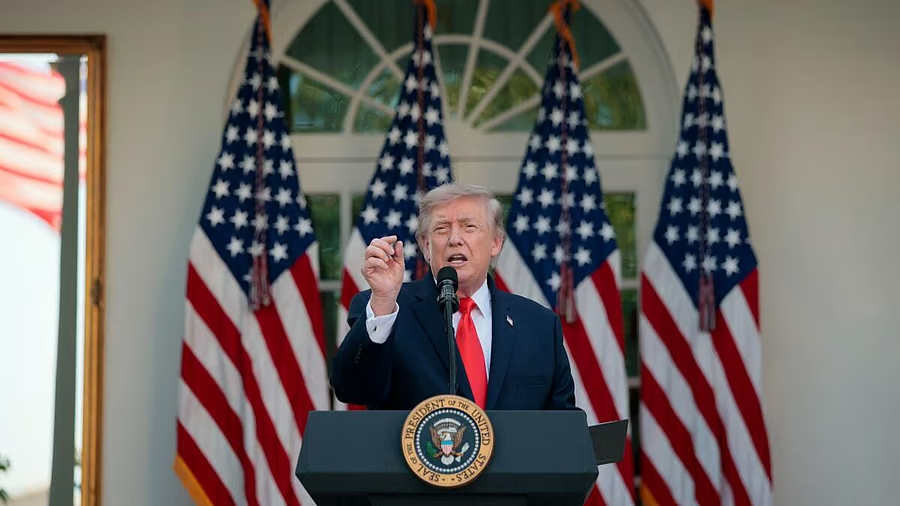
US President Donald Trump has issued a stern warning, threatening to impose a 100% tariff on goods from any country that enacts a digital services tax targeting American companies.
This aggressive stance comes amid ongoing transatlantic frictions. It follows EU efforts to ease tariffs on US goods to meet Trump’s July 4 deadline.
Escalating Trade Tensions
Trump made the announcement via social media. He highlighted discussions in several European nations about implementing such taxes on US tech firms. The move would override existing trade agreements. This includes the recent US-EU deal capping certain tariffs.
French President Emmanuel Macron has resisted pressure. France maintains its digital tax on major tech platforms.
Global Implications for Tech and Trade
Digital services taxes aim to capture revenue from online advertising, marketplaces, and other services. US firms like Google, Amazon, and Meta dominate these sectors. Countries including France, the UK, Italy, and others have pursued these levies. They argue that traditional tax rules fail to address the digital economy.
Critics, including the US, view them as discriminatory. They claim the taxes unfairly target American innovation.For developing economies, the ripple effects could be significant. Heightened protectionism may disrupt global supply chains and investment flows.
Pakistan’s Perspective
Pakistan has been expanding its digital taxation framework. Recent budgets introduced measures on social media income and digital platforms to broaden the tax base. While not directly mirroring European DSTs, any escalation in US tariffs could affect bilateral trade. Pakistan’s exports to the US, particularly textiles and other goods, remain vital.
Analysts warn that broader trade wars might complicate FDI inflows. Pakistan’s IT and fintech sectors, key growth areas, could face indirect pressures. The development underscores the need for cautious policy. Balancing revenue goals with international trade relations will be crucial.
Experts suggest monitoring multilateral talks. OECD efforts for global tax reform remain relevant amid these unilateral actions. This latest threat highlights the fragile balance in US relations with trading partners. Markets are watching closely for potential fallout.